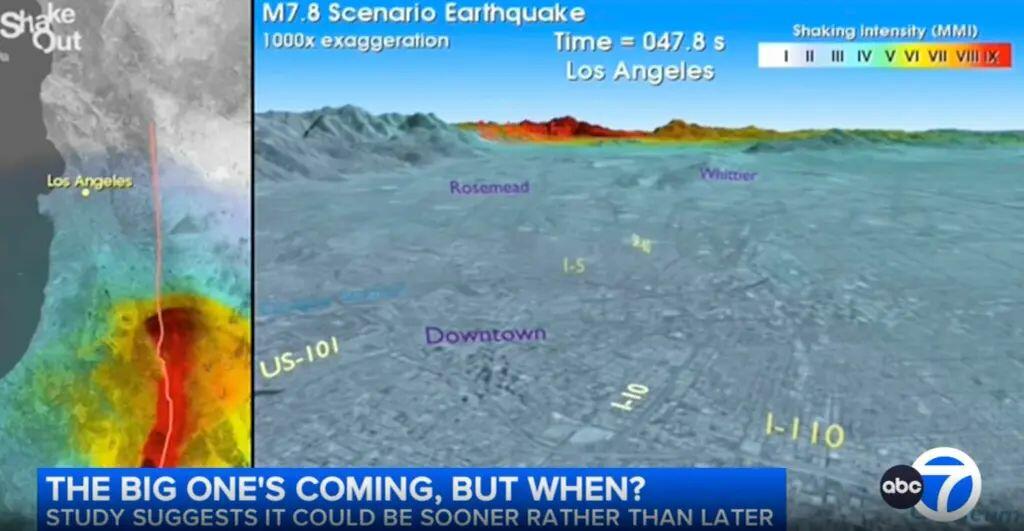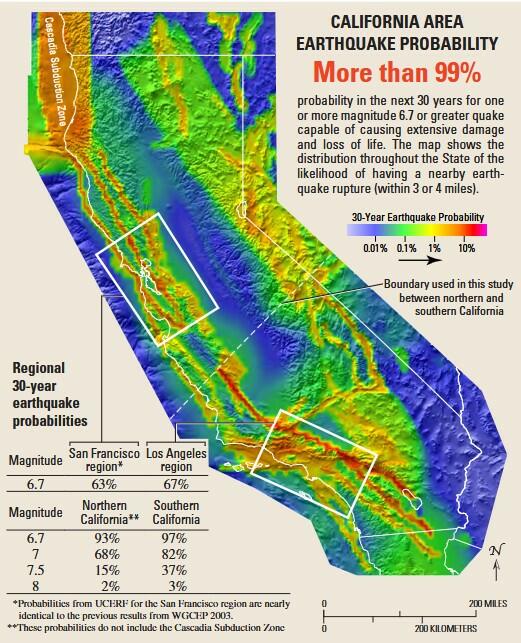
A new peer-reviewed study found that the fault system running beneath Los Angeles and the Inland Empire is carrying more stress today than at any point in the last millennium, and that a single rupture could tear across both the San Andreas and San Jacinto faults at once.
The research, led by Dr. Liliane Burkhard of the University of Bern and published in the Journal of Geophysical Research: Solid Earth, simulated 1,000 years of earthquake cycles on the southern San Andreas and San Jacinto systems.
The flashpoint is Cajon Pass, the junction northeast of Los Angeles where the two systems meet, and where Interstate 15, freight rail lines, power corridors and the aqueducts that supply Southern California's water all cross.
The model puts Coulomb stress at 3.6 megapascals on the San Jacinto-Bernardino segment, the highest value anywhere in the entire 1,000-year reconstruction, and 2.8 megapascals on the San Andreas Mojave South segment. Both are elevated, and both are closely aligned, the same configuration that preceded joint ruptures in the past.
Researchers caution these are modeled values that depend on the simulation's assumptions, not direct measurements from underground. Burkhard's team describes Cajon Pass as an "earthquake gate," a junction that can either stop a rupture cold or let it through.
The 1857 Fort Tejon earthquake, READ MORE AT SOURCE »
« Back to The Culture War