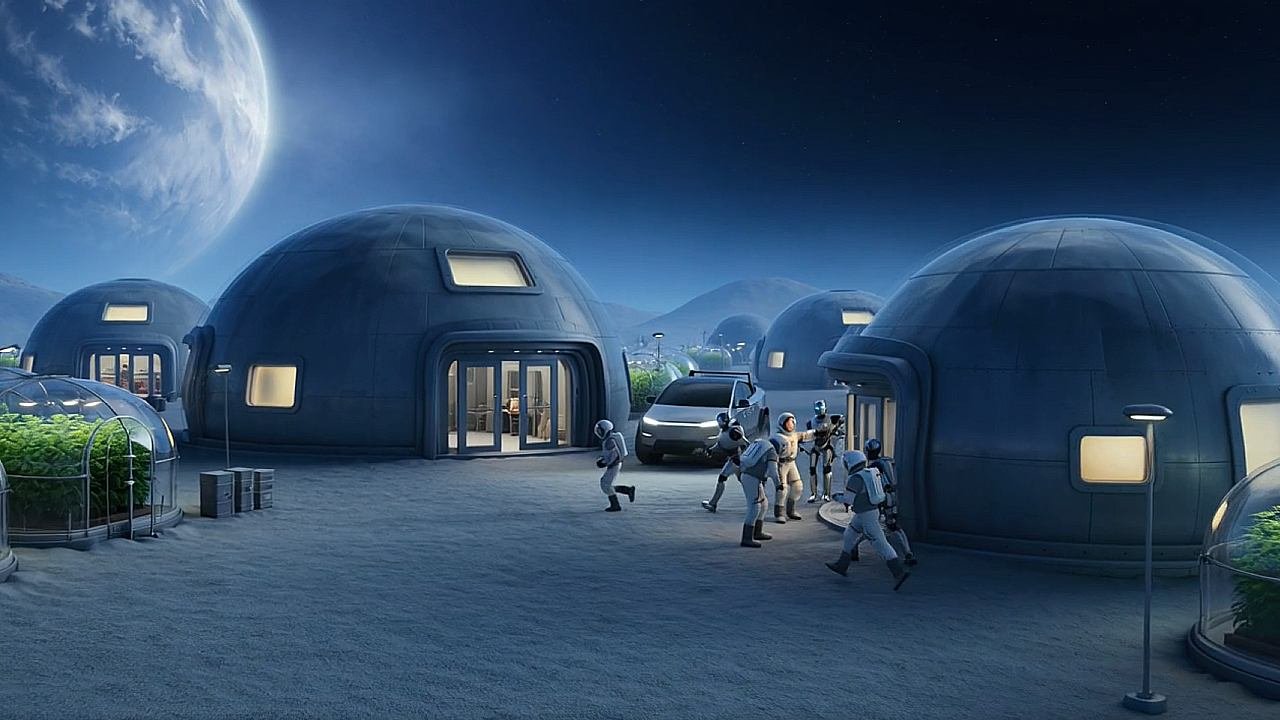
Elon Musk and SpaceX are charting a bold new course for American space dominance, prioritizing a thriving city on the Moon to shield civilization from earthly perils like natural disasters or geopolitical chaos.
With frequent launches and rapid iteration cycles, the Moon offers a practical launchpad for multi-planetary life, free from the constraints of overregulated space agencies that have stalled progress for decades.
SpaceX’s announcement comes amid a renewed push for lunar exploration, where private enterprise is outpacing sluggish international efforts.
SpaceX just officially shifted its #1 priority to building a self-growing city on the Moon. Not a base. Not an outpost. A city.Here's why it makes sense: you can launch to the Moon every 10 days vs. every 26 months for Mars. Two-day trip vs. six months. That means hundreds of…pic.twitter.com/G8JyICe9Qw
According to reports, the company aims to establish a “self-growing city” on the Moon within a decade, leveraging the proximity for hundreds of test cycles that Mars’ distant orbit simply can’t match.
Musk elaborated on X, stating, “SpaceX has already shifted focus to building a self-growing city on the Moon, as we can potentially achieve that in less than 10 years, whereas Mars would take 20+ years.”
He emphasized the logistical edge: launches to the Moon every 10 days with a two-day trip, versus Mars’ 26-month windows and six-month journeys.
For those unaware, SpaceX has already shifted focus to building a self-growing city on the Moon, as we can potentially achieve that in less than 10 years, whereas Mars would take 20+ years.The mission of SpaceX remains the same: extend consciousness and life as we know it to…
This allows for swift advancements in life support, construction, and energy systems—key to breaking free from Earth’s vulnerabilities.
The Moon would establish a foothold beyond Earth quickly, to protect life against risk of a natural or manmade disaster on Earth.We would continue to launch directly from Earth to Mars while possible, rather than Moon to Mars, as fuel is relatively scarce on the Moon.
Source: modernity
