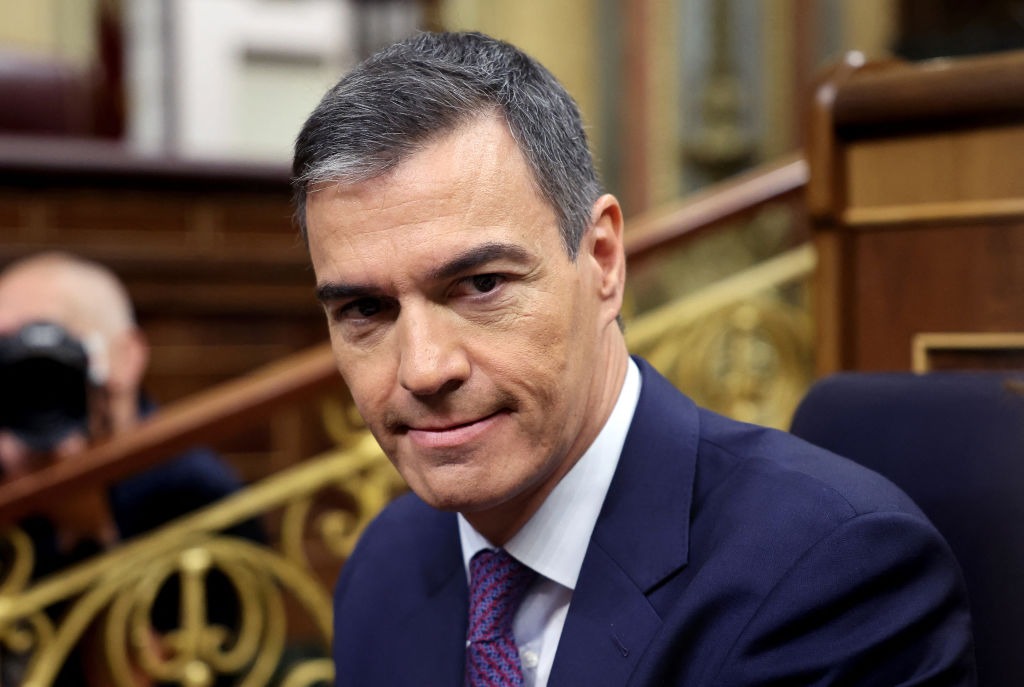
Between corruption and radicalization, Spain's government seems to be spinning out of control.
In 1936, Spainplungedinto civil war. A proud nation collapsed into violence, fire, and devastation. The Spanish Civil War, which set a communist-dominated Republican left against an authoritarian nationalist right, claimed roughly half a million lives. Priests were dragged through the streets, beaten, and mutilated — ears, noses, even genitals cut off — before being shot or having their throats slit. Nuns were raped prior to execution, in cases documented across several regions. Churches were set ablaze with priests still inside. In many towns, militiamen forced clergy to drink motor oil or gasoline before burning them alive. Spain's right wing, not to be outdone, killed just as many.
Almost a century later, when one might have hoped that these wounds had finally healed, political and cultural fault lines are reopening. Polarization has reached levels rarely seen since Spain's transition to democracy.
1. The original trauma of the Spanish left
The Spanish Civil War, in Spain's collective memory, remains an open wound. For a significant portion of the Spanish "left" -- standing for workers' rights, a shorter work week, women's and transgender rights, reducing carbon emissions -- the dominant narrative remains that of a revolutionbetrayed, confiscated by fascism, and still pending, never repaired. This historical resentment has been transmitted from generation to generation like an act of faith. Today, under the government of Prime Minister Pedro Sánchez and his coalition, which governs with the support of theextreme-left, this resentment is resurfacing in the form of historical revisionism.
By constantly summoning the specters of the past — going so far as to exhume Francisco Franco's remains, in a direct evocation of civil-war-era practices, when communists gleefully desecrated the graves of their so-called "class enemies" — is the left not in danger of reviving the hatreds and violence of the past?
2. A left without a compass: ideological orphanhood
Spain's left is becoming more radical precisely because it has run out of ideas. Marxism, long the doctrinalbackboneof the global left, lost all credibility with the implosion of the USSR, amid the stench ofcabbageandcorpses. Spain is no exception. Stripped of this ideological foundation, the Spanish left now finds itself without a compass.
Before the July 2023 elections, Sánchezpromiseda bold progressive agenda: mass public housing construction, reducing the working week to 37.5 hours, large minimum wage hikes, slashing healthcare waiting lists with binding maximum times, free public transport for youth, and expanded public education. Critically, delivery on these massive flagship promises has been dismal to date: virtually no new public housingbuilt, prices soaring, the work-week reductiondefeatedin parliament, real wages eroded by inflation, and chronic healthcare waiting lists unchanged.
Sánchez's Spanish Socialist Workers' Party (PSOE), once anchored in moderate, reformist social democracy, has gradually shifted toward a strategy of sheerpolitical survival. To remain in power, it allied itself first with Podemos and then with Sumar—two extreme left-wing parties obsessed with supporting Palestinians, against NATO, and soft on Russia — as well as withseparatistmovements. In doing so, the PSOE diluted its original moderate reformist vision through blatant opportunism, sacrificing doctrinal coherence in favor of questionable alliances.
Source: Gatestone Institute :: Articles