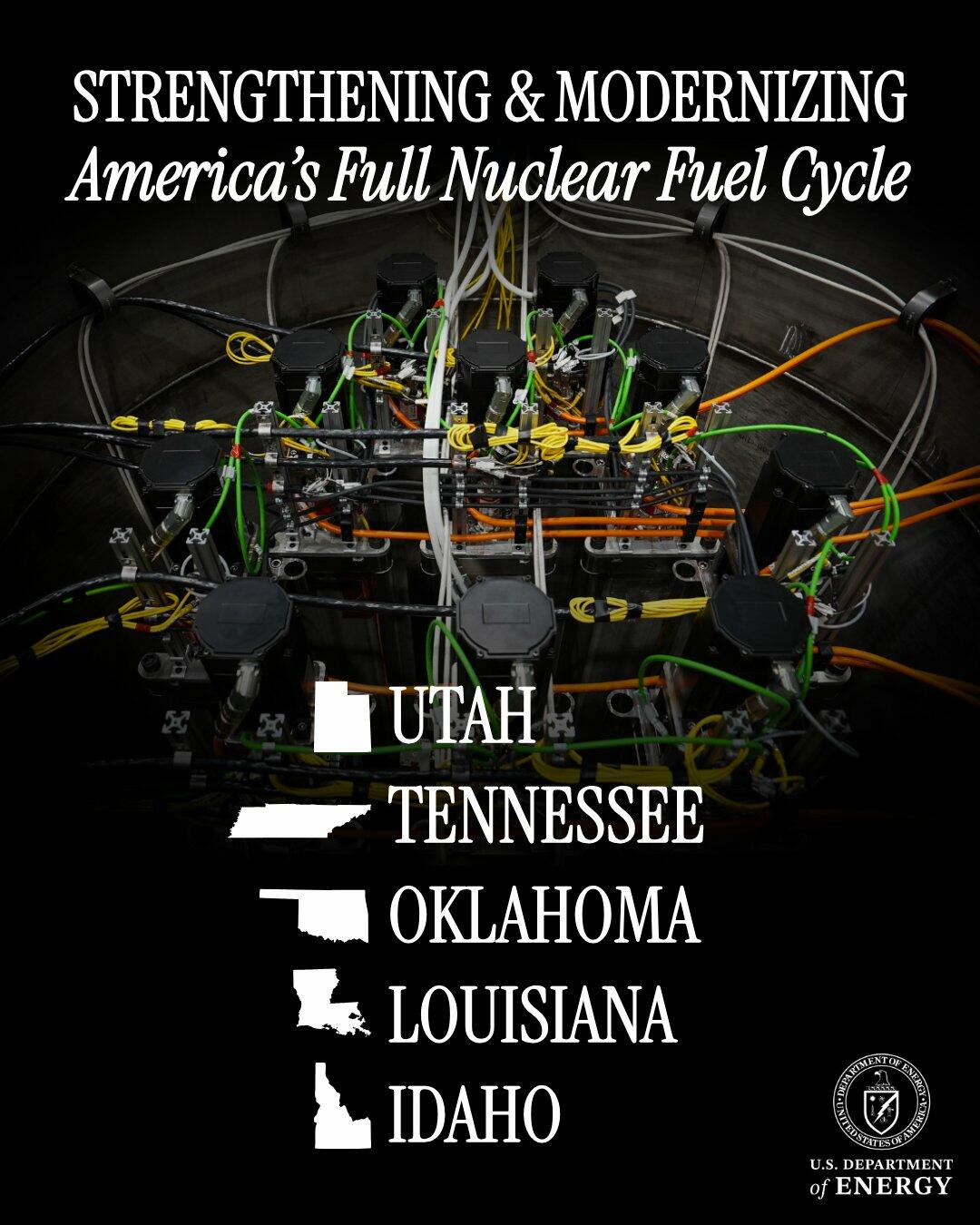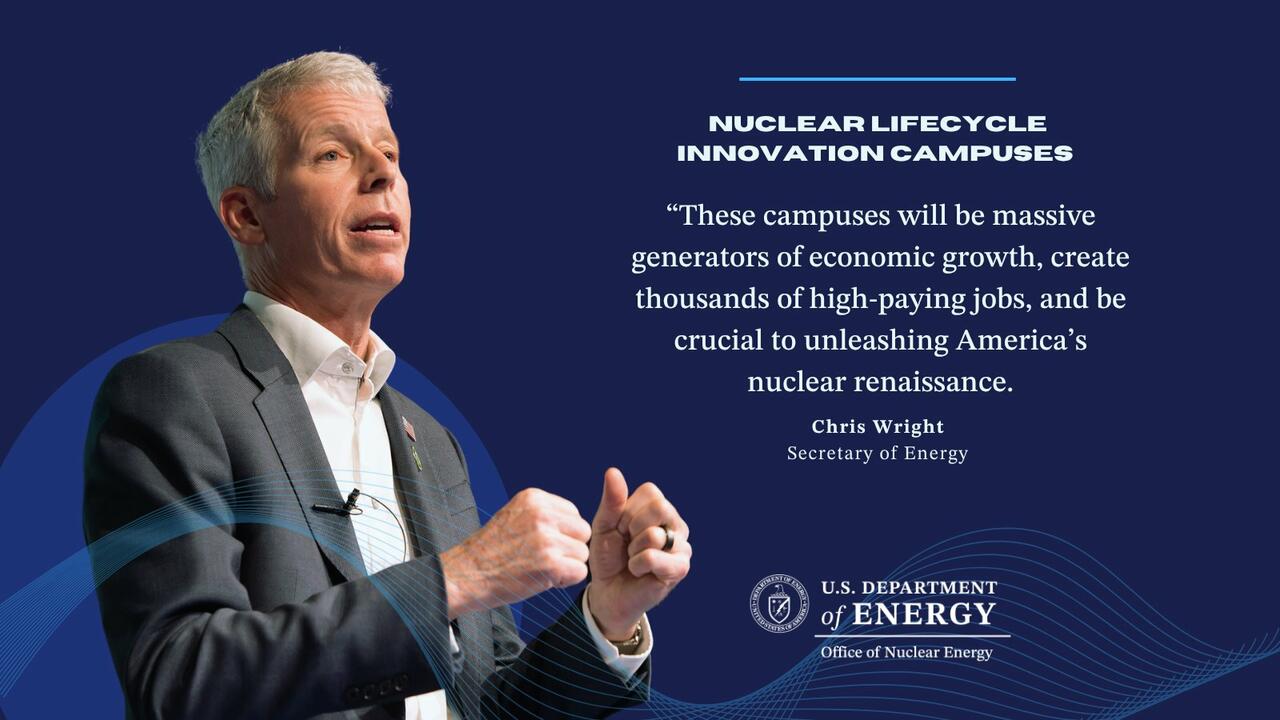
The Department of Energy has selected Utah, Tennessee, Oklahoma, Louisiana, and Idaho as the first five potential hosts for Nuclear Lifecycle Innovation Campuses (NLICs), advancing an effort that forced states to decide whether they support the entire nuclear industry or merely the convenient parts.
Energy Secretary Chris Wright signed Memorandums of Understanding with the five states after the DOE reviewed 28 applications from 26 states. The agreements allow the federal government and the states to continue exploring potential campuses.
The potential prize is substantial, with NLICs potentially attracting up to $50 billion in capital investment, generating almost $10 billion in state and local tax revenue and creating 25,000 jobs each.
These would not simply be reactor parks. The campuses are intended to accommodate multiple parts of the nuclear fuel cycle, including uranium enrichment, fuel fabrication, reprocessing or recycling of used nuclear fuel, and the final disposition of material that cannot be reused.
Depending on the state and location, a campus could also include advanced reactors, power generation, manufacturing facilities, and co-located data centers.
The DOE is offering states the opportunity to build entire nuclear industrial ecosystems, rather than collecting federal reactor grants while expecting somebody else to deal