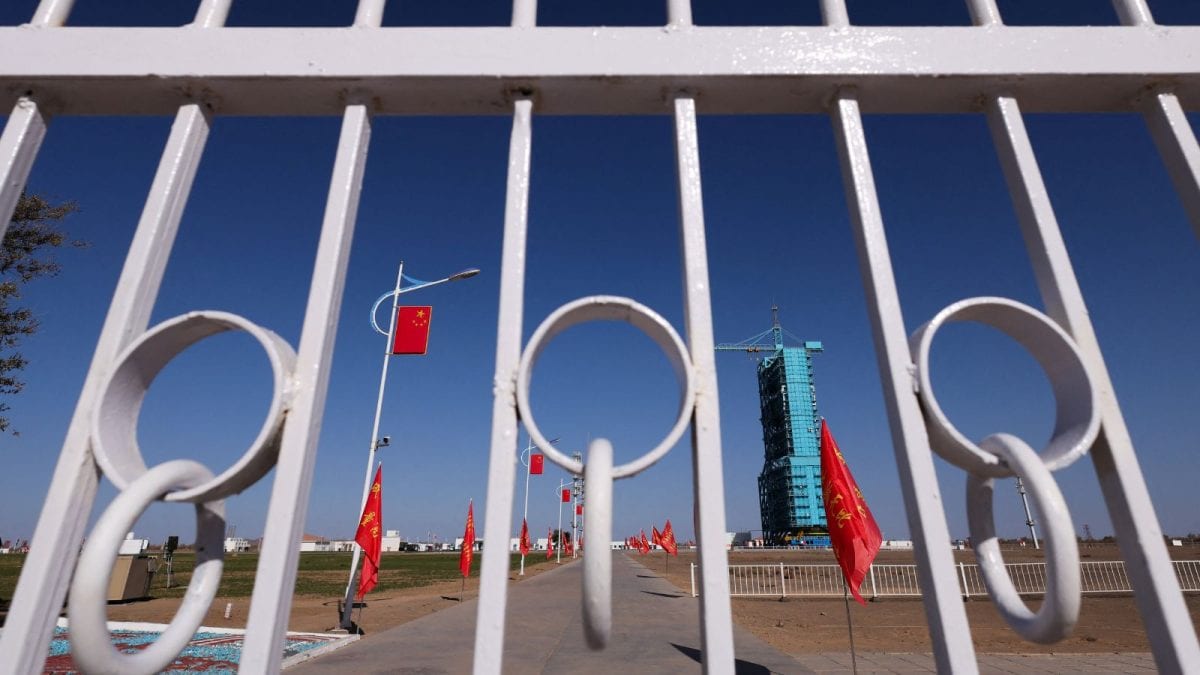
In the early hours of February 7, a Long March-2F carrier rocket ascended from China’s Jiuquan Satellite Launch Centre, carrying a payload that remains one of the most closely guarded secrets in modern aerospace.
This is not the first but the fourth time since 2020 that China has deployed its experimental reusable spacecraft, known as Shenlong meaning the “Divine Dragon".
But no one really knows what it is doing up there, leaving experts confused and in search of answers to decipher its true purpose. It is very much like China to be secretive, which was once again confirmed by state news agencyXinhua, and it did not provide any specifics of the mission.
The highly classified Shenlong programme, however, represents a significant leap in China’s orbital capabilities.
The Chinese government’s public stance on the Shenlong programme is what observers called “vague and anodyne" language.
According to official reports, the mission is intended to carry out “technological verification", providing essential “technical support for the peaceful use of space". The primary objective, as perXinhua, is to “pave the way for more convenient and affordable round-trip methods" for space travel in the future.
From a purely economic perspective, the development of reusable spacecraft is a logical step for any major space power. By creating a vehicle capable of returning to Earth and flying again, China aims to significantly increase the frequency of missions while lowering the per-mission costs.
But Beijing has virtually disclosed nothing about the craft’s technical capabilities, its internal design, or the nature of its payloads.
The Shenlong’s flight history reveals a programme that has rapidly matured since its inception. Its first mission in September 2020 was a brief two-day proof-of-concept.
Subsequent flights have demonstrated remarkable endurance. A second spacecraft launched in August 2022 remained in orbit for 276 days before returning in May 2023.
Source: World News in news18.com, World Latest News, World News
