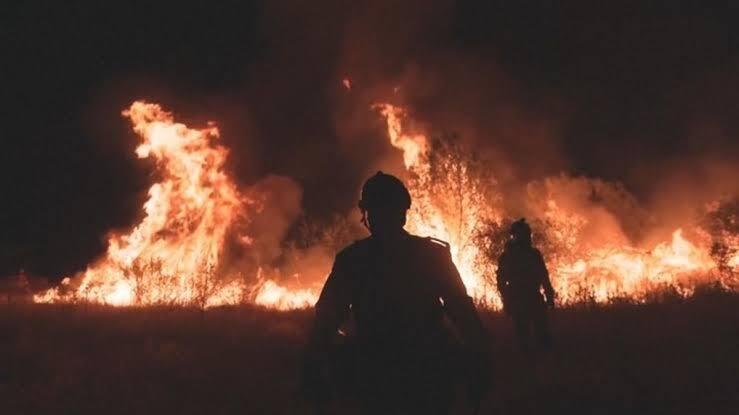
Europe’s wildfire crisis has also exposed the failure of public spending rhetoric unsupported by effective land and forest management. EU governments spent 40.6 billion euros on fire protection services in 2023. In 2022, the total expenditure stood at EUR 37.4 billion. The European Court of Auditors discovered that spending oversight was incomplete, result monitoring was weak, and there was no assurance that the most impactful actions received financing. At the same time, the average annual burnt area in the EU rose to 527,000 hectares in 2021-2024, up sharply from 268,000 hectares in 2006-2010, showing that more money has not guaranteed better outcomes.
European Commission policy documents acknowledge that sustainable forest management, vegetation thinning, firebreaks, access roads, buffer zones, mixed grazing, and prescribed burning are essential to reduce wildfire risk.
Therefore, the worsening wildfire record is not only a climate story but also a policy failure in land management, prevention design, and execution.
This is just another example of how big government does not mean better services. The European Union spends more and gets worse results. What do governments say? Of course, they need more revenue.
Net zero is proving to be a failure wherever it is implemented. From 1996 to 2024, Europe, the United Kingdom, and Canada cut CO₂ and greenhouse gas emissions, but most of the reduction came from economic stagnation and deindustrialization, higher