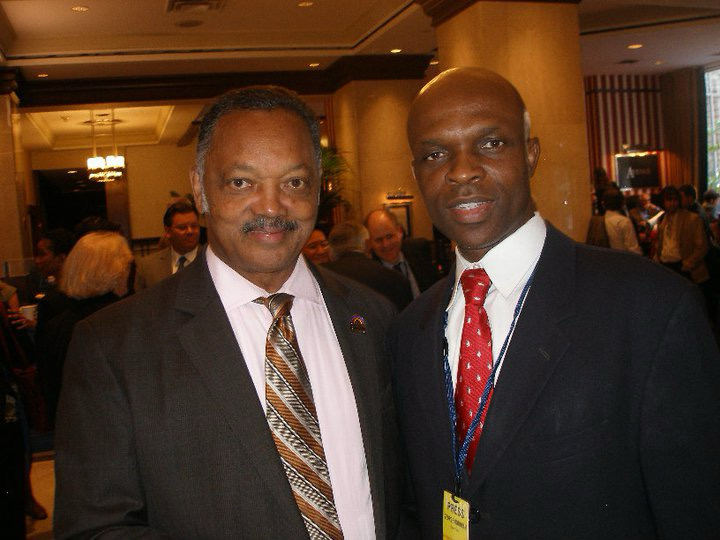
An Adelphi University professor recalled how Rev. Jesse Jackson, the civil rights leader who died Feb. 17 at the age 0f 84, inspired her to hope and be courageous.
Roi Daconto, a Ph.D and professor in Adelphi University’s Center for African, Black and Caribbean Studies, said she met Jackson about 30 years ago. He was engaged in a lifetime of civil rights activism, political organization and outspoken protest against racial and economic injustice.
Jackson founded the Rainbow Coalition, now called Rainbow PUSH Coalition, a multi-racial, multi-issue organization for social change. Coalition leadership issued a statement following his death that documented his work alongside Martin Luther King Jr. during the civil rights movement.
“Rev. Jackson remained steadfast in his mission to pave the way for the next generation of freedom fighters,”the statementsaid. “[His] fearless leadership brought attention to issues of racial discrimination, economic and gender inequality, social injustice, healthcare, education, social injustice, healthcare, education and peace building.”
Jackson was born in 1941 in Greenville, SC,and studied in a segregated school system throughout his early life. He attended the University of Illinois and the Agricultural and Technical College of North Carolina, a historically Black college, to study sociology.
Later, he went to the Chicago Theological Seminary but did not complete his studies, instead leaving to focus on his activism. He became a Baptist minister following the assassination of King.
“Jesse Jackson taught us that hopelessness is one of the most dangerous forces we can face. When people start to believe nothing can change, they stop trying, and that’s when injustice really wins,” Roi Daconto said.
“He was incredibly gracious and kind, and what struck me most was his presence in conversation,” she said. “[He] spoke with such conviction and hope about bringing people together across differences. I was deeply moved that one person could inspire that kind of unity and change.”
Jackson ran for president twice in 1984 and 1988. He focused on expanding voter registration and increasing the political representation of eligible voters nationwide.
“I seek the presidency to serve the nation at a level where I can help restore a moral tone, a redemptive spirit, and a sensitivity to the poor and the dispossessed of this nation,” he said during the campaign. “When we form a great quilt of unity and common ground, we’ll have the power to bring about health care and housing and jobs and education and hope to our nation.”
Source: LI Press
