Depressingly, today marks thestart of the fifth year of the Ukraine War: a battered Ukraine is still standing against a bruised Russia; the US is still aiming for a peace deal so it can pivot to Asia; and Europe --even as it knows it has to look after both Ukraine and its own conventional defenses after decades of having this provided for it-- is still trying to get its act together.
Despite its rhetoric, with a few notable exceptionsEuropean rearmament isn’t happening with appropriate scale and speed.Is Ukraine supposed to hold on until 2035, when EU defense budgets will be at the promised 3.5% of GDP?
EU ministers also justfailed to agree their 20th sanctions package on Russia, and Hungary is blocking the €90bn loan to Ukraine the EU had thrashed out.As such, the EU’s Kallas is reopening the controversial Russian frozen assets option shelved in December, which Belgium refused to go along with it. That’s as the UK Telegraph reports that “Kremlin spies” are acquiring ‘Trojan horse’ networks of sites in residential homes near European military bases that could be used to launch sabotage campaigns.
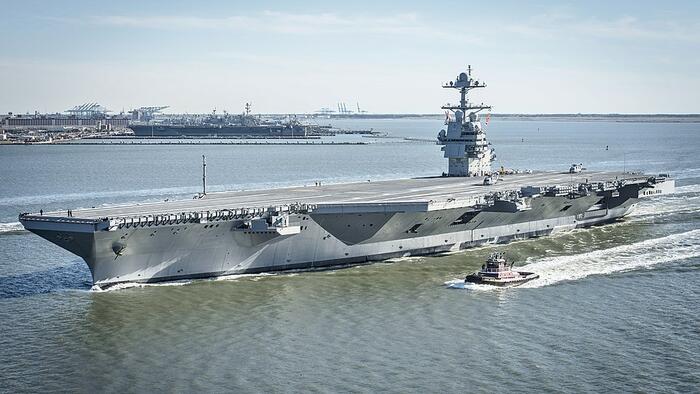
Meanwhile,we appear very close to a new war in the Middle East.Forget Bloomberg headlines and Iranian sabre-rattling. Look to: the USS Ford steaming towards Haifa; US troops removed from bases in Qatar; US staff removed from the embassy in Lebanon; former senior Israeli officials told to return home from abroad immediately; Israel preparing to shutter its embassies; a major underground hospital being opened in Tel Aviv; US Secretary of State Rubio postponing his planned meeting in Israel to next week; Indian PM Modi to speak in the Knesset tomorrow as part of what is claimed will be the announcement of a new extremist coalition (which will also have some EU members); and PM Netanyahu telling the Knesset:“This is not a time to engage in arguing. I am setting that aside. We are in very complex and challenging days. No one knows what tomorrow will bring. We have our eye open and are prepared for every scenario. I have made it clear to the ayatollah regime that if they make an error, perhaps the severest error in their history, and attack Israel, we will respond with force that they cannot imagine…. we must rally the ranks of the nation and stand shoulder to shoulder.”
Importantly, what looms is not a repeat of the Iran-Israel clashes we correctly predicted following October 7: logically,ifit’s to happen, it will be an endgame. The Iranian regime’s response will be appropriate, as seen vs its own people, up to 30,000 of whom may have died while protesting against it. In that respect,if Iran feels it’s going to lose control --which is never has until now-- it will do whatever it can to fan the global flames as high as possible for as long as possible.
In the recent Greenland Crisis, we stressed that in 2026 Europe is the Egypt of 1956’s Suez Crisis and the US is still the US.Iran’s goal will be to try to make the US into the UK and France of 1956 via markets telling Trump to pack up and go homerather than play grand macro strategy in the Middle East.
Of course,that involves energy flows– and it’s Iran’s physical ability to stop them that matters more than the politics or “because markets” of it.Could Hormuz be mined or see suicide attacks on tankers?Could missile attacks hit Saudi oil given reports Iran will have heard that Riyadh now backs a US strike?Could there be terror attacks from sleeper cells across the region and the West against civilians or key infrastructure? None of this is available on Bloomberg, so are you sure?
Look to the cartel violence in Mexico as an example of how one can be relaxing one minute and fleeing from gunfire the next. There, following President Shenbaum’s evacuation to a naval vessel for her own safety, the WSJ reports, ‘Mexico Races to Prevent Cartel War’.
That’s plenty of ‘risk off’ for markets. But there’s far more afoot.
Stocks were rocked by a viral report underlining the devastating impact of AI on the economy as another claimed UK unemployment will rise above its pandemic high within months: you think the UK by-election on Thursday shows a fragmented and polarized polity now? Such views overlook the need for resources to power AI but are worth considering – so is the struggle for those resources, which hardly says we are all going to sit and sing kumbaya together.
Source: ZeroHedge News