The key takeaway heading into the weekend is that maritime chokepoint chaos has spread from the Strait of Hormuz to the Bab el-Mandeb Strait, while fighting across the Black Sea has intensified between Russia and Ukraine. The widening disruptions have prompted several institutional desks this week to warn that a potential squeeze on physical commodity markets could send prices from energy to agricultural goods higher.
"The Middle East conflict has escalated, putting a substantial squeeze back into commodity markets," Paul Bloxham, HSBC's chief economist for Australia, New Zealand and global commodities, wrote in a note on Friday morning.
Bloxham continued, "Traffic through Hormuz has almost stalled again, and the disruption has spread to the Bab el-Mandeb Strait, the key access point for the Red Sea, for Saudi oil going to Asia and Europe-Asia trade through the Suez Canal."
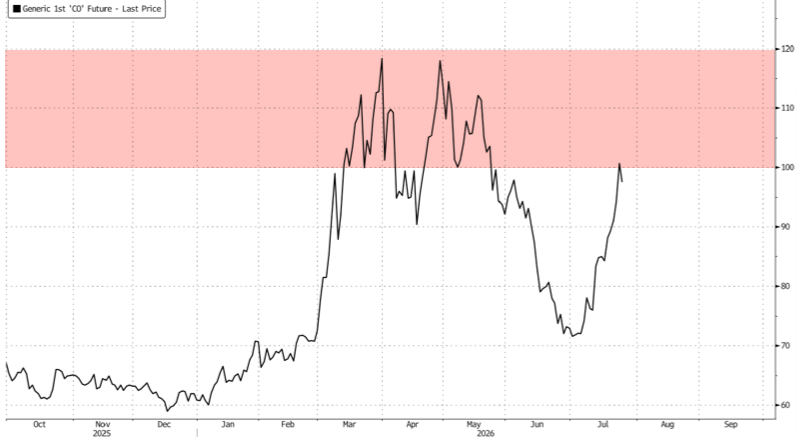
Bloxham warned that with Brent trading above $100 a barrel and strategic petroleum reserves being rapidly depleted worldwide, energy markets face a mounting risk of a "super-squeeze."
His message was blunt: "It's not over yet," adding, "Hormuz, Mandeb, oil at 100 ... it's getting worse. "
Here's more:
The Brent oil price has risen sharply, to over USD100/b recently; European and Asian gas prices are more than 40% m-o-m; refined product prices, like jet fuel and diesel are surging; urea prices are up 13%; and wheat prices are at a three year hi