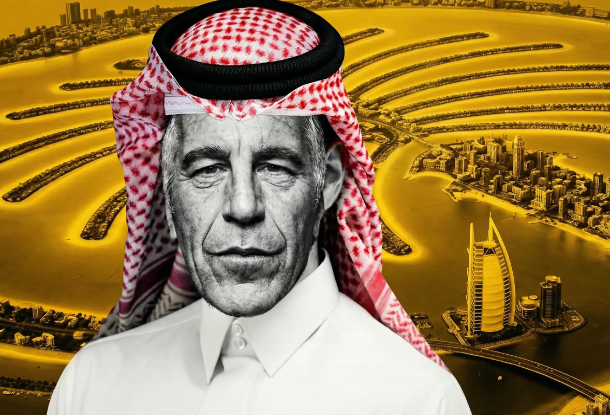
In the last 48 hours, the U.S. Department of Justice has begun dumping what officials say amounts to more than three million pages of material tied to Jeffrey Epstein—an archive so vast it includes thousands of videos and hundreds of thousands of images. The tranche is only a fraction of what exists. Officials acknowledge that millions of additional documents remain under review, meaning the public has seen just a sliver of the government’s total Epstein archive. What is being unloaded into the public domain is not just evidence of private depravity; it is an inadvertent blueprint of how power really works when no one is supposed to be watching, an industrial‑scale influence machine whose files casually braid together billionaires, cabinet‑level officials, and strategic infrastructure from New York to the Horn of Africa. And even now, the public is being allowed to see only what officials deem manageable, with redactions still shielding some of the most sensitive names and millions of pages kept out of sight.
Hidden within those documents, leaks, screenshots, and email excerpts now circulating online, are connections that stretch far beyond Manhattan, Palm Beach, or even Paris. They reach deep into the Persian Gulf, into Dubai’s executive suites, and into the personal inboxes of officials in the United Arab Emirates.
These emails offer a unique glimpse behind the opulent shadows of Dubai’s towers, where untraceable billions flow like oil. In that world, a convicted pedophile whispers ministerial appointments to a UAE diplomat while discussing port deals that could move cargo and secrets across continents. According to persistent intelligence‑linked information surrounding his operations, Jeffrey Epstein was not acting alone or merely chasing thrills; he was allegedly operating as a geopolitical asset, cultivating leverage over Gulf elites, with places like Somaliland emerging as potential pawns in a larger strategic game. It is in such an environment that figures like Epstein thrive the best, because their private perversions double as statecraft.
Hind Al Owais and the Epstein Emails That Stain a Nation
Emails unearthed from the DOJ Epstein library reveal troubling facts about Jeffrey Epstein’s exchanges withHind Al Owais, a young, ambitious Emirati woman navigating the opulent halls of UAE diplomacy. With her polished LinkedIn profile and lofty titles, she appears at first glance to be a symbol of progress. As director of the UAE’s Permanent Committee for Human Rights and a UN adviser since 2015, she has publicly championed women’s empowerment, declaring it both a moral and strategic imperative. On paper, Hind Al Owais is the face of a “modern” UAE: a diplomat, UN adviser, and later a senior human‑rights official fronting panels on women’s rights and regional mechanisms.
IMAGE: Hind Al Owais, UAE’s Permanent Committee for Human Rights and a UN adviser since 2015 (Source: YourStory.com)
In press releases, she speaks of “dignity” and “gender equality” while chairing events under the banner of the Permanent Committee for Human Rights in Abu Dhabi. In the emails, the tone is very different. The same woman who would later open high‑level human‑rights dialogues is trading easy banter with a convicted sex offender, eagerly accepting his career advice, and bringing family into his orbit. The contrast is not just personal hypocrisy; it looks like the textbook use of a polished, progressive female diplomat as a shield for an authoritarian system willing to outsource leverage work to a man like Epstein while selling the world a sanitised narrative at the UN.
The correspondence begins in 2011, during Epstein’s post‑prison resurgence. Al Owais, then a rising figure in UAE foreign affairs, began emailing the financier. Their communications suggest the exchanges were part of a broader effort to compromise UAE elites for Israeli leverage. Numerous emails linked to Hind Al Owais and Jeffrey Epstein from January 2012 are currently the subject of extensive scrutiny, prompting unsettling questions regarding the nature of their relationship. One email (EFTA01844869) states: “Getting one girl ready is difficult enough; two girls, you can certainly call a challenge.” Another conversation is said to mention introducing her sister to Epstein. In one message, Epstein positioned her as a future UAE Minister of Culture, declaring there would be “no competition.” (EFTA00909346)
Source: 21st Century Wire