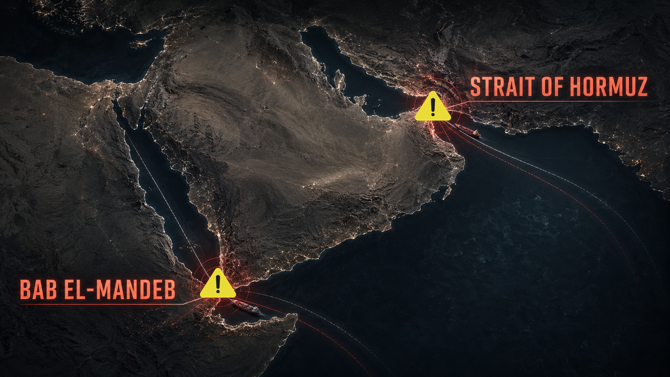
The new troubling development is that maritime chokepoint chaos spread overnight from the Strait of Hormuz to the Bab el-Mandeb Strait, where Iran-backed Houthis targeted two Saudi Arabian tankers. The attacks expose yet another maritime chokepoint and risk further physical market tightening, forcing traders to price a larger war-risk premium into Brent crude futures and pushing the benchmark above $100 a barrel Thursday morning.
Oil headed to Asia generally does not flow through both chokepoints. Persian Gulf exports pass through Hormuz and sail east, while Saudi crude loaded at Yanbu enters the Red Sea and passes south through Bab el-Mandeb.
Asia takes most of Hormuz crude, with China alone absorbing nearly two-fifths. On Saudi Arabia's Red Sea route through Bab el-Mandeb, China recently accounted for more than half of exports.
With both chokepoints disrupted, we want to check back in with China to understand what levers Beijing is pulling to absorb the energy shock - this builds on our three previous notes:
- China's Oil Imports Plummet To Eight-Year Low
- Visualizing China's Role In Stabilizing Oil Markets
- READ MORE AT SOURCE »
Originally reported by ZeroHedge NewsHOW DO YOU SEE THIS STORY?Choose your pill. Your vote is anonymous.0 TOTAL VOTES
« Back to The Culture War