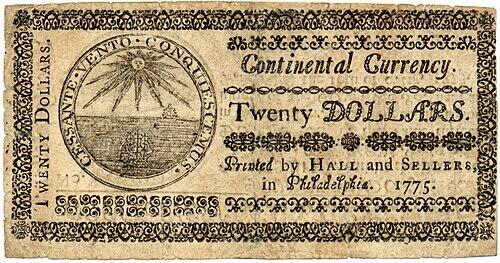
The Continental dollar, born in 1775, was meant to finance the colonies’ fight against Britain—the American Revolution. What it actually financed was a masterclass in how quickly a currency can evaporate when it has no anchor, no credible backing, and no one willing to stop the printing presses. Hundreds of millions of Continental notes were issued with nothing but the promise of future redemption in gold or silver—which the colonies did not possess in sufficient quantity.
As wartime expenses mounted and the conflict dragged on, the colonies’ solution was a time-honored tactic. Just dig yourself a deeper financial hole by printing more currency. When confidence in the Continental buck inevitably collapsed, merchants demanded ever-larger stacks of paper for the same goods.
By 1781, a barrel of flour that once cost a few Continental dollars cost hundreds or thousands. The exchange rate against silver reached the point where it took five hundred to a thousand Continentals to buy a single hard dollar (meaning a silver or metal coin). Some states saw the writing on the wall and simply stopped accepting the notes altogether.
The British, who had plenty of practice in meddling in colonial internal affairs, helped the debasement process along. They knew that counterfeiting Continentals on an industrial scale was cheaper than fighting military battles, and more&nb