Authored by Jeffrey A. Tucker via The Epoch Times(emphasis ours),
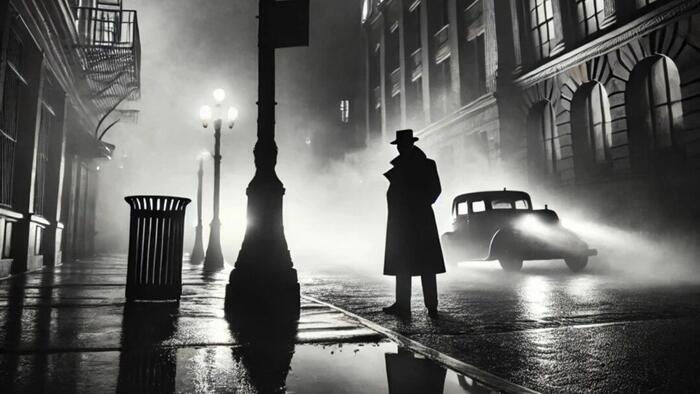
If you watch any movie from the 1940s in thefilm noirgenre, you will see a recurring theme. Someone does something bad but runs away to another state. He might put on a disguise. People try to find him but cannot. He checks in and out of hotels under an assumed name.The heroic detective works to put together clues to connect the dots.
So on it goes in many variations of this theme, all of which turn on technological limitations. The police did not have the data. Communications technology was limited to phones attached to walls. There was no national database of anything, no permanent records except paper with fading ink in deep storage.
Nearly every drama turns on this point.A man courts a beautiful woman of noble lineage only to find out later that she is really a tramp on the make. A woman loves a man who she thinks is a fine gentleman only to discover later that he is an indebted rake. The priest is actually a mobster, a mobster is really a policeman, a shopkeeper is really a spy, and so on.
It’s all about information asymmetry. A vast gulf separates what is known by the players who are making decisions based on knowledge flows.Trickery is easy, deception is not easily discovered, duplicity is rewarded, and all-around sneakiness becomes the desiderata of social functioning.This dark plot line was especially compelling during and after World War II.
Watching this now, it’s impossible not to notice the difference between then and now. Almost everyone has a huge social media timeline that is open to the public. Artificial intelligence can figure out the most important details about anyone. What was once private is now entirely out in the open. What’s more remarkable still is that this new world without privacy was built entirely with public cooperation.
You watch old movies now and want to yell at the confused cop:Why not just take a look at the suspect’s social media trail?Of course, no such thing existed at the time. Now it does, which certainly makes law enforcement easier. That’s good. On the other hand, there is no longer much chance for anyone to maintain any privacy at all. That’s bad.
It’s much worse than that, as you know. Your every mouse click and phone scroll is recorded on databases that grow ever larger in size. These are sold and sold again, to other companies and also to governments. There is no limit on this. Your life has become your data, and your data belong to everyone. It’s the panopticon courtesy of technological innovation without guardrails.
Years ago, when email first came along, I intuited that there was nothing private about it ever.Anyone can forward anything to anyone. Storage allows something you sent a decade ago to resurface and be posted in public. Everything you say might as well be on a billboard on the interstate highway. This is just the nature of the medium.
Sadly, it took most people about 10 years to figure this out. What applies to email also applies to chats and groups. Screenshots enable anyone to share anything and everything you have ever said.Only recently have some options appeared that block screenshots, but I’m sure there is some way around that.
Source: ZeroHedge News