Prime Minister Modi secured another major uranium supply line. During his visit to Australia this month, the two sides finalized the administrative arrangements needed to move Australian uranium to India under the previous 2014 nuclear cooperation agreement. The fuel must stay under IAEA safeguards for exclusively peaceful use.
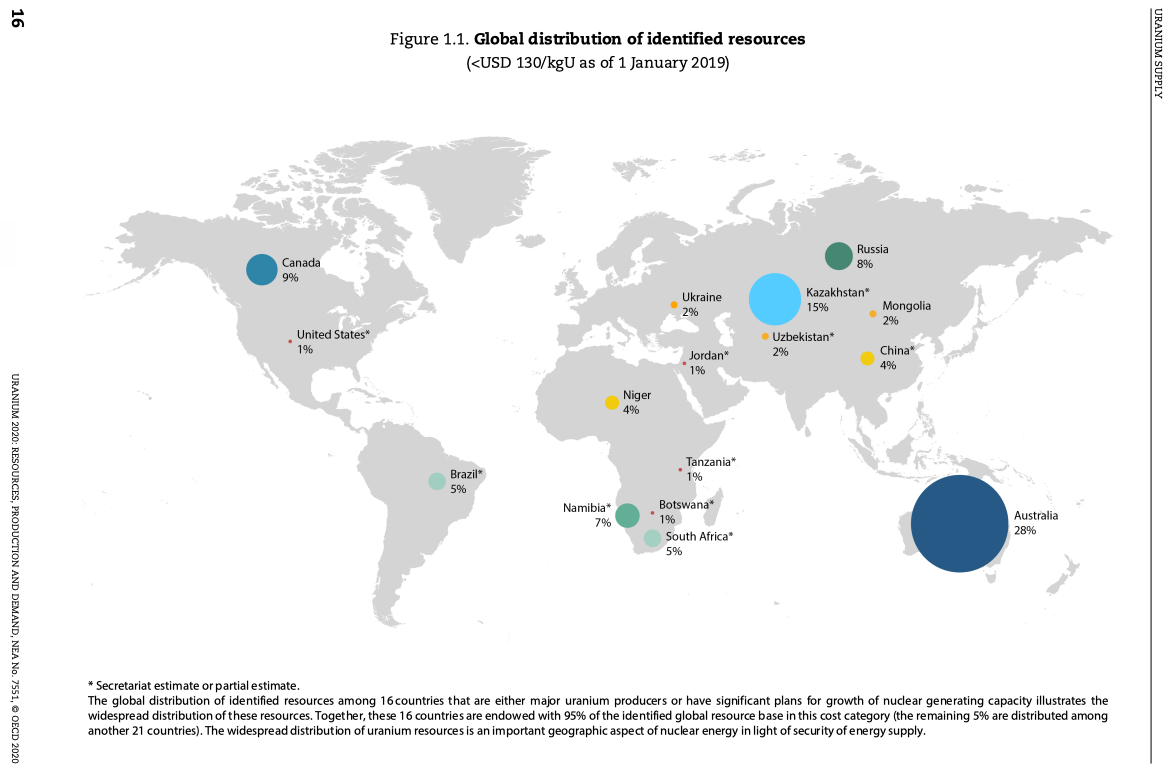
Australia holds roughly 28% of global uranium reserves. New Delhi has eyed those reserves for years, and now the yellowcake spigot can open.
This follows the March deal with Canada's Cameco. That contract covers nearly 22 million pounds of U3O8 from 2027 through 2035 at market-related pricing, worth around C$2.6 billion.
India already buys from Russia and Uzbekistan, and holds some domestic production. The message is consistent: a country targeting 100 GW of nuclear capacity by 2047 cannot rely on thin indigenous resources alone.
Current operable capacity sits near 8 GW. The gap requires sustained annual additions measured in gigawatts, not megawatts.
Cumulative net deficits keep expanding as reactor builds in China and Russia outpace primary supply response. Goldman models have only recently started taking into account the significant expansion in