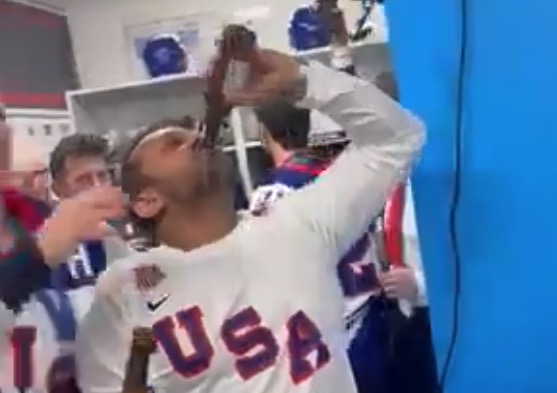
Kash Patel,the director of the FBI, using a government plane toattenda hockey game overseas. Locker room beer chugging. The sitting president onspeakerphone. Reports of a girlfriend traveling with a security footprint. Banners bearing PresidentDonald Trump’simagehanging outside the Justice Department building. All while high-profile cases linger, victims seek justice,cartel violenceescalates, and a wannabe assassin was killed by authorities at Mar-a-Lago.
Each episode, taken individually, comes with an explanation. Senior officials travel on government aircraft. Presidents congratulate championship teams. Security details are often broader than the public understands. Buildings reflect the priorities of the administration in power. None of this, standing alone, establishes misconduct.
But the issue isn’t just a few isolated moments; it’s the pattern. Leaders at this level are judged over time, and increasingly by the images they generate. When those images lean toward spectacle, self-serving obsequiousness, and fame, the burden falls on the institution to convince a skeptical public that nothing fundamental has changed.
Patel appears to be operating inside the same attention-driven culture that has reshaped much of American public life — where social media algorithms reward visibility as currency, proximity to power is the message, and presence substitutes for restraint. Every institution that has surrendered to that logic has paid for it in credibility. The bureau was built to resist it, and its authority depends on that resistance.
“Serious” in this context means understanding that the office carries symbolic weight and that perception shapes how power is received. The FBI director does not operate as a personality. And yet Patel seems more committed to acting like a wannabe Instagram influencer than the nation’s top cop.
The FBI’s credibility has been fragile for decades. Hoover’s excesses forced reforms meant to insulate investigative power from politics. Watergate reinforced the need for distance from the White House. The post-9/11 expansion of surveillance authority deepened both capability and suspicion. The Comey years and January 6 fractured public confidence across party lines. The bureau now functions in a climate where half the country is predisposed to question its motives.
That reality has both perceptual and operational consequences. When the FBI seeks cooperation from a reluctant witness in a politically sensitive probe, its reputation matters. When prosecutors present a case to a jury involving a powerful figure, perceived neutrality influences deliberations. When the bureau asks Congress to renew surveillance authorities, lawmakers weigh their trust in those exercising them.
A leadership style that resembles influencer-era visibility rather than institutional restraint undermines its standing. The authority of the office depends on maintaining distance from the political energy of the moment, not moving comfortably within it, seeking likes and clicks.
Social media-fueled images and videos feed directly into the erosion of that confidence. Visual signals of proximity to presidential power serve as reference points in arguments about independence. Public perception informs congressional oversight, courtroom strategy, and internal morale.
The more unsettling reading is that this performative clout-chasing is entirely by design.
Source: Drudge Report
