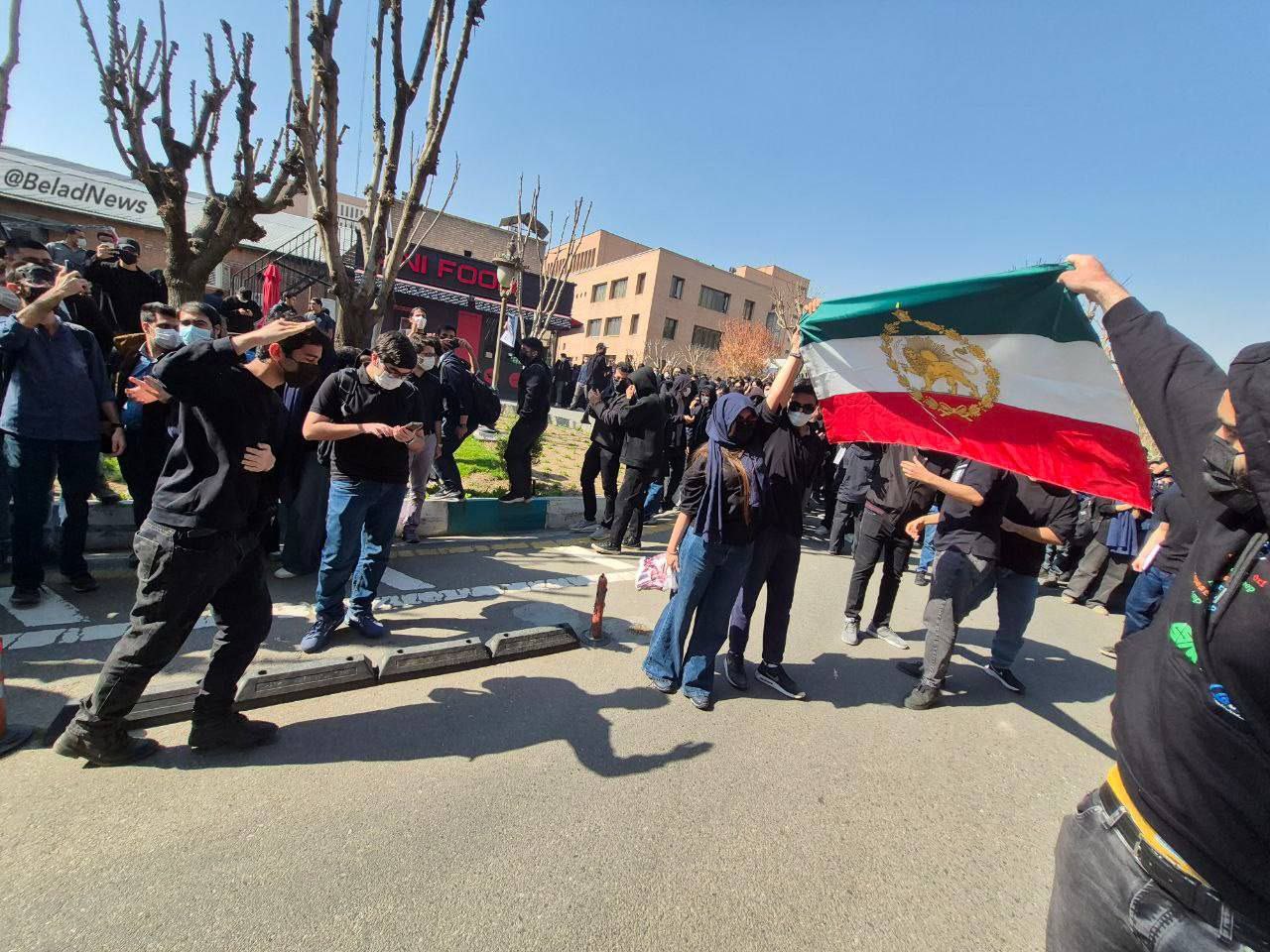
These protests are no longer just about campus issues. They are unfolding at a moment of serious geopolitical strain. Domestic anger now sits alongside high-stakes diplomacy and military pressure.
Asuniversities reopened, students quickly returned to the streets. Demonstrations were reported at the University of Tehran, Sharif University of Technology, and Ferdowsi University of Mashhad.
In Tehran and Mashhad, students gathered in courtyards and outside faculty buildings. Videos show them chanting against the leadership. Some honoured classmates were killed during earlier unrest. The mood was tense but organised.
These were not isolated incidents. Reports describe coordinated protests across several campuses. Students appear determined to keep the pressure on.
The response was swift. Units linked to the Islamic Revolutionary Guard Corps were deployed in some areas.Tear gas was used to disperse crowds. Witness accounts and shared footage also described gunfire near certain university sites.
Clashes intensified when protests moved beyond campus gates. In parts of Tehran, confrontations spilled into nearby streets. Students were seen openly criticising the country's leadership. In some cases, images of senior officials were torn down or trampled.
State media offered a different version of events. It broadcast footage, it said showed pro-government students being attacked. The gap between official reporting and videos shared online remains stark.
Students have openly criticised Ali Khamenei, Iran's Supreme Leader. Chants against senior officials were heard on several campuses. Protesters vowed to continue despite the heavy security presence.
University activism has deep roots in Iran. Campuses have often been at the forefront of political movements. This latest wave follows that pattern. But the national context is especially sensitive.
The protests are unfolding as Iran engages in nuclear discussions with the United States in Geneva. Diplomatic talks continue. At the same time, US officials have publicly discussed military options in the region.
Source: International Business Times UK
