In one of the most significant setbacks to organised crime in Mexico in recent years, drug lord Nemesio Ruben Oseguera Cervantes, better known as “El Mencho", was wounded in a Mexican military operation and died while being flown to Mexico City on Sunday.
Oseguera, the 59-year-old leader of the Jalisco New Generation Cartel, had a $15 million US bounty on his head. According to AFP, he is one of the biggest Mexican drug lords to be taken down since the capture of the founders of the Sinaloa cartel, Joaquin “El Chapo" Guzman and Ismael Zambada. Both are now serving time in the United States.
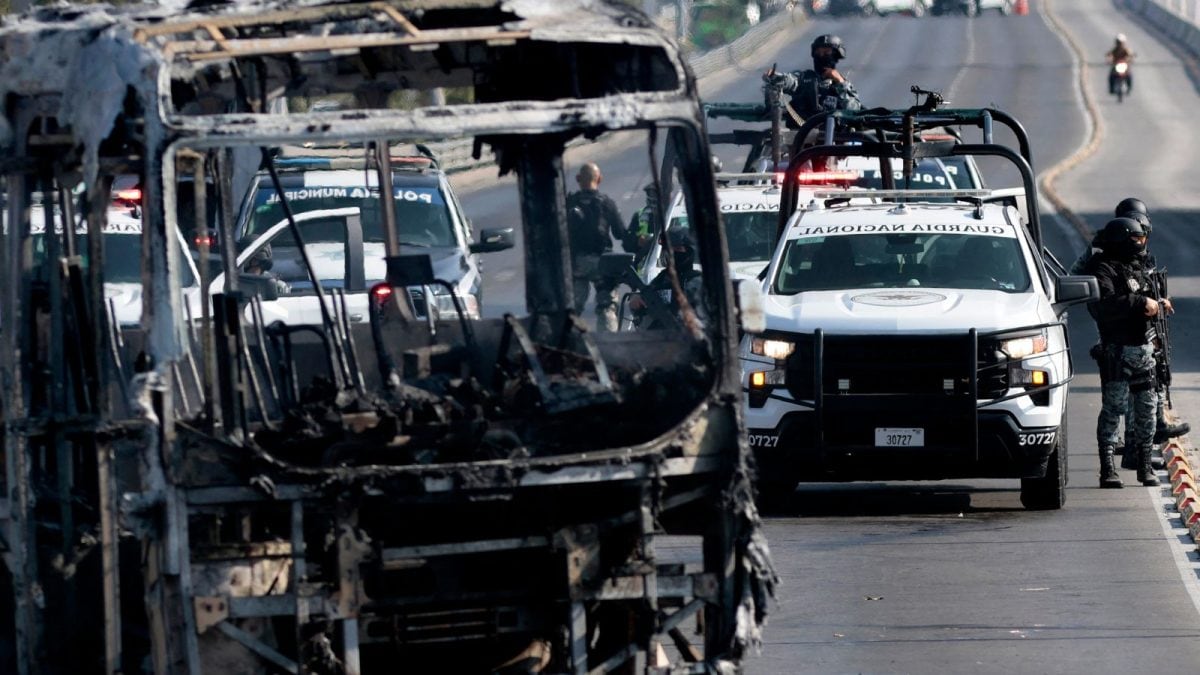
The top cartel boss’s killing has triggered a wave of violence across the country, including road blocks and flight cancellations. Jalisco’s capital, Guadalajara, was turned into a ghost town on Sunday night as civilians hunkered down. School was cancelled in several states on Monday and authorities in Jalisco, Michoacan and Guanajuato reported at least 14 dead, including seven National Guard troops. Videos circulating on social media showed smoke billowing over the tourist city of Puerto Vallarta in Jalisco, and people sprinting through the airport of the state’s capital in panic.
The Jalisco New Generation Cartel is one of the most powerful and fastest growing criminal organisations in Mexico and began operating around 2009. In February 2025, the Trump administration designated it as a foreign terrorist organisation.
AP reported that the Jalisco cartel has been one of the most aggressive in its attacks on the military, including on helicopters, and is a pioneer in launching explosives from drones and installing mines. In 2020, it carried out an assassination attempt with grenades and high-powered rifles in the heart of Mexico City against the then head of the capital’s police force and now federal security secretary. It is one of the main suppliers of cocaine to the US market and, like the Sinaloa cartel, earns billions from the production of fentanyl and methamphetamines.
El Mencho’s death and the immediate retaliatory violence shows both the persistence of cartel power and the volatile interplay between state efforts to enforce the law and decades of gang-related conflict.
It also brings the spotlight on the historical roots and evolution of gang violence in Mexico, from earlier cartel wars and mass atrocities to the modern era of decentralised, militarised criminal organisations and their impact on society and governance.
Much before modern-day cartels, northern Mexico had smuggling networks tied to the Mexican Revolution (1910-1920) where weapons, liquor, and contraband flowed across a porous border. During the US Prohibition (1920-1933), alcohol smuggling created organised criminal routes. From alcohol, the trade moved to opium and marijuana from the 1940s-60s as cultivation in states like Sinaloa grew under tacit protection from corrupt officials.
This period successfully established smuggling routes, corrupt political/criminal connections, and a culture of cross-border smuggling.
The routes of cocaine smuggling changed to Mexico because of the crackdowns by the United States, which affected the Colombian routes via the Caribbean.
Source: World News in news18.com, World Latest News, World News
