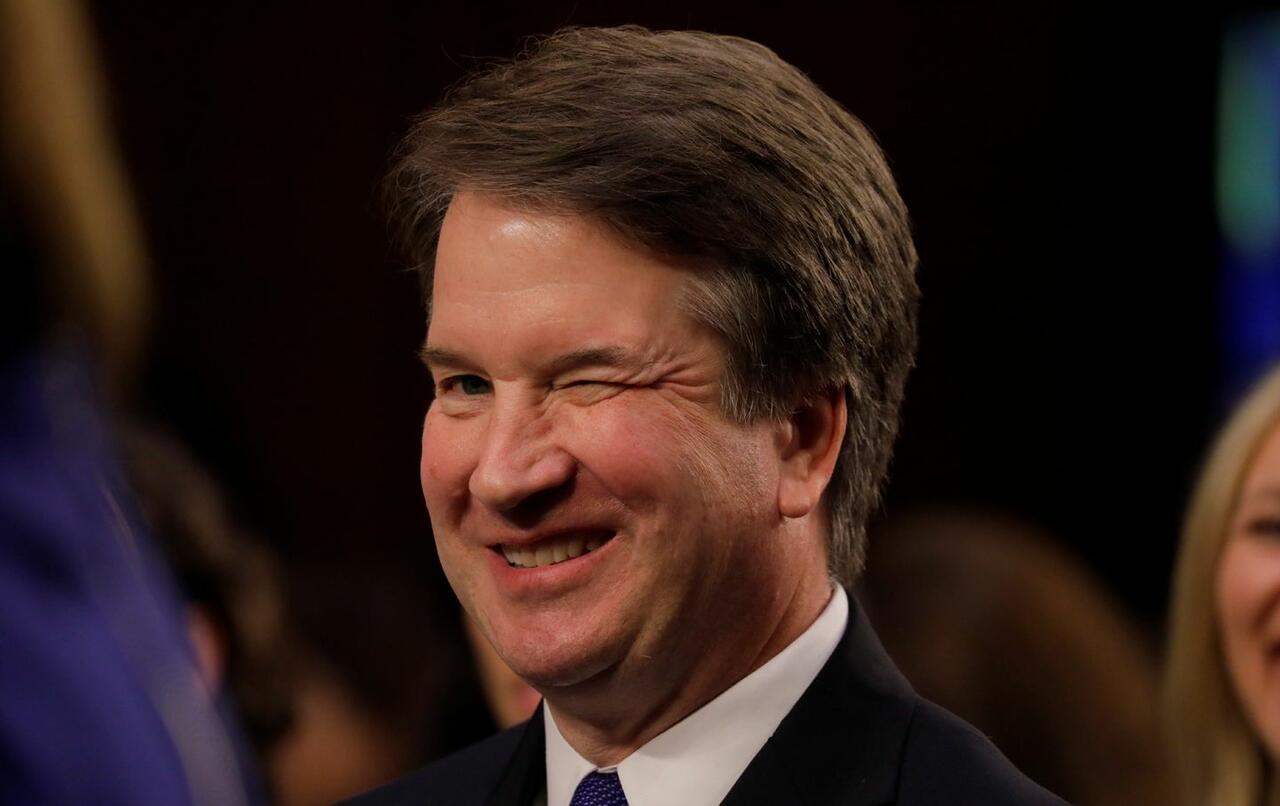
Last month, the Supreme Court struck down Trump's executive order attempting to end birthright citizenship. Justice Kavanaugh joined that majority in striking down the order, but he also filed a separate partial dissent, and his reasoning did Republicans a favor.
Chief Justice John Roberts wrote for the majority in Trump v. Barbara, a 5-4 decision joined by Justices Kagan, Sotomayor, Barrett, and Jackson, and leaned on the 1898 case U.S. v. Wong Kim Ark to hold that the 14th Amendment guarantees citizenship to "all children born in the United States and subject to its power."
Kavanaugh concluded Trump's order conflicted with an existing federal statute, not the Constitution or the 14th Amendment specifically. His complaint was narrower. Trump's order collided with a law Congress passed in the spirit of an amendment conservatives say was written mainly to secure citizenship for freed slaves and their children. Kavanaugh's fix was simple. Congress could rewrite the statute.
The Court today holds that the Order violates the Fourteenth Amendment to the Constitution. I respectfully disagree with the Court's constitutional holding. In my view, the Executive Order does not violate the Fourteenth Amendment. But the Order does contravene a federal statute, 8 U. S. C. §1401(a). Congress could - consistent with the Fourteenth Amendment - amend §1401(a) or otherwise enact new legislation establishing exceptions to birthright citizenship for children born to foreign citizens unlawfully or temporarily in the country. But Co