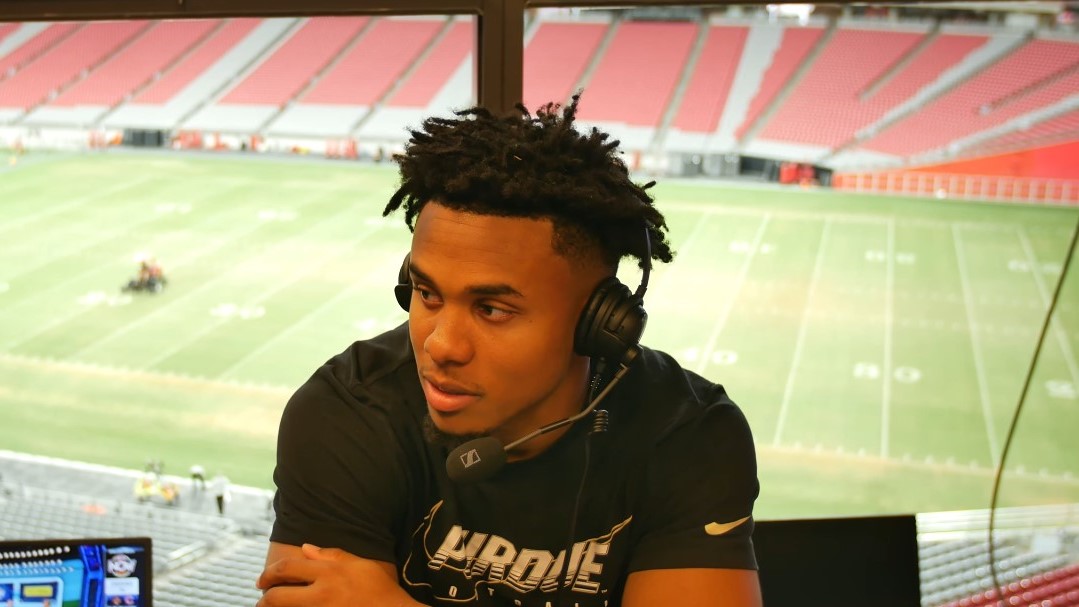
The death of Rondale Moore has forced a painful reckoning between sporting promise, contract uncertainty, and the fragile human story behind NFL net worth headlines. The 25-year-old wide receiver, once hailed as one of college football's most electrifying talents, died on Saturday from a self-inflicted gunshot wound, with New Albany Police Chief Todd Bailey confirming his body was discovered in a garage at his hometown in Indiana, and an autopsy was scheduled the following day.
Moore's death hasstunnedthe NFL community, particularly as the receiver was attempting to rebuild his career following repeated injury setbacks and fresh contract uncertainty. As reported by CBS Sports, the news broke as he was still trying to turn short flashes of brilliance into the long-term stability that often separates journeymen players from established stars. The Minnesota Vikings released a statement saying they were 'deeply saddened' and confirmed that counselling and emotional support resources would be made available to players, coaches, and staff.
The Purdue Football family is deeply saddened by the news of Rondale Moore’s tragic passing. An All-American with an infectious smile, Rondale was a joy on and off the field. Someone who left this world too soon, Rondale will be remembered as a legendary Boilermaker.Our…pic.twitter.com/ONh5YI1aTR
Moore's rise began at Purdue, where he became one of the most dynamic players in American college football. As a freshman in 2018, he amassed 1,258 receiving yards, 213 rushing yards, and scored 14 total touchdowns. He was named a consensus All-American, won the Paul Warfield Trophy, and was recognised as CBS Sports Freshman of the Year.
Yet injuries disrupted that trajectory quickly. Over his sophomore and junior seasons, Moore managed just seven games, limiting his momentum ahead of the NFL Draft. For many scouts, the question shifted from talent to durability — not whether he could make plays, but whether his body would allow him to do it consistently.
Selected 49th overall in the 2021 NFL Draft by the Arizona Cardinals, Moore entered the league with high expectations and a rookie deal that offered structure but not lifelong security. He spent three seasons with the Cardinals before moving to the Atlanta Falcons, where a preseason knee injury ruled him out of the entire 2024 campaign.
In 2025, Moore signed with the Minnesota Vikings in what many saw as a fresh opportunity to reset his value. Instead, he suffered a season-ending knee injury during the first preseason game. For a player still in his mid-twenties, each setback shifted the narrative from breakout star to uncertain future, with contract instability shaping not only career prospects but personal outlook.
Public discussion following Moore's death has turned, inevitably, to his finances. NFL contracts often run into millions, but they rarely tell the full story. Rookie deals, endorsement potential, and team moves create the appearance of financial certainty, yet short careers, injury clauses, and performance-related structures mean long-term security is never guaranteed.
Moore's net worth reflected a promising but still developing career. He had not yet secured the kind of second contract that cements generational wealth for many NFL stars, and his earnings would have been spread across taxes, agent fees, and the cost of maintaining an elite training regime. Financial success, as his story makes clear, does not insulate athletes from emotional or psychological strain.
Moore was born and raised in New Albany, Indiana, and tributes have poured in from former teammates, fans, and college supporters. Many recall his speed on the field and his character off it in equal measure, describing a player who stayed connected to his home community even as he moved through the NFL.
Source: International Business Times UK