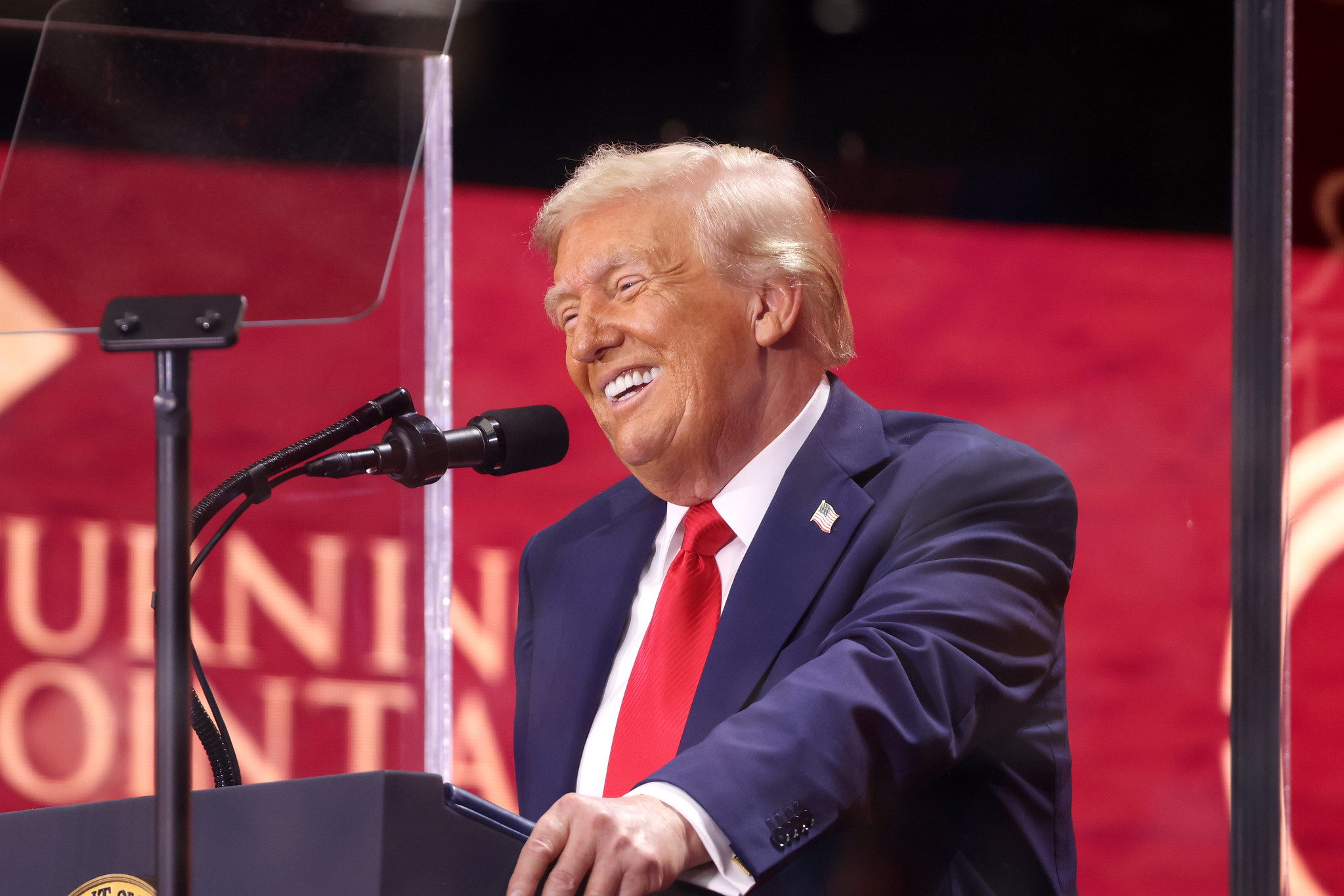
A mysterious caller using a name once deployed by President Donald Trump to shape media narratives has leapt into the national spotlight, reigniting debate about executive power and public discourse. In a viral telephone segment on C‑SPAN, a man identifying himself as John Barron railed against the US Supreme Court's landmark tariff decision, triggering widespread online speculation about motive and identity.
The name struck a familiar chord in American political culture. John Barron was one of several aliases Trump used in the 1980s and 1990s to field media inquiries without attaching his own name, an approach documented in public records and court testimony linking the alias to Trump's communications strategy.
On 22 February 2026, during a live call‑in segment about the Supreme Court ruling on tariffs,C‑SPANhost Greta Brawner put through a caller who identified himself as 'John Barron from Virginia.' In a brief but heated exchange lasting roughly 30 seconds, the caller blasted the court's decision as 'the worst decision you ever have in your life, practically' and criticised leading congressional figures before Brawner cut the line.
The clip spread quickly across social media as users reshared the audio alongside commentary on the caller's choice of name and his cadence. Many highlighted the historical link between the Barron alias and Trump, though there is no public evidence tying the caller directly to the president.
a guy who claimed to be named John Barron and sounded a lot like Trump called into C-SPAN to complain about the Supreme Court's tariff decision and call Hakeem Jeffries "a dope"(John Barron is a pseudonym Trump has used for himself when talking to journalists)pic.twitter.com/UixNjll7NB
The John Barron alias is a well‑known footnote in Trump's media history. In the late twentieth century, he occasionally gave statements to reporters under that name, sometimes presenting Barron as a spokesperson for the Trump Organisation rather than acknowledging that he was speaking in his own voice. Court records from 1990 show Trump acknowledging under oath that he had used the alias in media interactions.
That history has turned the C‑SPAN moment into more than a routine call‑in. Commentators have debated whether the choice of name was a deliberate nod to Trump's past, a satirical flourish, or simply a prank designed to tease audiences familiar with his media playbook.
A former Forbes reporter claims that Donald Trump, before he was president, called him posing as "John Barron," a purported executive with The Trump Organization, speaking on Trump's behalf and lied about his wealth in order to crack the Forbes 400 listhttps://t.co/LkxLLEDpHBpic.twitter.com/7Ds9Wl96Jl
The backdrop to the call was the Supreme Court's 6–3 ruling inLearning Resources, Inc. v. Trump, delivered on 20 February 2026. The majority held that the International Emergency Economic Powers Act (IEEPA), a 1977 law granting presidents authority to regulate commerce during national emergencies, did not authorise the president to impose sweeping import tariffs.
Chief Justice John Roberts, writing for the court, stressed that tariffs are fundamentally a form of taxation and therefore sit with Congress under Article I of the US Constitution. The opinion concluded that IEEPA's text did not clearly delegate that taxing power to the executive branch. The case arose from consolidated challenges by businesses and US states that had already won favourable rulings in lower courts and at the Federal Circuit.
Source: International Business Times UK
