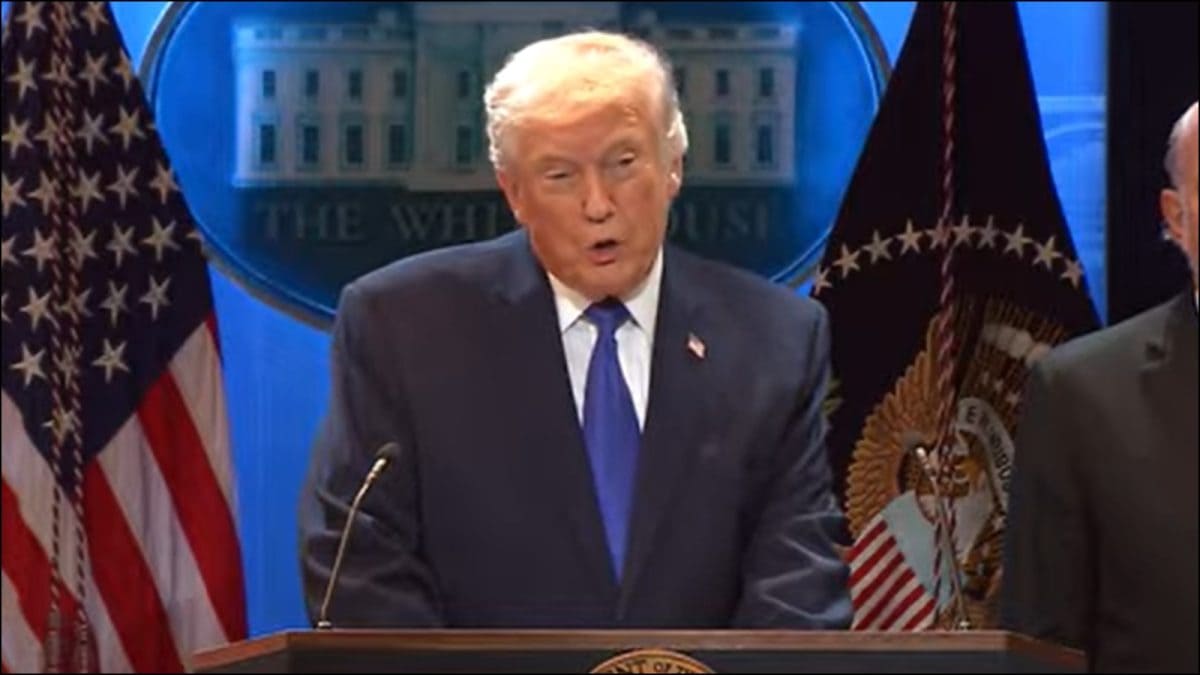
US President Donald Trump was in the middle of a closed-door meeting with governors at the White House when he first learnt that the Supreme Court of the United States had struck down his global tariff programme.
According to a report byThe Wall Street Journal, a trade adviser quietly handed Trump a note during the session in the State Dining Room on Friday. The note informed him that the court had ruled his sweeping tariffs illegal.
“So it’s a loss, then?" Trump asked, according to people in the room. When the adviser confirmed the decision, the president told the governors that he appeared calm on the outside, but was angry inside. He called the ruling as a “disgrace", those present said.
Shortly afterwards, Trump cut short a question-and-answer session and left the meeting, saying he needed to prepare a response.
ALSO READ:Most Americans Unhappy With Trump’s Handling Of Key Issues Including Tariff And Immigration: Poll
Earlier on Friday, the Supreme Court had delivered a 6-3 ruling against the president’s tariff policy. In a decision written by Chief Justice John Roberts, the court said Trump had overstepped his authority by using a 1977 emergency economic powers law to impose broad “reciprocal tariffs". The justices held that the law did not permit such sweeping trade measures.
The ruling marked a rare setback for Trump at a court that has often sided with him since his return to office. It also struck at the centre of his economic agenda, which has reshaped US trade policy over the past year.
In public remarks on Saturday, Trump criticised the justices who ruled against him, calling the decision “extraordinarily anti-American". He also said he wouldraise a temporary tariff on importsfrom 10% to 15%, the highest level allowed under the law.
The move came less than 24 hours after he announced a 10% across-the-board tariff following the court’s decision.
The new levies are based on a separate and largely untested law known as Section 122. It allows tariffs of up to 15% but requires approval from Congress if they are to remain in place beyond 150 days. No president has previously used this provision, and its use could trigger further legal challenges.
Source: World News in news18.com, World Latest News, World News
