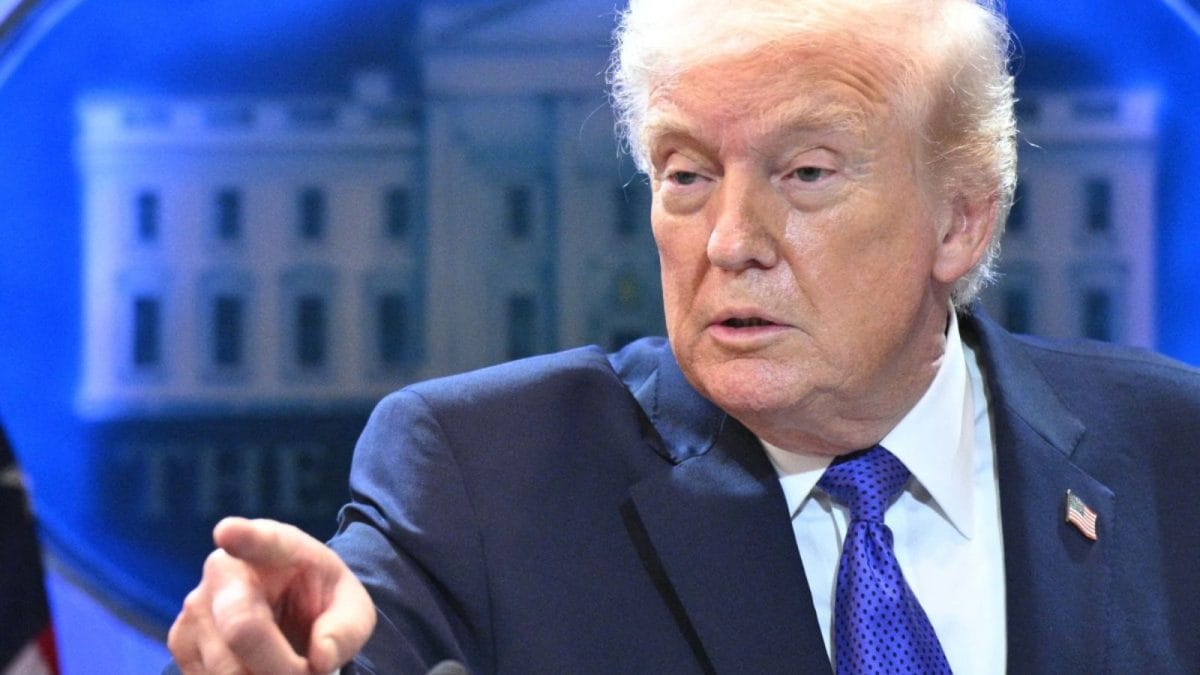
The drama continues as US President Donald Trump escalated his trade offensive by increasing global tariffs to 15 percent, hours after the Supreme Court struck them down as illegal.
Following what he called a “terrible decision" by the US Supreme Court, President Trump signed a proclamation, first on Friday (February 20) for a 10 percent levy only to jack it up to the statutory maximum of 15 percent on Saturday (February 21) via social media.
Trump remained defiant in the face of the SC ruling, claiming that his administration has “great alternatives" that could bring in “more money" and make the United States “a lot stronger". He lashed out at the judiciary, saying he was “ashamed" of the conservative judges who ruled against him and labelling the liberal wing a “disgrace".
Now, his latest move creates a complex shift in the global trade landscape. Many major economies, including India, China, South Korea, and Brazil, are likely to witness their tariffs temporarily lowered to 15 percent from previously higher “reciprocal" levels.
For instance, as per a report published byThe Indian Express, India’s effective incidence of duties, which had reached as high as 50 percent for some goods, is now set to drop to this flat 15 percent rate starting February 24. Conversely, countries such as the United Kingdom, Australia, and Saudi Arabia will face higher tariff rates than before.
While some critical products like pharmaceuticals, electronics, and aerospace goods remain exempt, the US expects trading partners to continue abiding by previous concessions even as their negotiated agreements are superseded by this global levy.
How will Trump’s global tariffs work now and what comes next?
The new 15 per cent global tariff is being implemented under Section 122 of the Trade Act of 1974, a provision intended to address “large and serious" balance of payments deficits. Unlike his previous strategy, this authority is strictly temporary, lasting for only 150 days unless the US Congress votes to extend it. To ensure the tariffs remain durable beyond this five-month window, Trump has ordered the US Trade Representative (USTR) to initiate new investigations under Section 301 into “unfair" trade practices. These investigations, which can take up to a year, are intended to pave the way for more legally “durable" and potentially higher country-specific duties. In the interim, the administration will continue to use Section 232 of the Trade Expansion Act of 1962 to maintain industry-specific taxes on steel and aluminium for national security reasons.
What is the impact of the newest tariffs on India and other countries?
For India, the ruling and subsequent 15 per cent pivot represent a significant strategic recalibration. Previously, Indian imports faced a 25 per cent reciprocal levy, which rose to 50 per cent for products linked to India’s purchase of Russian oil. Under the new flat rate, roughly 55 per cent of India’s exports to the US will be freed from these high reciprocal duties, reverting to standard rates plus the 15 per cent surcharge. China, Mexico, and Canada also see the removal of specific “trafficking tariffs" related to fentanyl, though Mexican and Canadian goods compliant with the USMCA remain largely exempt. However, experts warn that this shift diminishes Trump’s negotiating leverage, as partners may now reconsider or abandon trade deals that were originally negotiated under the threat of the now-illegal IEEPA levies.
Source: World News in news18.com, World Latest News, World News
