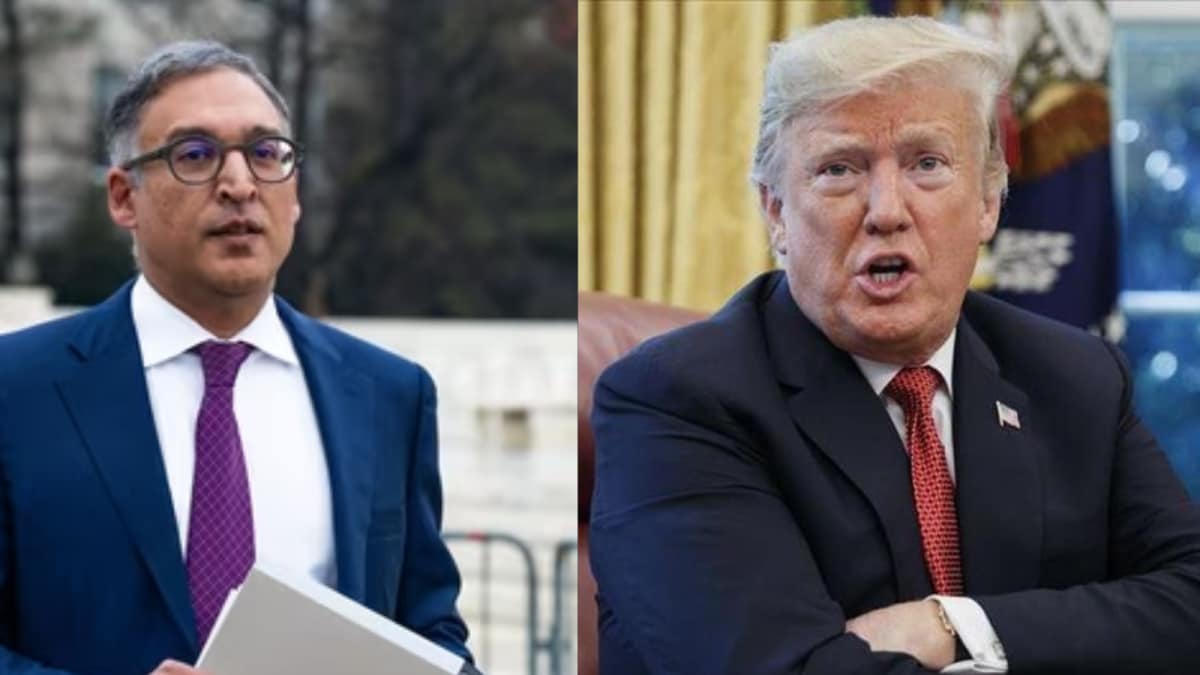
Indian-origin attorney Neal Katyal, who successfully argued against US President Donald Trump’s sweeping tariffs before the Supreme Court, on Sunday (local time) lashed out at Trump over his decision to impose 15% global tariffs, saying that he cannot bypass Congress while taking such measures.
While questioning the President’s reliance on Section 122 of the Trade Act of 1974, he said that Trump’s decision to impose tariffs contradicts the administration’s own earlier position before the Supreme Court of the United States.
He pointed out that the Department of Justice (DOJ) had previously told the Court that Section 122 was not suited for situations involving trade deficits, which are different from balance-of-payments deficits.
“Seems hard for the President to rely on the 15 percent statute (sec 122) when his DOJ in our case told the Court the opposite: Nor does [122] have any obvious application here, where the concerns the President identified in declaring an emergency arise from trade deficits, which are conceptually distinct from balance-of-payments deficits," he said in a post on X.
Seems hard for the President to rely on the 15 percent statute (sec 122) when his DOJ in our case told the Court the opposite: “Nor does [122] have any obvious application here, where the concerns the President identified in declaring an emergency arise from trade deficits, which…— Neal Katyal (@neal_katyal)February 21, 2026
Calling out Trump for his decision to rely on executive orders to impose sweeping global tariffs, Katyal, a former Acting Solicitor General who represented small businesses challenging the tariffs in the top court, also called for the US President to act the ‘American way’.
“If he wants sweeping tariffs, he should do the American thing and go to Congress. If his tariffs are such a good idea, he should have no problem persuading Congress. That’s what our Constitution requires," Katyal asserted.
Economist and former IMF First Deputy Managing Director Gita Gopinath also supported Katyal’s analysis on X and pointed out that trade deficits and balance-of-payments deficits are not the same.
“@neal_katyal speaking International Economics 101:“Nor does [122] have any obvious application here, where the concerns the President identified in declaring an emergency arise from trade deficits, which are conceptually distinct from balance-of-payments deficits," she said.
.@neal_katyalspeaking International Economics 101:“Nor does [122] have any obvious application here, where the concerns the President identified in declaring an emergency arise from trade deficits, which are conceptually distinct from balance-of-payments deficits."https://t.co/lQyeKGJ4Hi— Gita Gopinath (@GitaGopinath)February 21, 2026
Source: World News in news18.com, World Latest News, World News
