TALLINN, Estonia (AP) — Even now, safely in her new home of Estonia, Inna Vnukova says she can’t purge the terrifying memory of living under Russian occupation in eastern Ukraine early in the war and her family’s harrowing escape.
They hid in a damp basement for days in their village of Kudriashivka after Russia’s full-scale invasion in February 2022. In the streets, soldiers waving machine guns bullied residents, set up checkpoints and looted homes. There was constant shelling.
“Everyone was very scared and afraid to go outside,” Vnukova told The Associated Press, with troops seeking out Ukrainian sympathizers and civil servants like her and her husband, Oleksii Vnukov.
In mid-March, she decided that she and her 16-year-old son, Zhenya, would flee the village with her brother's family, even though it meant leaving her husband behind temporarily. They took a risky trip by car to nearby Starobilsk, waving a white sheet amid mortar fire.
“We had already said our goodbyes to life, cursing this Russian world,” said Vnukova, 42. “I’ve been trying to forget this nightmare for four years, but I can’t.”
Many Ukrainians like Vnukova fled the invading forces. Those who stayed risked being detained — or worse — as Russian forces eventually took control of about 20% of the country and its estimated 3 million to 5 million people.
A new, Russian life in the seized regions
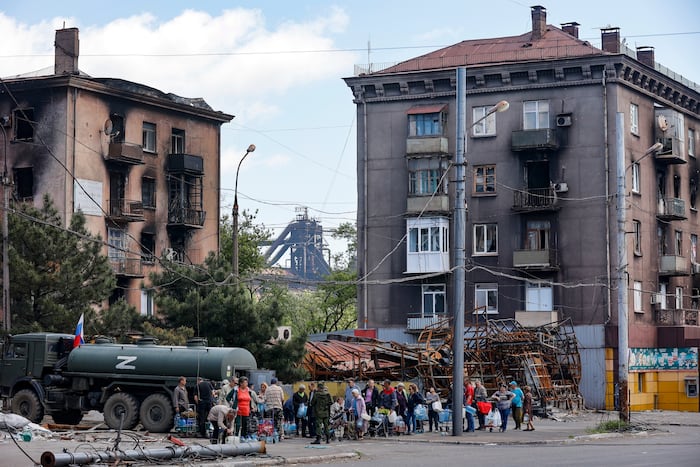
After four years of war, life in shattered cities like Mariupol and villages like Kudriashivka remains difficult, with residents facing problems with housing, water, power, heat and health care. Even President Vladimir Putin has acknowledged they have “many truly pressing, urgent problems."
In the illegally annexed regions of Donetsk, Luhansk, Kherson and Zaporizhzhia, Russian citizenship, language and culture is forced on residents, including in school lessons and textbooks. By spring 2025, some 3.5 million people in the four regions had been given Russian passports — a requirement to receive vital services like health care.
Some in the regions say they live in fear of being accused of sympathizing with Ukraine. Many have been imprisoned, beaten and killed, according to human rights activists.
Source: WPLG
