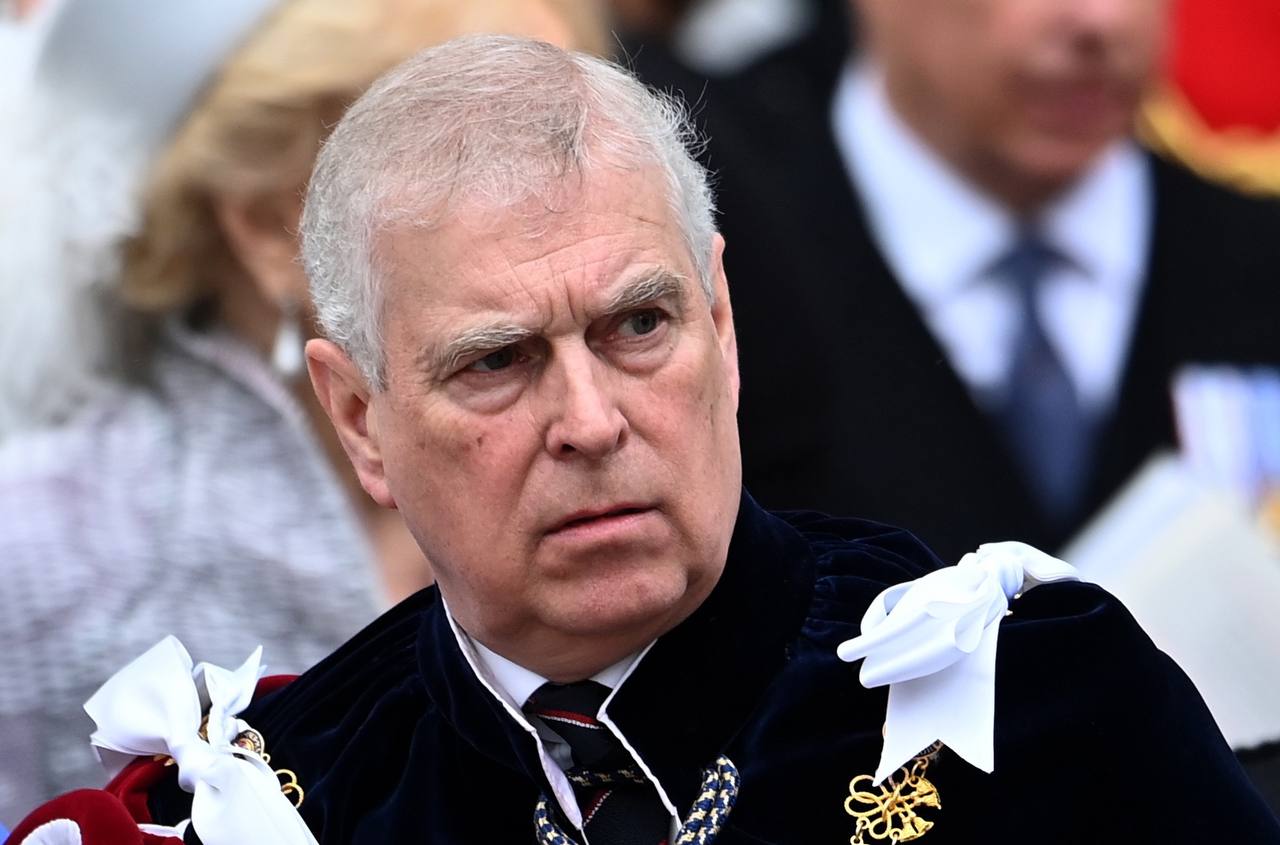
Andrew Mountbatten-Windsor wasarrested on his 66th birthday, on suspicion of misconduct in public office — an allegation with an unusually technical name for a scandal that has long lived in the realm of the lurid. Thames Valley Police, careful to follow national guidance, did not name him, saying only that officers had arrested 'a man in his sixties from Norfolk' and were searching addresses in Berkshire and Norfolk. By later that day, police said the man had been released under investigation and that searches in Norfolk had ended.
For readers outside Britain, a quick translation helps: 'misconduct in public office' is the kind of charge that sits in that peculiarly British overlap between old-fashioned duty and modern prosecutorial muscle — often invoked when someone entrusted with public power is suspected of abusing it. Contempt-of-court rules also matter here; once a case is 'active,' news organizations cannot publish material that risks prejudicing proceedings, which is why police explicitly urged caution.
Andrew's reported relocation to the Sandringham estate earlier this month — after being pushed out of Royal Lodge in Windsor — now reads less like a family shuffle and more like a strategic retreat to royal-owned geography. Sandringham is private, sprawling and historically insulated, but it is not invisible; it is also a name that carries weight in the British imagination, a place of tradition now being used as a kind of holding pen.
The Spectator's Tim Shipman, relaying what he described as palace whispering, claimed: 'The Palace is terrified' about what could happen next. Shipman added that those around the institution would rather see a clean, final outcome — 'tried and convicted and sent to prison, or tried and cleared' — because ambiguity is the thing monarchies handle worst.
Interesting Tim Shipman, writing for The Spectatator, suggests there are big fears that Andrew was leaking Military information being used as the useful idiot to bad actors.pic.twitter.com/FEob8WIfDX
A source quoted in the same reporting suggested anxiety in Whitehall that investigators might be 'trawling' beyond civilian or political decisions, with fears of a possible 'military dimension' to whatever evidence emerges. That, frankly, is the sort of line that makes seasoned observers raise an eyebrow — vague enough to be portentous, specific enough to terrify people paid to worry for a living.
Officially, the message is one of procedural calm. In his statement,King Charles said he had learned 'with the deepest concern' of the arrestand insisted the matter must follow 'the full, fair and proper process' by the appropriate authorities. He then added a line designed to outlast the headlines: 'Let me state clearly: the law must take its course.'
A statement from a true leader. Thank you, Your Majesty, for standing firm in what is right and ensuring accountability. I can only imagine how difficult this must be for King Charles — navigating this moment both as a monarch and as a brother.pic.twitter.com/6TWbkb2he4
It is the sound of a monarch putting distance in writing — support for the authorities, no public warmth for the accused, and a reminder that the family will 'continue in our duty and service.' Behind the scenes, it also signals something else: the Palace understands this is no longer a problem that can be managed with quiet allowances and averted eyes.
The shadow over all of it remainsJeffrey Epstein. Earlier this year, renewed scrutiny followed the US Department of Justice's release of millions of documents relating to Epstein — material that reanimated old questions about who knew what, when and what access bought. Andrew has denied wrongdoing, but denial is not a shield against a police investigation, and an arrest — while not a charge — changes the social physics instantly.
Source: International Business Times UK