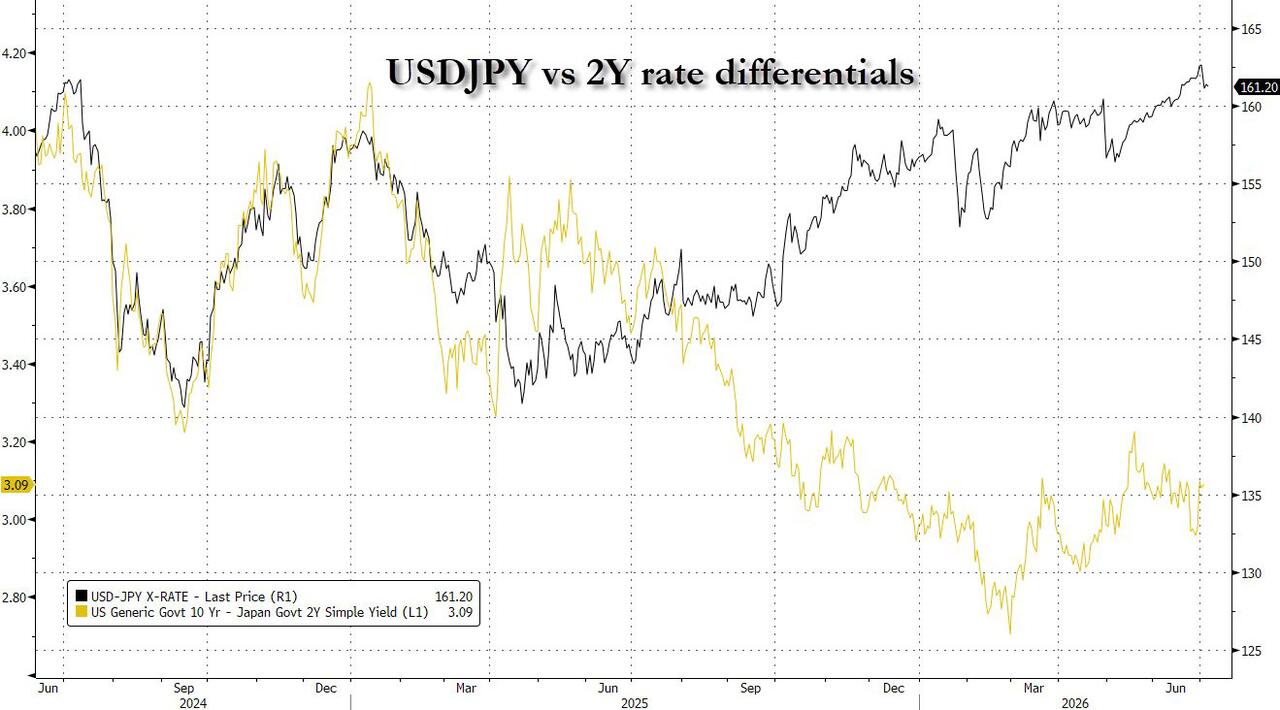
In recent months one of the more frequent questions in FX trading has been the relentless collapse in the yen, which recently sank below a 40 year low despite rate differentials stubbornly headed in the opposite direction, and is increasingly flirting with levels which on previous occasions always prompted BOJ intervention.
Among the reasons cited for the chronic weakness of the Japanese currency have been the following three:
- Real short-term rates in Japan are negative, which is why Ueda has been slow to hike
- There is a growing perception that Japan's PM Takaichi doesn't want a higher rates or a stronger yen. A weak yen certainly helps big JP firms profits (while hurting households) so there is a clear weak yen constituency inside the LDP. Japanese financial institutions are also short the yen generally
- JP financial institutions (notably lifer insurers) see the upfront cost of hedging (the nominal ST rate differential) and have made a mint on unhedged fx assets, and they have been reluctant to change their position just because the yen looks exceptionally undervalued.
Effectively a feedback loop has emerged, whereby the weaker yen leads to an even weaker yen, and despite token resistance by the BOJ - the latest long overdue rate hike being an example - the market clearly anticipates further weakness in the currency, and is pushing it to new lows.
However, a limit to the yen's weakness is now emerging, and it goes to the growing damage on the country's households noted in point 2 above.
As Bloomberg reports, Japan’s weak currency caused the most bankrup