A Red Sea disruption would be terrible timing for global shipping and energy markets, coming just as vessel traffic through the Strait of Hormuz has started to normalize in recent weeks.
An overnight report that a cargo ship was attacked by "armed assailants" in the southern Red Sea off Yemen is a reminder that the region's maritime-risk premium has not totally disappeared; it has simply shifted chokepoints.
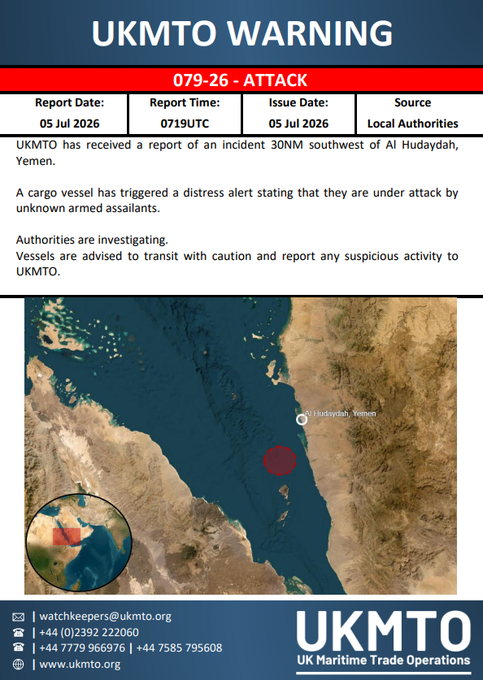
"UKMTO has received a report of an incident 30NM southwest of Al Hudaydah, Yemen. A cargo vessel has triggered a distress alert stating that they are under attack by unknown armed assailants," the United Kingdom Maritime Trade Operations wrote in an alert published on X early Sunday morning.
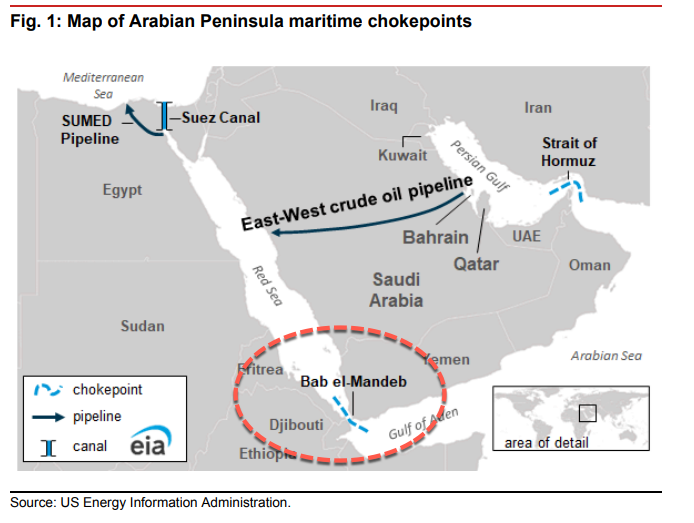
If the Bab el-Mandeb Strait, the southern gateway of the Red Sea that sits between Yemen and the Arabian Peninsula, begins flashing red again, the Suez-Red Sea maritime trade route could quickly become a major headache for global shipping companies, forcing more vessels around the Cape of Good Hope and reigniting pressure on freight rates, insurance costs, and energy-linked supply chains - thus fueling inflation.
Nomura's Chief Economist for India and Asia ex-Japan, Sonal Varma, recently outlined for clients the critical importance of the Red Sea:
Since the Houthi attacks in 2023, global trade via the Red Sea has fallen, but the Bal el-Mandeb Strait and Suez Canal still account for 9% of global maritime traffic, ~20% of global container traffic and ~8.7% of world oil supply (including