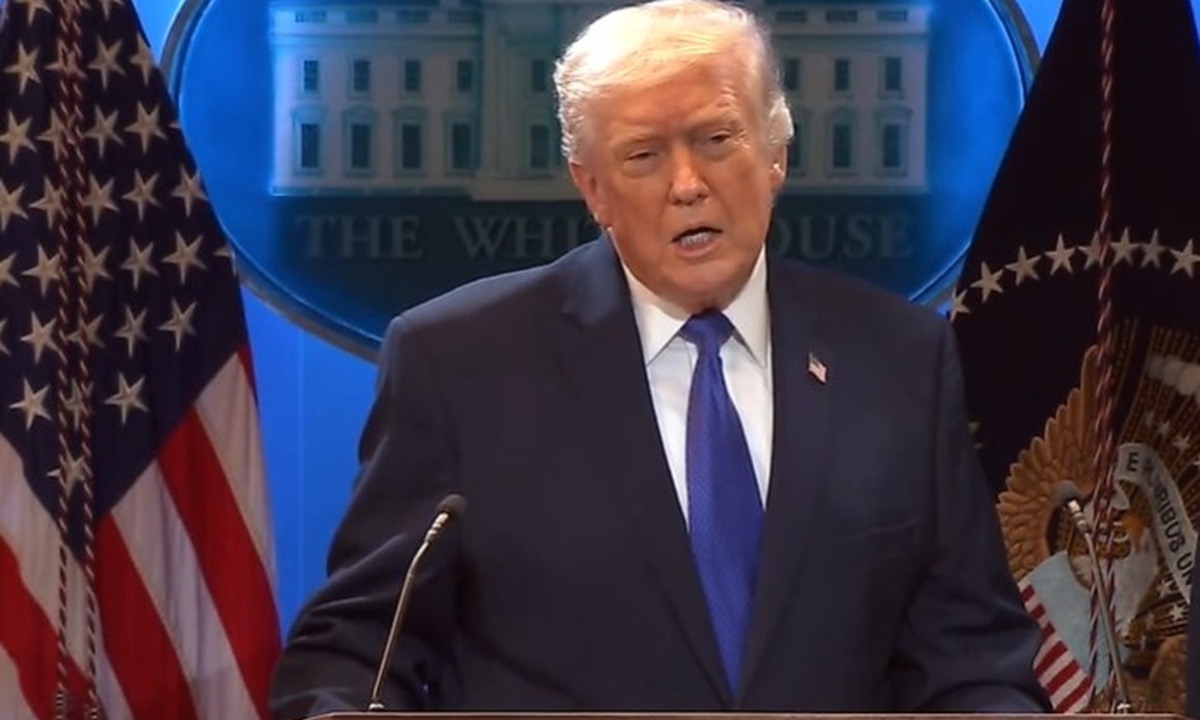
A confrontation between presidential power and the judiciary erupted in Washington after the United States Supreme Court struck down Donald Trump's sweeping global tariffs, triggering an angry reaction inside the White House that witnesses described as explosive. The ruling, delivered on Feb. 20, 2026, dismantled a central pillar of Trump's economic agenda and sharply curtailed his attempt to reshape global trade through emergency executive authority.
Reports emerging from the White House indicated that the president learned of the decision while attending a breakfast meeting with US governors, where his response quickly escalated into a heated outburst. The episode underscored the political and constitutional stakes surrounding one of the most consequential trade cases in decades.
In a 6–3 decision, the Supreme Courtruledthat Trump lacked legal authority to impose worldwide tariffs using the International Emergency Economic Powers Act (IEEPA), a statute historically used to regulate financial transactions during national emergencies rather than levy taxes. Chief Justice John Roberts, writing for the majority, concluded that tariff-setting authority rests primarily with Congress under the US Constitution.
Theopinionstressed that the executive branch must demonstrate 'clear congressional authorisation' when claiming sweeping economic powers. The Court relied in part on the 'major questions doctrine,' which requires explicit legislative approval for actions carrying vast economic and political consequences.
🚨Breaking: The US Supreme Court has ruled against President Trump’s tariff authority, 6-3!He still has options, but they just put the fast paced winning we’re used to in quicksand!This is a MAJOR BLOW, but President Trump can handle anything!pic.twitter.com/2PGg3KzOb3
Justices Sonia Sotomayor, Elena Kagan, Ketanji Brown Jackson, Neil Gorsuch and Amy Coney Barrett joined Roberts in the majority. Conservative justices Clarence Thomas, Samuel Alito and Brett Kavanaugh dissented, arguing that tariffs historically fall within broader presidential authority to regulate imports.
The decision effectively invalidated tariffs that generated more than $175 billion in revenue and raised immediate questions about whether importers could seek refunds from the federal government.
According toreportingcirculating from multiple observers and amplified in televised political coverage, Trump learned of the ruling during a White House breakfast with state governors. He reportedly called the decision 'a disgrace' shortly after receiving the news.
A CNN report cited that the president became 'enraged' and started ranting about the decision before swearing 'these e*ing courts.' Social media comments described his reaction a 'full-blown meltdown.' While CNN's characterisation reflected witness descriptions rather than an official transcript, contemporaneous reporting confirms that Trump erupted in frustration immediately after the decision became public.
BREAKING: CNN is reporting that Trump found out about the Supreme Court decision during a breakfast with governors. Once he learned about the decision, he started having a full-blown meltdown. This is incredible.pic.twitter.com/xWra16pzaV
Source: International Business Times UK
