At times, it seems almost absurdly comical when senior European Union officials make conspicuous efforts to court local business on foreign trips.Didactic in tone, nearly arrogant in their demands toward potential trade partners, and buoyed by a taste for moral superiority, the EU takes the global stage.
It still attempts to force large parts of the world into Brussels’ doctrinal playbook—as if economic cooperation could be achieved through normative decrees.
Meanwhile, its own economic weakness is either overlooked or deliberately ignored.
Economic strength would at least provide some justification for such demands.
Yet the ongoing relocation of European industry to Asia and the United States undermines any carefully staged display of supposed superiority.
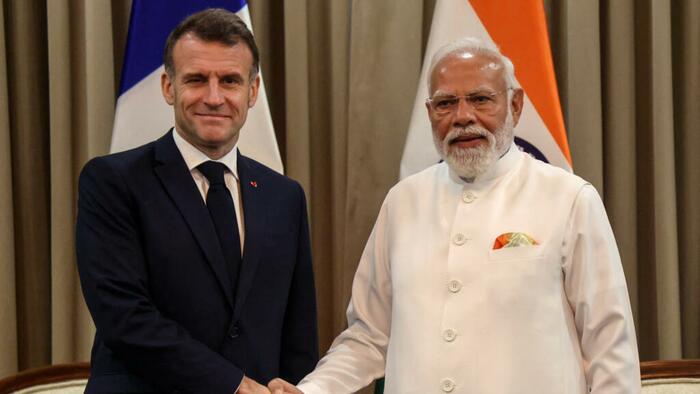
From February 17 to 19, France’s President Emmanuel Macron visited India—the newly discovered object of European diplomatic desire.
In Brussels, high hopes are pinned on Prime Minister Narendra Modi: unspoken is the goal of trade-policy support in the battle against Donald Trump’s America.
For Macron, this India trip could have been an easy diplomatic exercise—without missteps, without verbal blunders, simply by observing routine protocol.
He could have used the opportunity to study how a booming AI hub is being built. Instead, he presented his bewildered hosts with Europe’s “third way”—a performance that at best left them perplexed, likely met with a shrug.
Macron advocated for “transparent” AI focused on open-source models, strict privacy standards, and societal benefits in health, education, and especially climate protection. Initiatives like “Current AI,” an EU-funded €2.5 billion project to finance nonprofit activities, confirm what is already obvious:Brussels still believes technological innovation can be decreed by the state.
Source: ZeroHedge News
