There is one thing the Iranian regime needs now more than anything else — something upon which its survival may depend. That lifeline is a deal.
Precisely for that reason, at this moment of maximum pressure, President Donald J. Trump's offering Tehran an agreement — especially one that provides sanctions relief, legitimacy, or breathing room — could become the single most consequential mistake of the century.
The regime needs a deal because it needs a breath of relief. It is under pressure from several directions simultaneously. Internally, Iran has recently witnessed incessant waves of unrest, protests, and uprisings that cut across class, ethnic, and generational lines, with many Iranianscallingfor regime change -- despite openly being gunned in the streets.
A deal would allow the authorities to intensify repression with fewer external consequences. Security forces could move more aggressively against activists, journalists, and opposition networks, confident that diplomatic engagement would temper foreign criticism. In this sense, a deal might consolidate the regime's control internally by removing the leverage that international pressure has currently been providing to Iran's civil society.
Morally, the Iranians risking their lives to protest the system look to the outside world for solidarity. A sweeping agreement that rehabilitates the regime without addressing human rights will be perceived, not just by them but by history, as abandonment. Any deal that allows the mullahs to survive to torture their citizens another day would be looked on by both the international community and history as the pinnacle of American hypocrisy: a permanent stain on the values that the United States and the Free World purport to uphold. America's stature as the world's guarantor of freedom and humanitarian values would be demolished overnight. It would signal that geopolitical considerations outweigh aspirations for freedom and that in such a quest, America could no longer be counted on to be your greatest ally. Any reach for freedom or challenging authoritarian rule from within -- as seen tragically in the retreat from Afghanistan -- would from now on be seen as a fatal waste of time and the United States as basically no different from any other weak, spoiled state.
Second, the regime faces acute regional pressure. Over recent years, Iran's network of proxies — long the backbone of its regional strategy — has beenweakened, degraded, or constrained. Israeli military operations havetargetedIranian assets and affiliated groups across the region, while the Trump administration's pressurecampaignshave sought to disrupt funding channels and logistics. Tehran, once confident in its arc of influence stretching from Lebanon to Yemen, now confronts pushback on multiple fronts. A deal with Washington would break this isolation, reduce the risk of confrontation, and allow Iran to rebuild its regional posture under the cover of diplomacy.
Third, Iran desperately needs sanctions relief, which is what its rulers want most, right after the survival of their regime. Sanctions have battered the economy,restrictedoil exports, limited access to international banking, and fueled inflation that has eroded living standards. A deal that lifts sanctions or reintegrates Iran into the global financial system would most likely unlock billions of dollars in frozen assets and enable increased oil revenues.
Such financial relief would not merely stabilize the domestic economy — it wouldstrengthenthe state apparatus. With renewed resources, the regime could better fund security forces, patronage networks and foreign operations, and restore its war machine. Groups aligned with Tehran — such as Hezbollah, Hamas, and the Houthis — would receive expanded funding and weapon flows, exacerbating regional instability rather than reducing it.
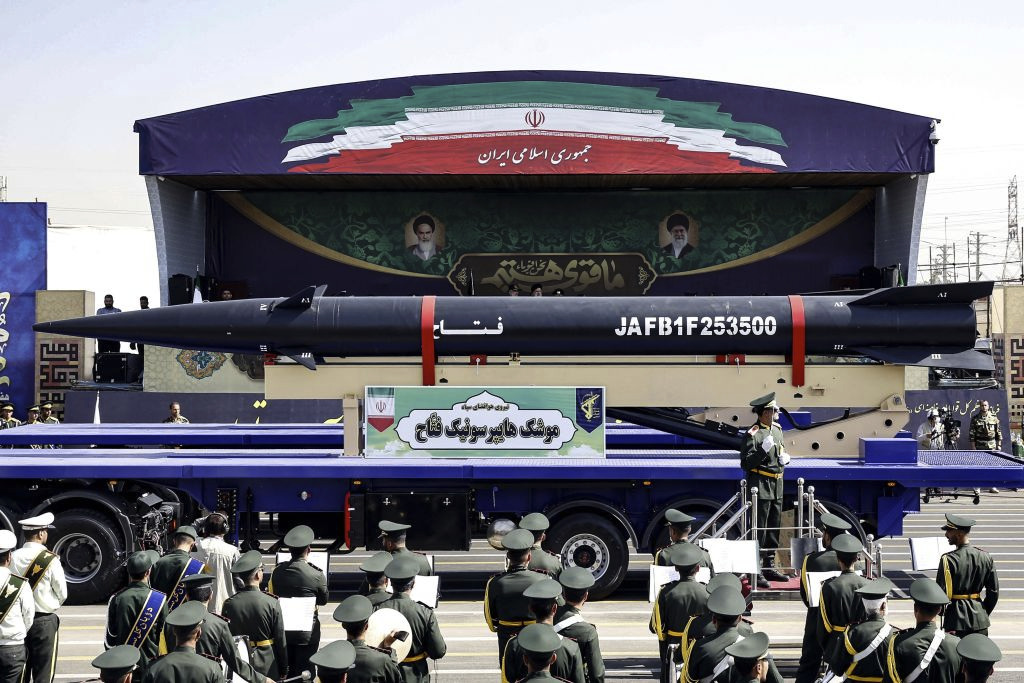
A deal would also buy Iran time to rebuild and expand its military capabilities, particularly its drone and ballistic missile program — thelargestin the Middle East. "Iran's drones and ballistic missiles can finish 40,000 US troops," Secretary of State Marco Rubioinformedthe US Senate. Tehran has long invested in drones and missiles as a deterrent and a tool of asymmetric warfare. Iran could also accelerate the transfer of missiles and missile technology to its regional proxies, multiplying the threat environment. Survival today means strength tomorrow.
Equally concerning is the nuclear dimension. Any agreement that relaxes pressure risksgivingIran the space to rebuild its nuclear capabilities. Even if Iran were notdistinguishedfor lying and cheating under inspections, the opacity of underground facilities and covert procurement networks makes monitoring and verification extraordinarily difficult. Iran's rulers most likely have concluded that nuclear capability is essential to regime survival, so they can pursue that objective regardless of formal commitments. A deal could therefore function less as a barrier and more as a shield behind which nuclear progress continues, shortening the path to a weapon.
Source: Gatestone Institute :: Articles