Authored by John R. Lott Jr. via RealClearPolitics,
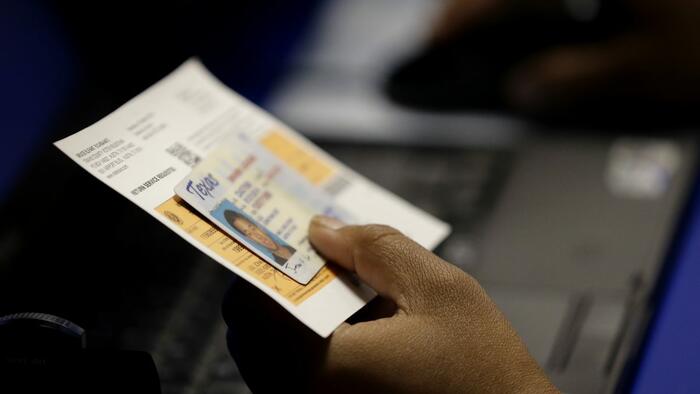
“The bottom line is this: voter ID is not controversial in this country,” Harry Enten, the chief data analyst for CNN, recentlyreported.Nor is it controversial in virtually any other country in the world. Yet despite massive supportamong both Democrats (71%) and Republicans (95%),onlyone Democratic member of the Houseandone in the Senateare supporting the SAVE Act. Unless seven more of the 47 Senate Democrats step forward, their filibuster will kill the bill.
Democrats argue that requiring free voter photo IDs – even when the ID itself costs nothing – harms eligible voters by creating practical barriers to casting a ballot.They contend thatblacks would be especially hard hit. Interestingly,every country in Africarequires government-issued identification to vote.
They also argue that such requirements woulddisenfranchise Hispanic voters.YetMexico,all twelve South American countries, andSpainrequire government-issued photo IDs to vote.
All of these countries have lower per-capita incomes than the United States. If citizens in those nations can obtain the necessary identification to vote, why would American Hispanics and blacks be unable to do the same?
While83% of American adults supportrequiring government-issued photo identification to vote, support is also strong among the very groups Democrats claim would be harmed:82% of Hispanics and 76% of black Americans favor the requirement.Those figures suggest that most black and Hispanic Americans do not view obtaining a photo ID as the obstacle Democrats describe. Ten U.S. states have similarly strong photo ID requirements.
Democratsclaimthat women are disproportionately disenfranchised by voter IDs, but women are also strongly supportive of IDs and have exactly the same level of support as men.
Democrats argue that voter ID requirements disproportionately disenfranchise people with the least education and lowest incomes.Yet, ironically,survey results show that voters who did not graduate from high school were27 percentage pointsmore likely to support photo voter ID laws than those who attended graduate school. Similarly, individuals earning less than $30,000 per year were seven percentage points more likely to support photo ID requirements than those earning over $200,000 annually. The well-educated and higher-income individuals thus express more concern about the impact of ID laws on the less educated and lower-income groups than those groups express themselves.
But it isn’t just South American countries and all of Africa that require voter IDs to vote. Both of our neighbors, Canada and Mexico, require them, with Mexico also requiring a thumbprint. All47 European countries, except parts of the United Kingdom, require a government-issued photo ID .
After widespread vote fraud, Mexico enacted major voting reforms in 1991.The government mandated voter photo IDs with biometric information, banned absentee ballots, and required in-person voter registration. Even though these changes made registration more difficult and eliminated absentee voting, turnout increased after the reforms took effect. In the three presidential elections following the 1991 changes,an average of 68% of eligible citizens voted, compared with 59% in the three elections before the reforms. As confidence in the electoral process grew, more citizens chose to participate.
Source: ZeroHedge News
