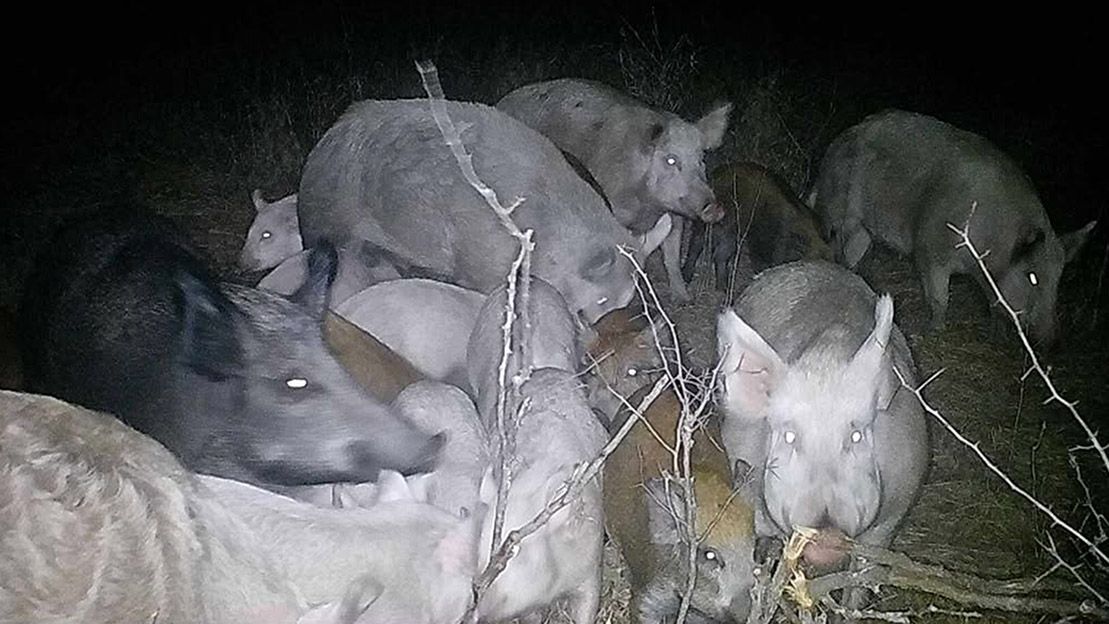
In the beginning, there were pigs. Domestic breeds, such as Duroc, Landrace and Yorkshire have been staples of the Prairie Provinces for more than a century, and while plenty escaped their resident farms over the years, few survived their first Saskatchewan winter.
Then came European wild boar, a species imported gleefully throughout the 1980s to diversify Canada’s livestock sector. For meat, and for “shoot farms,” boars materialized in most Canadian provinces, but especially in Manitoba, Saskatchewan and Alberta. When these escaped their resident farms, the result was a slow-moving catastrophe.
For one thing, escapees began forming sounders (herds) of wild boars and domestic pigs both, living and moving together across the prairie. They interbred, blending the resourcefulness and vigour of the wild species with the extra ribs, fat reserves and reproductive capacities of the domestic one. What we now call the “wild pig” was born.
Curated longreads and features from top journalists across Canada, delivered Saturdays.
A welcome email is on its way. If you don't see it, please check your junk folder.
The next issue of Long Story will soon be in your inbox.
We encountered an issue signing you up. Please try again
“They became the perfect invasive species,” says Ryan Brook, a professor at the University of Saskatchewan and head of the Canadian Wild Pig Research Project. “They have a large body, heavy hair, they’re super smart, they eat almost anything, and they reproduce like crazy.”
This cocktail was more than enough to survive a prairie winter, though no one believed it at the time. Well into the 2010s, when Brook began his research, these invasive swine were taken about as seriously as Bigfoot, with intelligent people denying their very existence. By 2017, Brook and PhD student Ruth Aschim had demonstrated that not only did wild pigs exist, they were conquering entire watersheds.
Thriving at the intersection of wetland and farmland, they rip the former up by its roots — young trees, ground vegetation, cattails, whatever — and raid the latter for seeds and crops, carving up fields like rototillers. They pack their stomachs with corn and canola, birds and eggs, small mammals, reptiles, amphibians and even insect larvae. They hunt, kill and eat adult whitetail deer, and at least the fawns of moose and elk. They retreat into mud to escape summer heat, and burrow underground to escape winter cold.
Source: Drudge Report
