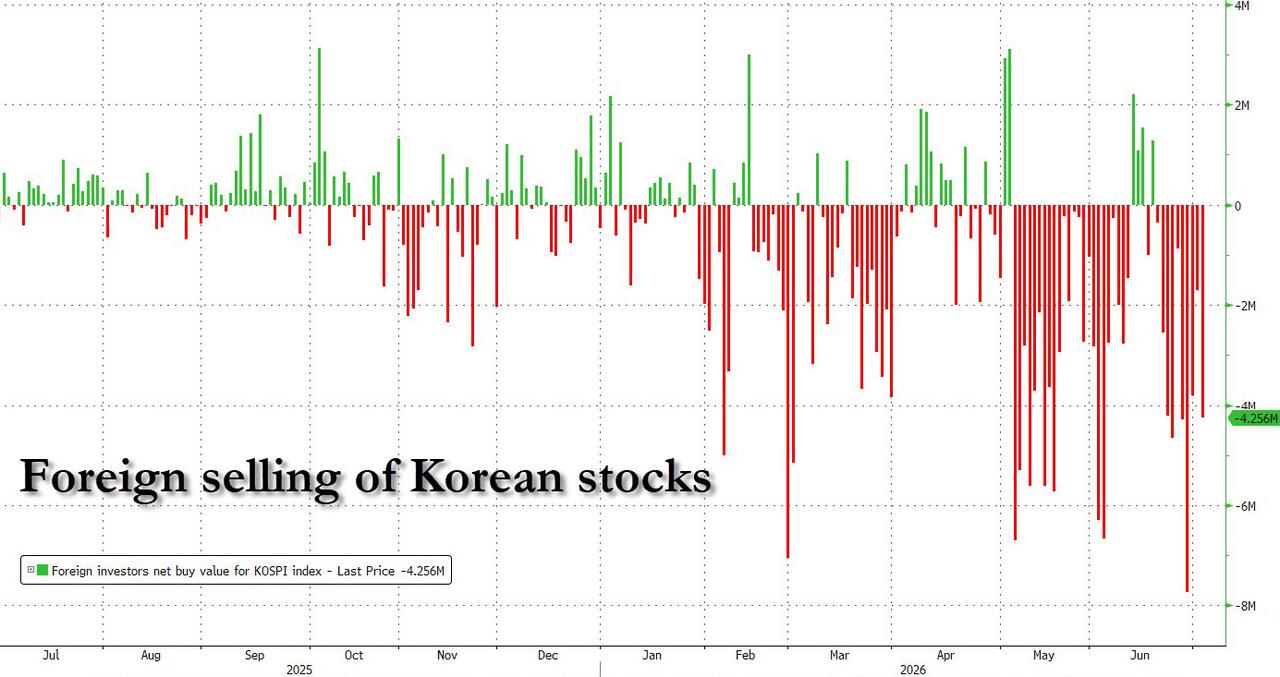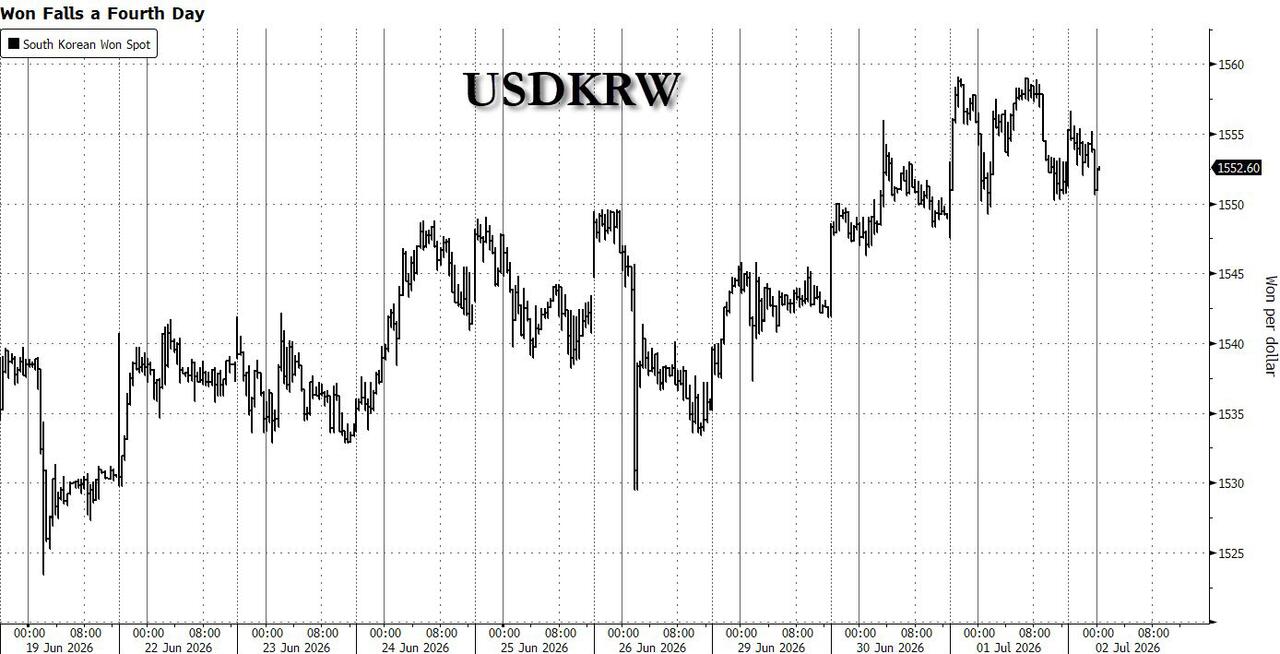
South Korea’s won weakened for a fourth day as overseas investors accelerated their relentless sales of local stocks.
In response, USD/KRW rose 0.1% to 1,552.60, extending its four-day gain to 1.2% (i.e. KRW drop).
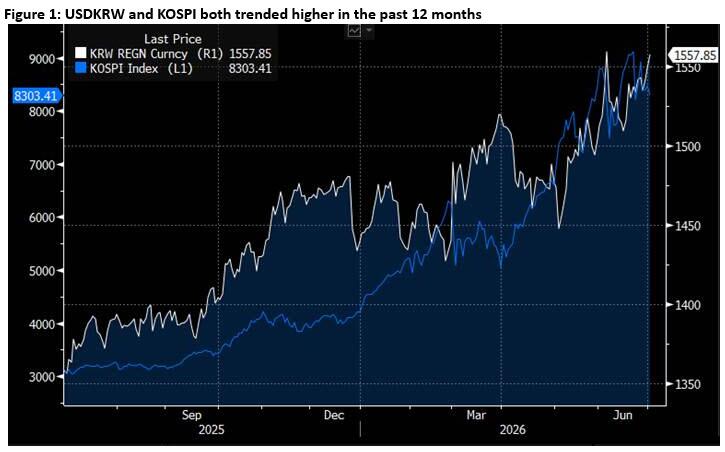
According to Barclays, pressure from both resident outflows and more recently in the case of Korea, heavy foreign outflows, could pose further headwinds even as exports performance remains robust and domestic equities extend their bubble.
Let's take a closer look at what's driving the key moves in Korea.
Why was USDKRW higher?
Other than stronger USD, Goldman has been highlighting that rebalancing related equity outflow has been the dominating factor. Equity outflow from Jun 22nd till month-end amounted to US$18bn, bringing total Jun equity outflow to US$30bn. This follows the US$27bn outflow observed in May. As of today, Samsung and Hynix are 32% and 30% of MSCI Korea respectively, which are 7% and 5% above the 25% single stock limit. A combined 12% rebalancing effort would lead to another US$24bn outflow with US$200bn AUM (passive and active) estimated tracking MSCI Korea.
Additionally, other portfolio concentration limits such as UCITS and HF internal concentration limit rule are also likely to be driving the rebalancing related outflows. In terms of timing, some fast money rebalancing is relatively real time, while