By Michael Every of Rabobank
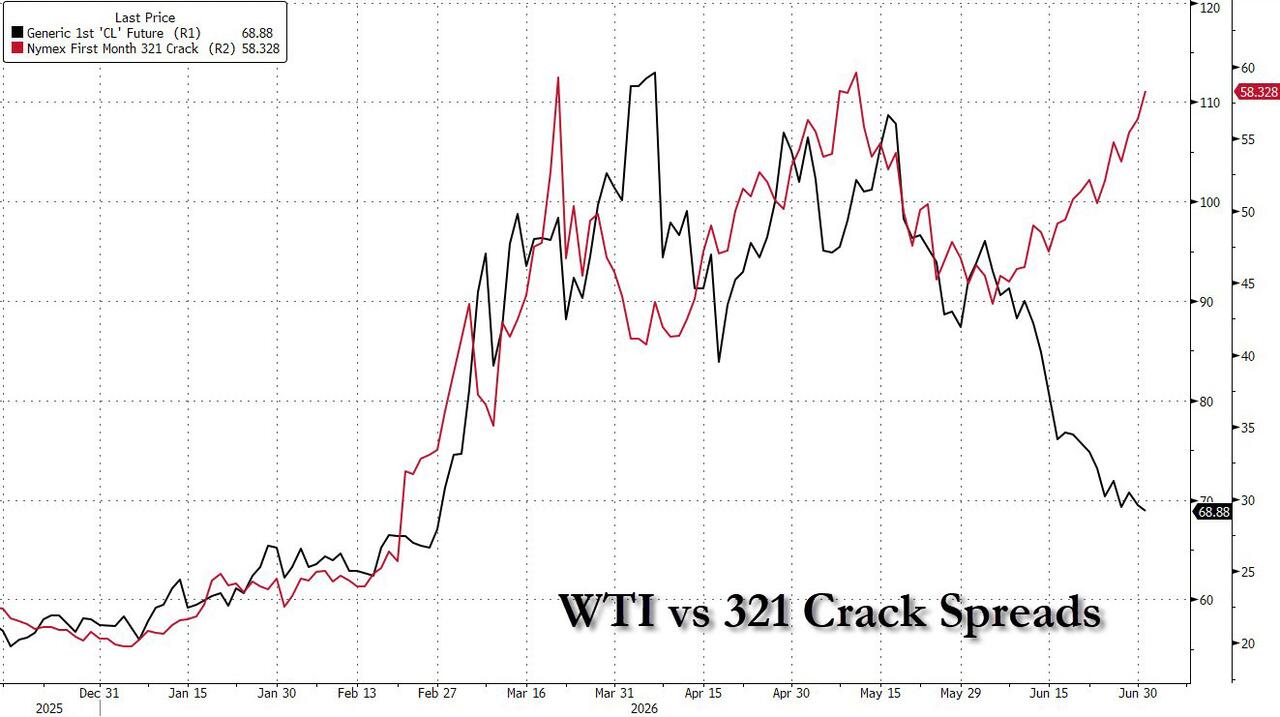
Hormuz traffic is climbing, but refined product prices are lagging, and crack spreads are blowing out: one can’t just look at the oil price to understand the overall energy dynamic.
On the geopolitical front, things are also still mixed. Talks about the US-Iran MoU in Doha, without either side speaking to the other, went well according to the US, who are staying on for what could be indirect talks today. However, the Wall Street Journal reports Iran is split, with political leadership focused on getting assets unfrozen and the IRGC on keeping Hormuz more frozen. Tehran has now rejected third-party offers to help demine the water way; they are in no hurry to see things return to normal as this removes their energy leverage. Iran is also opposed to allowing the southern passage via Oman, which the US favours, to become established - and there are still reports Oman wants to charge for access to this channel.
A WSJ headline is that Trump has been briefed on ‘all-out war options’ to finish the job but is sticking with talks while making clear that --as expected in our base case-- the 60-day MoU deadline ending 18 August will be extended. Until November at least, as we posit?
Meanwhile, Israeli PM Netanyahu visited south Lebanon and reiterated that as long as Hezbollah is armed, they won’t leave, as the US announced coordinated sanctions with Gulf countries against the Iranian terror proxy. So, Tehran reads the MoU as “peace, where Hezbollah wins the war though it lost the battle”, and the US reads it as “peace, where Hezbollah loses by Israel staying or by being disarmed.” That can easily lead to mo