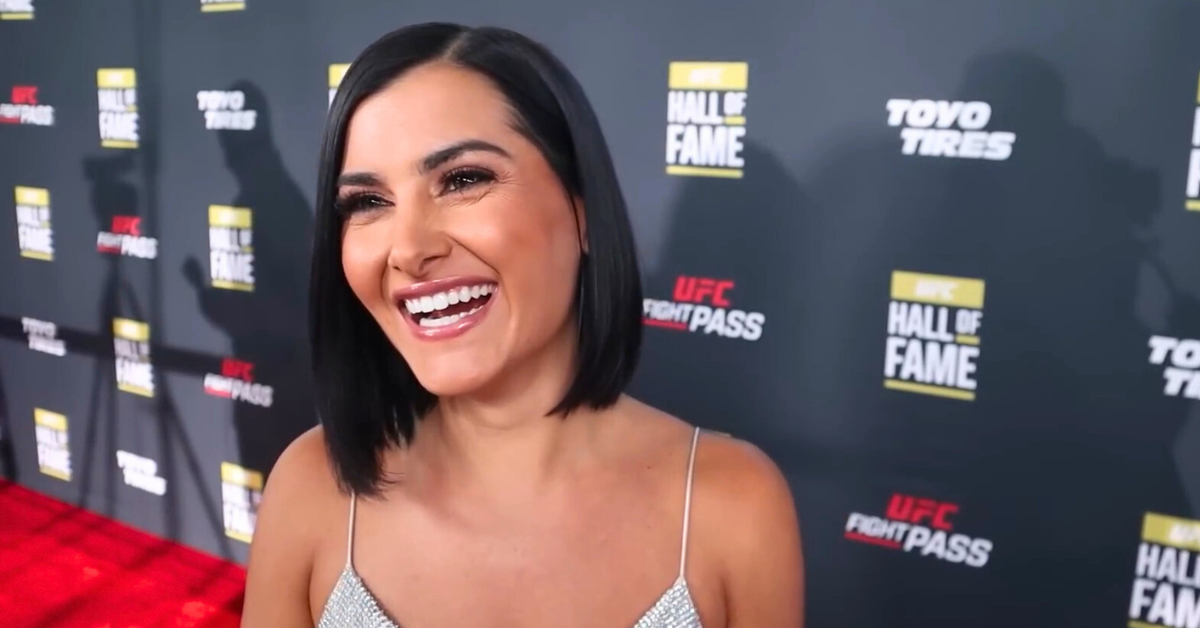
Megan Olivi has been a core part of UFC broadcasting for well over a decade, and her recent interview with Fighters Only offers a rare look at how she approaches the job, the pressure of the new Paramount+ era, and the personal line she walks between being a mother, a reporter, and a visible female figure in sport.
As the UFC’s U.S. rights moved from ESPN to Paramount+ and CBS, many fans expected major changes in presentation and production. Olivi said that, from the inside, the day‑to‑day workflow and team structure feel familiar, but the level of support and investment from the new partners has been immediately noticeable.
A clear addition has been the regular hour‑long pre‑show on Paramount+, a formatOliviis comfortable with from the Fox years, and a more prominent role for Kate Scott at the host desk alongside former champions like Michael Bisping, Dominick Cruz and Chris Weidman. “The support from Paramount from day one has really been a breath of fresh air,” Olivi said.
On thefield, Olivi’s role has expanded slightly as the UFC experiments with more host‑style duty. For numbered events she remains the primary reporter, but for many Fight Nights she is also hosting the weigh‑in show, the pre‑show, and the post‑show, which lets her shape the narrative around multiple fights rather than just one main event.
She credited head producer Zach Handido with driving many of the creative changes, from in‑cage pre‑fight analysis segments to more integrated sponsor features that sometimes place her on top of theOctagonwith commentary coming in from other hosts. One of the more subtle but meaningful shifts is the use of coaches and training partners in the locker room, which she feels gives viewers deeper insight than standard fight‑day interview tropes.
“I really enjoy talking to the coaches. Greg Jackson was the first guy I talked to in a locker room and I think: who better for a general fan to hear from than someone like Greg Jackson as to why he thought his athlete was going to win.”
Olivi has long made it a point to speak with coaches and training partners, not just fighters, because athletes are often exhausted, emotionally drained, or still in the space of “punching the clock” on fifth‑day media. For someone like Morab “Vet” Gvern, that means leaning on John Wood, whose honest camp assessments historically line up with what happens in the Octagon.
She pointed out that fighters also tend to be more understated about themselves, which is where coaches and teammates can share stories the athlete would not. “That’s an angle that always has to be uncovered,” she said. “It’s extra insight and genuinely great conversation.”
She stressed that the UFC has led the way in putting women in central roles: female fighters headline cards, and women like Laura Sanchez, Kate Scott and herself are part of the main broadcast team not as tokens but as credentialed voices. “I think we’re really fortunate that the athletes set the example,” she said. “We see women headlining cards, and there is equality across the board for male and female in the UFC.”
She also acknowledged that, whether male colleagues feel the same or not, she feels she must “earn” the job every single week. For her, that means more research, more creative pitches, and a constant effort to be the best storyteller in the room, regardless of gender or background.
Source: LowKickMMA.com