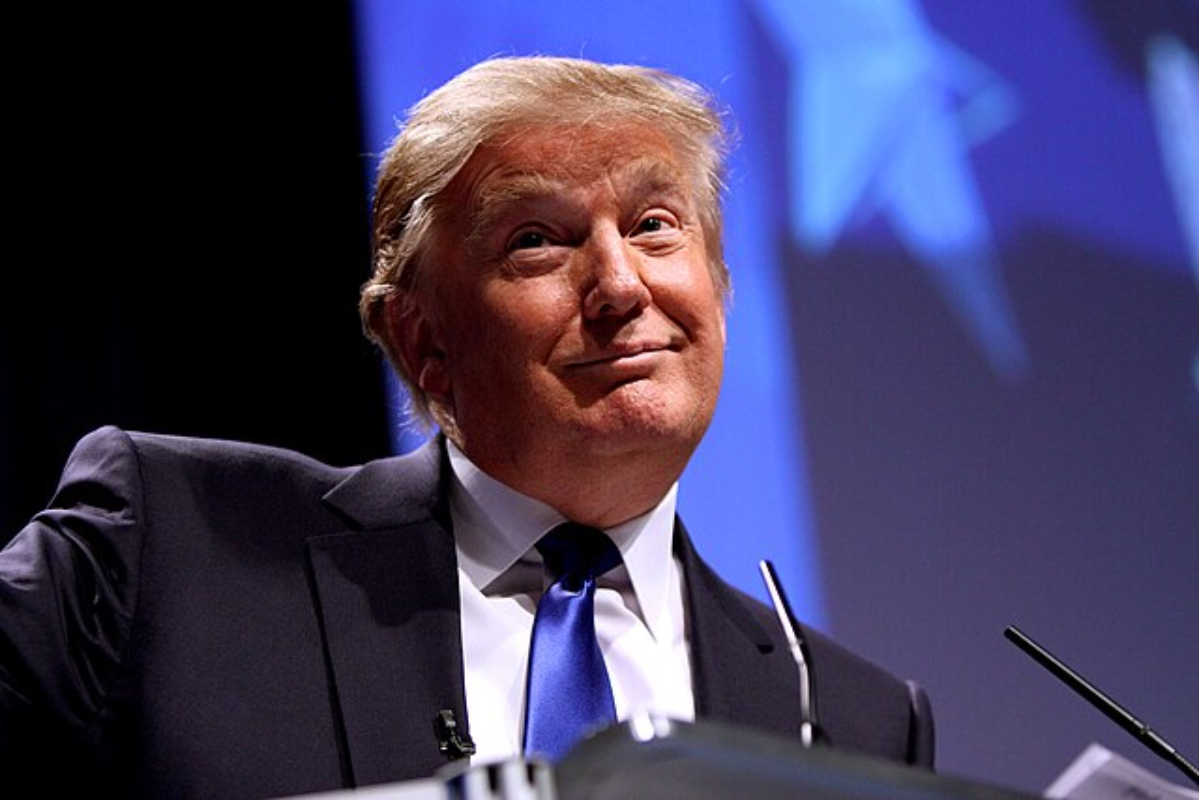
In one of the most consequential legal defeats of Donald Trump's presidency, the US Supreme Court has ruled that he exceeded his authority by imposing sweeping global tariffs under a 1977 emergency statute, leaving Washington staring at a potential repayment bill that could reach $150 billion (approximately £110.6 billion). The 6-3 decision found that the International Emergency Economic Powers Act, or IEEPA, does not give the president the power to levy tariffs, upending a central pillar of Trump's trade strategy and jolting global markets that had grown used to his aggressive tariff regime.
Chief JusticeJohn Roberts, writing for the majority, was blunt: 'IEEPA contains no reference to tariffs or duties,' he wrote. 'The Government points to no statute in which Congress used the word "regulate" to authorise taxation. And until now, no President has read IEEPA to confer such power.' Justices Neil Gorsuch, Amy Coney Barrett, Sonia Sotomayor, Elena Kagan, and Ketanji Brown Jackson joined him. Trump, told of the ruling during a meeting with governors, branded it a 'disgrace' and insisted he had a 'backup plan,' according to a person familiar with his reaction.
The ruling does not wipe out every Trump-era tariff. Sector-specific duties on steel, aluminium, and copper, imposed under different statutes, remain in place. The IEEPA-based levies, though, had formed the backbone of Trump's so-called 'Liberation Day' tariffs on Canada, China, and Mexico, and those have now been struck down.
That leaves the federal government facing a complex and politically explosive refund fight. Economists atPNC Financial Services Groupestimated that by mid-December 2025, roughly $130 billion had been collected under the IEEPA tariffs alone, with potential refunds to businesses approaching $150 billion. A separate estimate fromPenn-Whartonput the exposure even higher, at more than $175 billion (approximately £130 billion).
The majority offered no blueprint for how those refunds should work in practice. JusticeBrett Kavanaugh, in dissent, warned the process was 'likely to be a "mess",' saying the US 'may be required to refund billions of dollars to importers who paid the IEEPA tariffs, even though some importers may have already passed on costs to consumers or others.' More than 1,000 refund-related cases have already landed at the Court of International Trade, and the Department of Justice and litigants have asked judges to appoint a steering committee to manage the wave. Trade attorneyTim Keeler, a partner at Mayer Brown and former chief of staff at the US Trade Representative's office, told CNBC that any stampede for refunds could 'overwhelm the system and likely lead to long delays.'
The scramble to get money back is already underway. Costco, parts of the Toyota Group, Revlon, and hundreds of other firms hadfiled lawsuits aheadof Friday's ruling to secure their claims. None of those corporations was party to the Supreme Court case itself, which instead consolidated challenges brought by Democratic-led states and two groups of small businesses backed by a cross-party legal team.
For smaller operators, the sums involved can decide whether they hire, invest, or simply stay open. Beth Benike, co-founder of Busy Baby, a Minnesota-based maker of baby mealtime accessories, told CBS News she halted all imports from China while she waited for the decision because the tariffs were the difference between paying an extra $48,000 (around £35,400) or not. 'I am expecting a full refund,' Benike said, 'but if for some reason we don't get them, I would have to raise my prices, which will be tough for consumers.'Dan Anthony, executive director of We Pay the Tariffs — a coalition of more than 800 small businesses — warned that 'small businesses cannot afford to wait months or years while bureaucratic delays play out, nor can they afford expensive litigation just to recover money that was unlawfully collected from them in the first place.'
Today’s 6-3 ruling by the Supreme Court is a Victory for the American People and a Win for the Separation of Powers enshrined in the Constitution of the United States.In Learning Resources, Inc. v. Trump, our Supreme Court has reaffirmed that the Constitution grants Congress -…
Trump himself had been sounding the alarm about the risk that his own legal gamble could backfire. On 12 January,he postedon Truth Social that repayments would run to 'many Hundreds of Billions of Dollars,' saying: 'It would be a complete mess, and almost impossible for our Country to pay.' He added: 'If the Supreme Court rules against the United States of America on this National Security bonanza, WE'RE SCREWED!'
Despite the defeat, Treasury SecretaryScott Bessentand other senior officials have signalled that the White House will move quickly to restore as many of the tariffs as possible using alternative legal grounds, including national security provisions and laws targeting unfair trade practices. The revenue incentive is clear. The Treasury collected $287 billion (approximately £211.6 billion) in tariffs in 2025, up 192 per cent on the previous year, according to the Federal Reserve Bank of Richmond, turning tariffs into a major—if controversial—cash stream for Trump's second term.
Source: International Business Times UK
