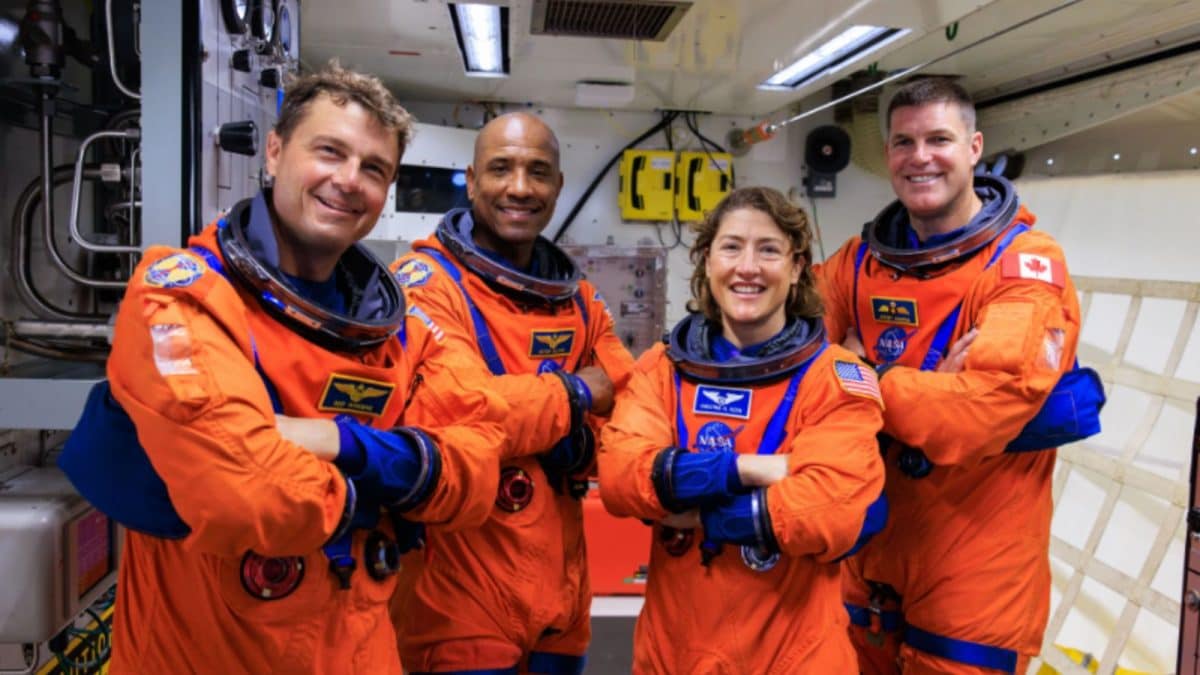
NASA is aiming to schedule the Artemis 2 lunar launch on March 6. The space agency is set to send four astronauts to the Moon and back under one of its most-awaited missions. Artemis 2 would be the first crewed flyby mission to the Moon in over 50 years.
NASA experts on Friday discussed the results of the second fuelling test for Artemis 2. As per the details available on the official website, with a crew size of four members, the mission will be 10 days. “Artemis II builds on the success of the uncrewed Artemis I in 2022, and will demonstrate a broad range of capabilities needed on deep space missions. The Artemis II test flight will be NASA’s first mission with crew aboard the SLS (Space Launch System) rocket and Orion spacecraft," NASA said.
NASA would launch four astronauts on the Artemis II lunar fly-around as soon as March 6 from Florida’s Kennedy Space Center. To keep their options open, the three Americans and one Canadian plan to go into the mandatory two-week health quarantine Friday night.
LIVE: NASA experts discuss results of the second fueling test for our upcoming@NASAArtemismission to fly around the Moon.https://t.co/MGc5yburW4— NASA (@NASA)February 20, 2026
NASA plans to launch four astronauts on the Artemis II lunar fly-around on March 6 from Florida’s Kennedy Space Center. To ensure they are prepared, the three Americans and one Canadian will begin their mandatory two-week health quarantine on Friday night.
The space agency has a five-day window in March to send the crew aboard the Space Launch System rocket, before pausing until April. Attempts to launch in February were thwarted by dangerous liquid hydrogen leaks during the initial fuelling demonstration.
As per a report by AP, technicians replaced two seals, leading to a successful test on Thursday. The countdown clocks reached the desired 29-second mark.
The repairs were effective, but additional tasks remain, including a flight readiness review, according to NASA’s Lori Glaze.
Commander Reid Wiseman and two of his crew observed Thursday’s operation alongside launch controllers. These astronauts will be the first to fly to the Moon since Apollo 17 concluded NASA’s first era of lunar exploration in 1972.
Source: World News in news18.com, World Latest News, World News