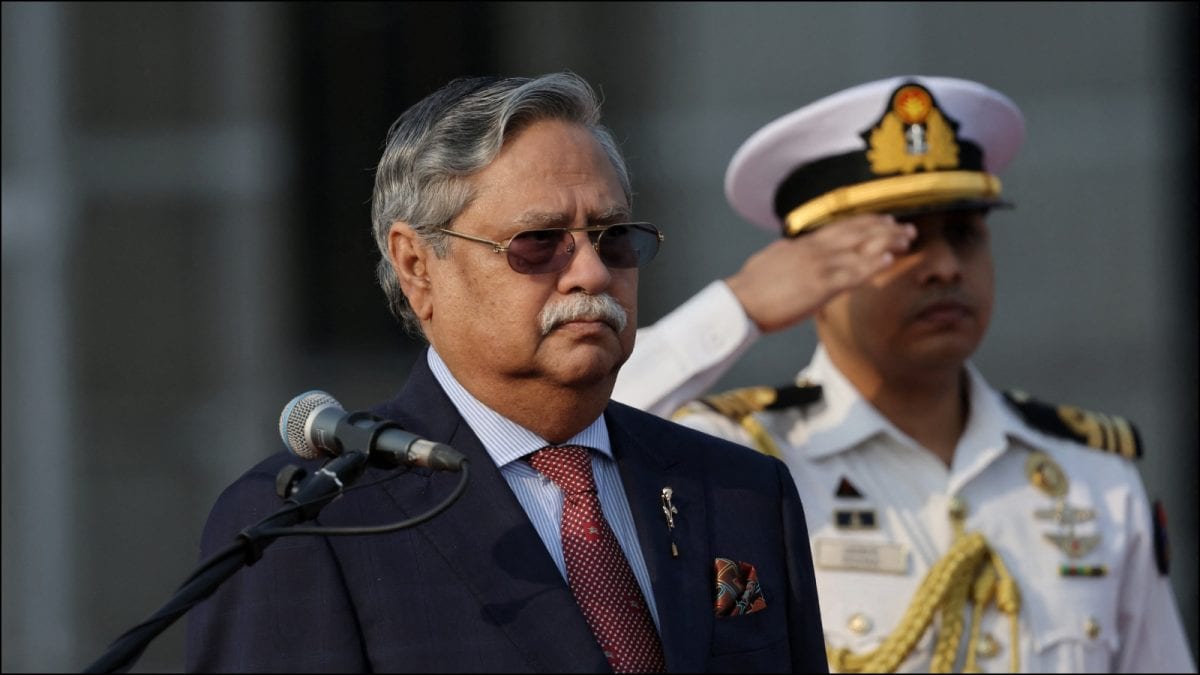
Bangladesh’s President Mohammed Shahabuddin on Friday took an apparent dig at Pakistan ahead of the International Mother Language Day being celebrated in the country on February 21 by recalling the atrocities committed by the Pakistan Army during Dhaka’s struggle for independence in 1971.
While congratulating the people and ethnic communities of Bangladesh on International Mother Language Day, Shahabuddin said, “The historic Language Movement stands as a glorious chapter in the history of our emergence," he said in a statement.
“In the aftermath of the Partition of 1947, despite the distinct linguistic and cultural identities of the two parts of Pakistan, the then-ruling authorities declared Urdu as the sole state language. This unjust attempt to suppress the mother tongue awakened a profound national resolve, as students and citizens of erstwhile East Pakistan, today’s Bangladesh rose in solemn defiance," he added.
The Bangladeshi President described the language movement as a “struggle to safeguard our national identity, individuality and cultural uniqueness."
“Language is the foremost custodian and carrier of a nation’s existence, heritage and culture. Bangla was earned through immeasurable sacrifice and the sacred blood of martyrs, we must be more mindful in its proper practice and in preserving its quality and dignity," he added.
The Bangladesh Liberation War began in March 1971 after months of political tensions between Pakistan and Bangladesh, then called East Pakistan. One of the most important factors of this conflict was the imposition of Urdu as the national language after the 1947 Partition, which led to widespread protests in Dhaka.
In 1952, thousands of people marched in Dhaka in defence of the Bengali language. Students of Dhaka University and other activists protested the imposition of Urdu and demanded that Bengali be recognised as an official language of Pakistan. Police opened fire on protesters, killing eight of them, which led to further unrest. This became known as the Bengali Language Movement.
Although Bengali was recognised as an official language in 1956, the distrust in Bengali-speaking communities and political exclusion played a major role in the 1971 war. The Pakistan Army killed thousands of students, political workers, and ordinary civilians across cities and villages. Entire neighbourhoods were sealed off, houses torched, and residents executed without distinction.
Shahabuddin’s remarks came after Bangladesh Nationalist Party (BNP) chairman Tarique Rahman assumed power as the Prime Minister after the recent elections in Bangladesh, with hopes of rebuilding ties with India after they were strained under the interim Muhammad Yunus regime, which sought closer ties with Islamabad.
Source: World News in news18.com, World Latest News, World News