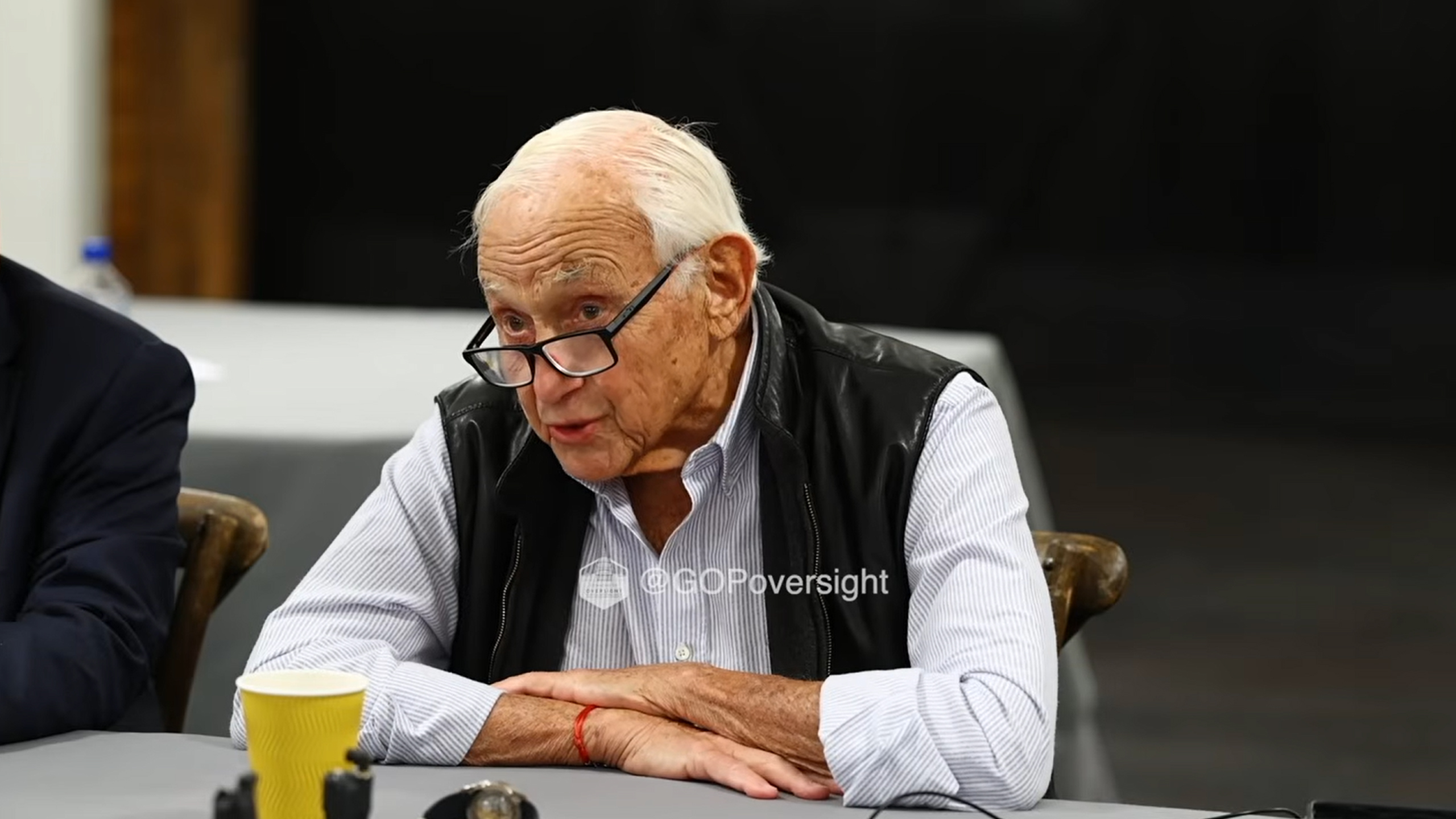
A lengthy Congressional deposition has placed billionaire retail magnateLes Wexner back at the centre of renewed scrutinysurrounding the late financierJeffrey Epstein and the powerful circles he moved within.
The testimony, delivered during a House Oversight Committee inquiry, revisited decades-old financial relationships while probing how Epstein gained extraordinary access to political, corporate and philanthropic elites.
Lawmakers pressed Wexner on Epstein's connections across global finance and technology networks, including references raised during questioning to the Rothschild family, Amazon founder Jeff Bezos, and the technology giant Google.
Thedeposition, recorded as part of a congressional investigation into Epstein's financial and social network, shows Wexner answering hours of questions under oath about the origins and evolution of their relationship. Committee members focused heavily on how Epstein, originally hired as a financial adviser in the 1980s, gained sweeping authority over Wexner's personal finances and charitable structures.
According to sworn testimony in the recorded proceeding, Wexner acknowledged granting Epstein unusually broad control through powers of attorney and trust arrangements. Lawmakers repeatedly returned to a central issue: how Epstein managed to embed himself within elite networks despite lacking a conventional track record in institutional finance.
During questioning, investigators referenced individuals and institutions alleged in public discussions to have intersected with Epstein's wider orbit. Wexner did not present documentary confirmation of operational partnerships between Epstein and those entities, but he responded to questions about whether Epstein claimed connections to influential banking families and major technology leaders while presenting himself as a global dealmaker.
The deposition itself constitutes a primary record, forming part of congressional investigative materials rather than secondary reporting. Members repeatedly pressed Wexner on whether Epstein leveraged name-dropping or social proximity to expand credibility among wealthy clients and philanthropic organisations.
Court filingsdating back to litigation connected to Epstein's estate and related civil claims have long described the financial entanglement between the two men.Wexner previously stated in sworn declarationsthat he severed ties after discovering what he characterised as financial misconduct, including the alleged misappropriation of tens of millions of dollars.
Legal documents filed in US courts during earlier proceedings show that Epstein's role extended beyond advisory work into direct control over assets linked to charitable foundations and property holdings. These arrangements later became a focal point for investigators attempting to understand how Epstein financed an image of extraordinary wealth.
In the deposition, Wexner reiterated that Epstein cultivated relationships across philanthropy, academia and high finance partly by presenting himself as an intermediary capable of introducing powerful figures to one another. Congressional questioners raised references to European banking dynasties and Silicon Valley executives as examples of names Epstein allegedly invoked in conversations with potential associates.
Source: International Business Times UK