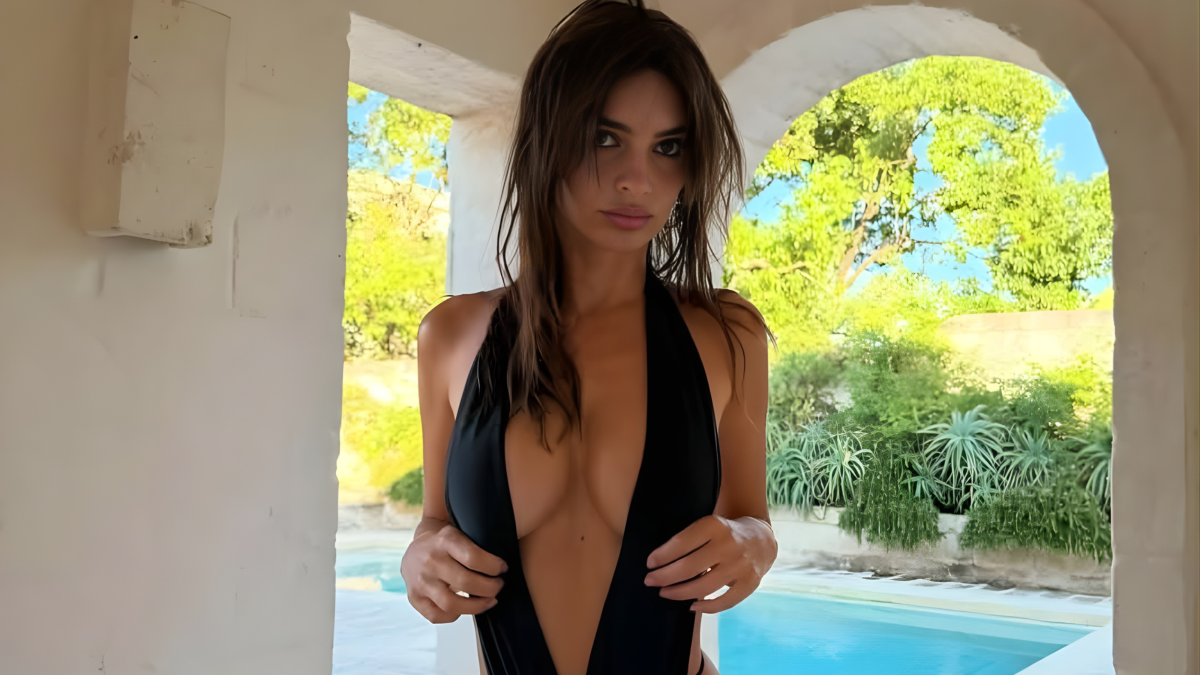
Emily Ratajkowski's latest essay has triggered a fierce cultural backlash after commentator Candace Owens accused the model and actress of 'ruining her life', escalating a viral debate over sex, feminism and identity that has rapidly spread across social media platforms.
Owens made the comments while reacting to Ratajkowski's essay published in The Cut, calling it 'one of the most degrading articles' she has read in recent years.
She argued that the piece reflects a troubling direction in modern celebrity feminism and questioned whether sexual freedom is being misrepresented as empowerment.
She further criticised the essay's tone and implications, suggesting it reflects emotional instability rather than liberation. Owens said the narrative points to 'self-destructive behaviour', adding that Ratajkowski is 'ruining her life' through the way she frames her personal experiences publicly.
The essay, titled 'I Decided to F** My Way Into a New Kind of Woman*', circulated rapidly after publication, with excerpts shared widely across TikTok, X and Instagram. The piece explores Ratajkowski's reflections on identity following motherhood and separation, including her rejection of traditional feminine ideals and her attempt to redefine her sense of self.
Her writing also references casual relationships, shifting social expectations and the pressures placed on women in the public eye, positioning sexual autonomy as part of a broader process of reclaiming personal agency after a traumatic birth experience.
The controversy intensified after Owens' comments were circulated alongside excerpts from the essay, turning the discussion into a broader cultural argument rather than a standalone publication moment.
The reaction quickly moved beyond lifestyle commentary into debates about morality, feminism and public influence, with clips of Owens' remarks widely reposted across platforms, further amplifying the dispute.
Online audiences reacted in distinct ways as the debate developed across platforms.
Supporters defended Ratajkowski's essay as a candid account of post-partum identity and personal autonomy, arguing it highlights the contradictions in how women's sexuality is judged in public discourse.
Source: International Business Times UK
