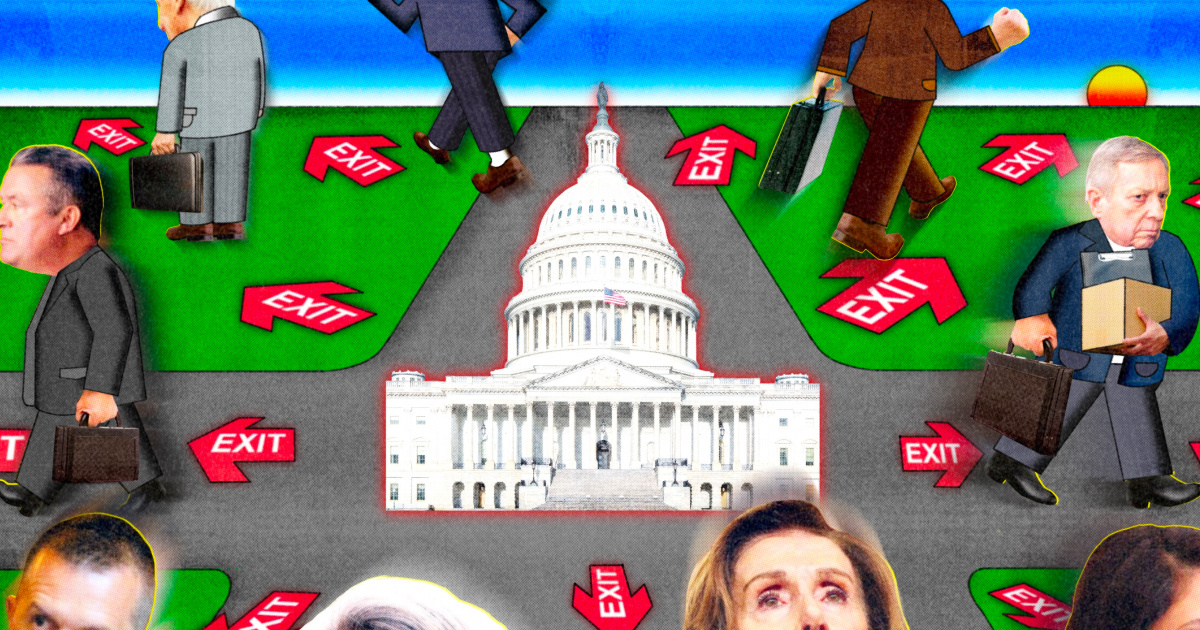
In a striking sign of disillusionment gripping Capitol Hill, more members of Congress are opting out of re-election bids than at any point in modern history, with over 50 House representatives and a handful of senators already announcing their departures ahead of the 2026 midterms. This exodus surpasses previous peaks seen during the turbulent Tea Party wave of 2010 and the post-January 6th reckoning, leaving a void that could reshape the balance of power in Washington. Longtime lawmakers cite exhaustion from partisan warfare, fundraising marathons, and a toxic political climate as key drivers, painting a picture of an institution buckling under its own weight.
The numbers tell a stark story: as of early 2026, 28 Democrats and 24 Republicans in the House have declared they won't seek another term, alongside three Senate incumbents—two from red states and one blue-state moderate. High-profile exits include House Speaker Emerita Nancy Pelosi's protégé, Rep. Adam Schiff, who decried the "endless cycle of obstruction," and GOP firebrand Rep. Matt Gaetz, who quipped on social media that he'd rather "fight from the outside." This wave eclipses the 49 House retirements of 2024, fueled by redistricting battles and the shadow of artificial intelligence reshaping campaign landscapes.
Historical context underscores the anomaly. Turnover rates typically hover around 10-15% per cycle, but the current pace rivals the Great Resignation era in corporate America. Experts point to structural woes: congressional pay, frozen at $174,000 since 2009, pales against lucrative K Street gigs or media punditry. A recent Pew Research poll revealed 72% of voters view Congress unfavorably, amplifying the personal toll of death threats, doxxing, and 24/7 scrutiny in an era of viral outrage.
Analysis from political scientists suggests profound implications. Open seats invite ideological purists and deep-pocketed outsiders, potentially deepening gridlock rather than fostering compromise. In battleground districts, this could tilt toward populists on both sides, with Democrats fretting over progressive strongholds and Republicans bracing for MAGA insurgents. Yet some see silver linings: fresh blood might reinvigorate a sclerotic body, echoing the reformer influx of the 1990s that birthed welfare overhaul.
As vacancies mount, party leaders scramble to recruit, but the talent pool feels shallow amid widespread voter apathy. Fundraising data shows incumbents raised $1.2 billion last cycle, yet many decry the "soul-crushing" demands. With midterms looming, this flight from the Hill signals not just personal burnout but a broader crisis of confidence in representative democracy, challenging both parties to confront why public service has become a revolving door.
