Home-Australia Is Turning to 3D Printing to Secure Its Industrial Foundation
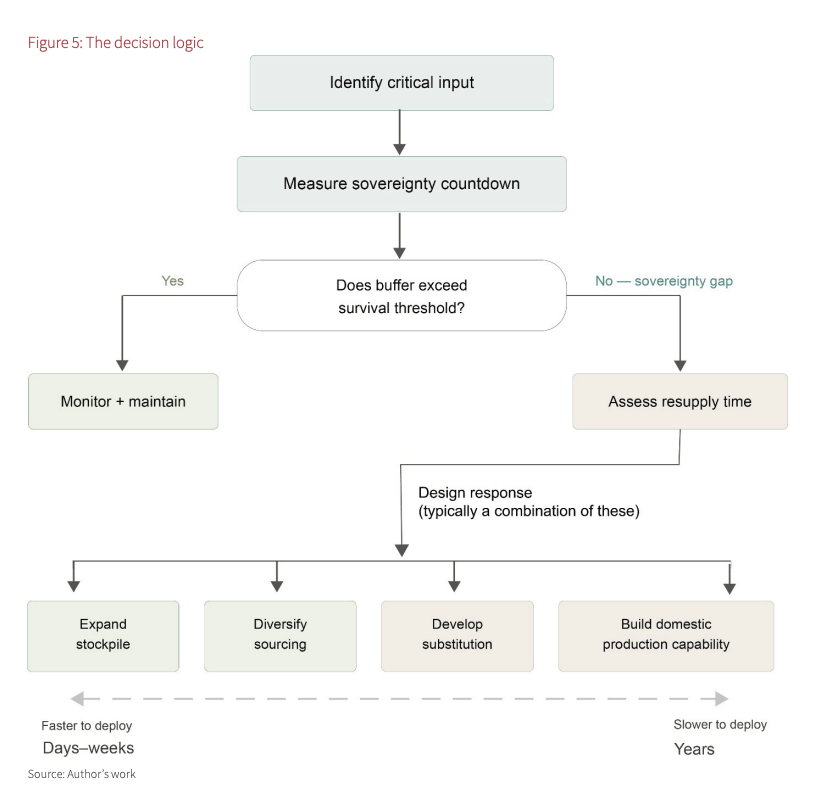
A new policy report from theAustralian Strategic Policy Institute(ASPI), authored by Steven Camilleri, co-founder and CTO of metal 3D printing companySPEE3D, argues that national resilience is not a political ambition but an engineering problem. TitledMake Stuff Here… Or Else, the report introduces the concept of the “Sovereignty Countdown”: the measured window of time a critical system can keep running once external supply is cut off. For the 3D printing sector, the implications are direct and worth attention.
From Efficiency to Endurance: The Strategic Shift
For decades, the dominant logic of global manufacturing was cost optimization. If a component was cheaper offshore, sourcing it offshore was rational. That logic held as long as supply chains were stable, maritime routes were open, and geopolitics was predictable. None of those conditions can be assumed today.
The report argues that Australia, like many advanced economies, has traded its industrial immune system for the comfort of a distribution warehouse. Workshops closed, foundries shuttered, and technical knowledge migrated offshore. What remained was storage and logistics: systems that can move and hold what others produce, but cannot regenerate supply once reserves run out. A warehouse can delay failure; it cannot prevent it.
At the center of the framework sits a measurable question every critical infrastructure operator should be able to answer: if external supply stopped tomorrow, how long could this system keep running? Water treatment chemicals in some Australian utilities sit at 14 to 21 days of buffer. Diesel reserves are measured in weeks. Agricultural inputs like urea carry longer countdowns but fail silently, a missed planting window shows up months later as a harvest shortfall. The countdown differs by sector. The vulnerability is the same.
Where 3D Printing Fits: The Production Layer
The report identifies three layers that keep a nation functioning: essentials (water, energy, food), systems (the infrastructure delivering them), and production (the capability to repair, replenish, and sustain those systems). Weakness in the production layer cascades upward. This is precisely where additive manufacturing enters the equation.
3D printing is uniquely suited to restoring that production layer, not by recreating 20th-century factory infrastructure, but by enabling distributed, on-demand fabrication closer to the point of need. The report explicitly names advanced manufacturing, including additive methods, as part of a “leapfrog opportunity”: rather than rebuilding legacy smokestack industries, nations can restore sovereign capability using more flexible, digitally driven production tools better suited to large geographies, dispersed infrastructure, and limited industrial workforces.
The report also extends this logic to the digital layer embedded in modern infrastructure. Critical systems now depend not only on pumps, valves, and chemicals, but on firmware, sensors, operational technology, and trusted hardware. A water treatment plant might hold weeks of chemical inventory while its control systems have no domestic replacement pathway at all. Sovereign capability in additive manufacturing therefore means more than machines, it means the domestic capacity to design, prototype, certify, and maintain the trusted components that critical systems depend on.
Source: 3D Printing Industry