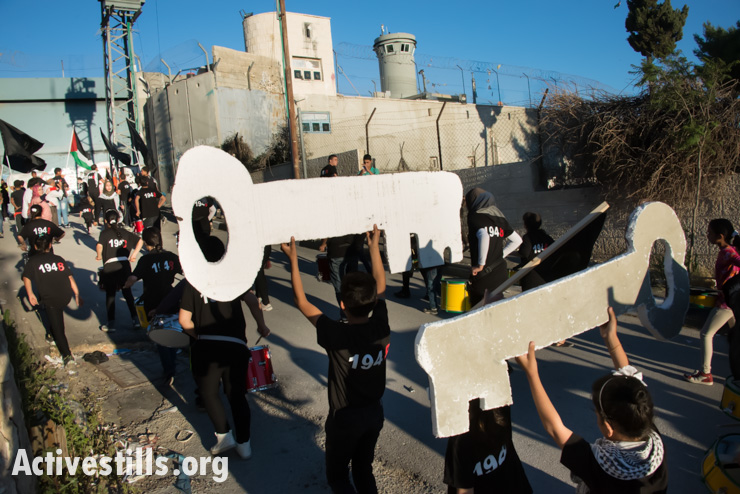
Last week, Israel “reopened” the Rafah crossing. Twelve Palestinians were allowed to return home. Twelve people who chose to return to Gaza, despite knowing they might be killed again, because they would rather die on their land than live as strangers in countries that will never be home. This followed a “master plan” for Gaza submitted by Israel and the United States for Gaza which both rejected Palestinian input and omitted widespread Palestinian return as an option. And then news broke thatOmar Shakirfrom Human Rights Watch resigned after a report his team produced on the Palestinian Right of Return was killed by his own organization.
To read this article in the following languages, click theTranslate Websitebutton below the author’s name.
عربي, Hebrew, Farsi, Español, Русский, 中文,Portugues,Français, Deutsch, Italiano, 日本語,한국어, Türkçe, Српски. And 40 more languages.
At a time when return is most critical to Palestinian survival, the world is working to make it seem impossible and punishing those who would advocate for it. Every “peace plan” offers Palestinians everything except the one thing that matters: the right to go home. All these recent stories show us that the question of Palestinian return to their land continues to be a question of whether Palestinians are allowed to exist as a people at all.
The right of return is the right of Palestinians who were expelled or forced to flee their homes in 1948 and after to return to those homes, to reclaim their property, and to live there in dignity. It is an individual and collective right recognized under international law that does not expire over time, through political negotiation, or with changes in sovereignty.
ETHNIC CLEANSING: Palestinian refugees in 1948 Photo: Public Domain
But the right of return is more than an obscure legal right. The right of return is inseparable from our identity as Palestinians and is necessary for our right to determine our future.
Where I live in Michigan, there is a child from Gaza who is receiving treatment for a prosthetic leg through HEAL Palestine. When I spoke to him, he told me all of his entire extended family who had been martyred during the genocide, except for one brother. But he still wants to go back to Gaza, to rebuild, and to one day die where his family died.
Why would anyone choose this? Why would someone who lost everything return to a place that has seemingly lost everything, too? Why does this specific land matter so much that people would rather die there than live safely somewhere else?
For Palestinians, land is not a passive setting for life. It is the fabric of Palestinian existence itself, woven into identity, memory, and continuity across generations. I haven’t been home in many years, but I still remember the way the sun feels on my skin there. How the warmth somehow feels warmer. How the scent of olive trees andyansoonmakes every corner store and outside market feel like home. To be Palestinian is to carry your name and your country in your blood, as Mahmoud Darwish wrote, it is to “suffer from incurable malady: Hope.”
Source: Global Research
