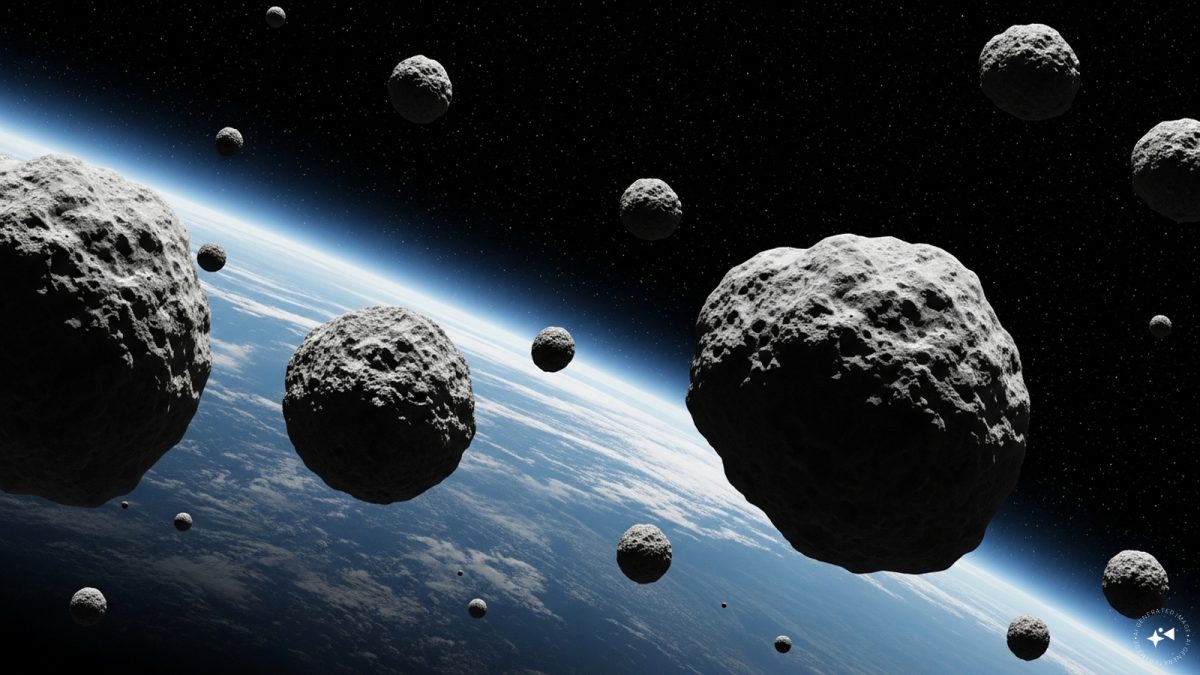
A stark warning fromNASA‘s Planetary Defense office has sent ripples across the scientific community and beyond. Speaking at a recent conference in Arizona, Dr Kelly Fast cautioned that thousands of asteroids are moving in near-Earth spacewith limited means currently available to stop them if they were found on a collision course. Many of these objects, she said, fall into the category scientists call“city-killer" asteroids, space rocks large enough to devastate an entire metropolitan region on impact.
According to research cited at the conference, nearly 25,000 asteroids measuring 140 metres or larger are believed to exist in near-Earth space. Alarmingly, only about 40% of them have been detected and tracked so far. The remaining 15,000 or so objects remain unaccounted for, with scientists unaware of their precise locations or trajectories.
Dr Fast acknowledged that while smaller asteroids typically burn up in Earth’s atmosphere and larger ones are easier to detect, medium-sized objects pose a unique threat. “It’s the ones we don’t know about that concern me," she indicated, noting that if such an asteroid were to approach Earth without warning, response time would be extremely limited.
Scientists classify asteroids measuring 140 metres or more as “city-killers" because of the scale of destruction they can unleash. Though relatively small by cosmic standards, these objects are large enough to flatten urban centres, trigger widespread fires and cause catastrophic structural damage. Many are extremely dark, reflecting little sunlight and blending into the vastness of space. Some also follow orbital paths similar to Earth’s, making them particularly difficult to spot until they are dangerously close. Older telescope systems struggle to detect such dim, fast-moving objects in time.
History offers a sobering reminder of the potential consequences. In 1908, a massive explosion rocked the Tunguska region of Siberia in what is known as the Tunguska event. Scientists estimate the object responsible was less than 100 metres wide, yet it flattened nearly 2,000 square kilometres of forest. Had a similar event occurred over a densely populated city, the human toll would have been catastrophic. Researchers say such historical precedents underscore why planetary defence remains a pressing concern.
At present, there is no ready-to-deploy system capable of immediately neutralising a sudden asteroid threat. In 2022, NASA demonstrated a proof of concept through its Double Asteroid Redirection Test (DART) mission, successfully altering the trajectory of a small asteroid. However, experts stress that such deflection techniques require several years of advance notice. Currently, no spacecraft is on standby for rapid launch, and budgetary as well as infrastructure constraints limit preparedness for unexpected scenarios.
Scientists say there is reason for cautious optimism. NASA is preparing to launch the NEO Surveyor, an infrared space telescope designed to detect dark asteroids by tracking the heat they emit, something traditional optical telescopes often miss. If successful, the mission aims to identify up to 90% of potentially hazardous near-Earth objects within the next decade. On the ground, facilities such as the Vera C Rubin Observatory are set to enhance round-the-clock sky surveys, improving early warning capabilities.
The warning serves as a reminder of both humanity’s vulnerability and its scientific resolve. While the probability of a large asteroid striking Earth in the near future remains low, experts say the risk from undetected objects cannot be ignored. Greater international cooperation, sustained funding and advanced detection technologies are essential to strengthening planetary defence. Scientists maintain that the first and most crucial step is comprehensive tracking. With sufficient warning, they believe, even a “city-killer" asteroid could potentially be deflected, safeguarding the planet from a preventable catastrophe.
Source: World News in news18.com, World Latest News, World News
