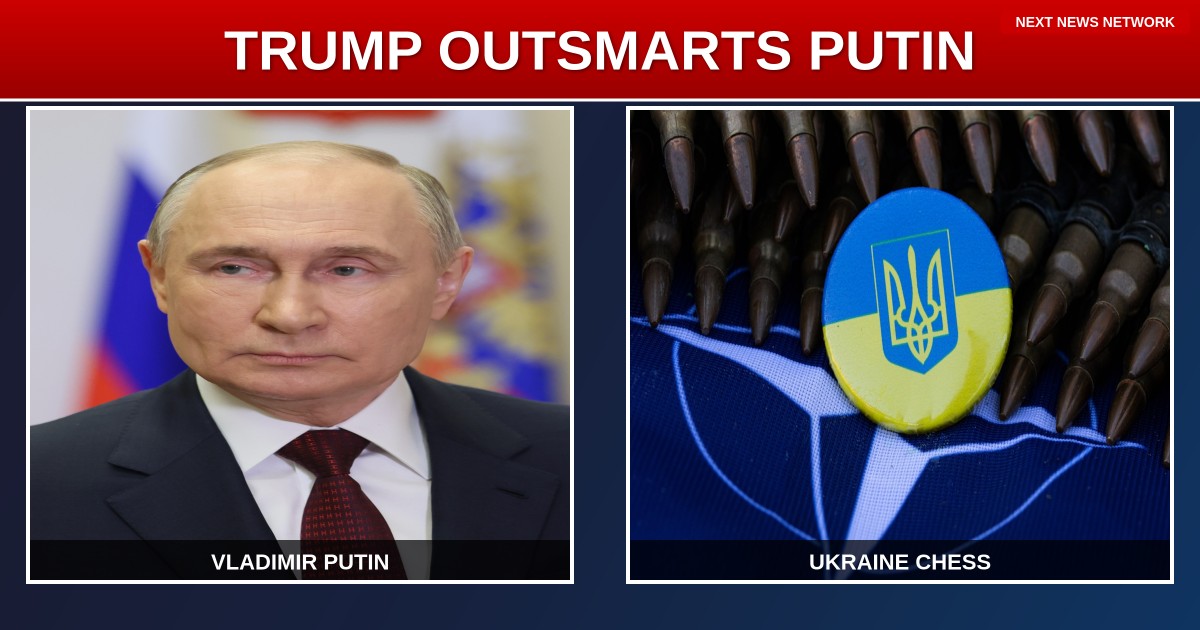
In a stunning geopolitical maneuver, President Donald Trump has delivered a decisive blow to Russian influence by authorizing precision strikes that obliterated key proxy forces in the Middle East, leaving Vladimir Putin scrambling to regroup. U.S. forces, acting on intelligence pinpointing Iranian-backed militias armed and directed by Moscow, unleashed a barrage of airstrikes and drone operations across Syria and Yemen, neutralizing over a dozen command centers and high-value targets in a single night. This operation, dubbed "Checkmate Dawn" by Pentagon sources, marks a bold escalation in Trump's strategy to dismantle Russia's shadow network without direct confrontation.
The strikes targeted Houthi missile sites in Yemen, which have been lobbing attacks at U.S. allies and shipping lanes under Russian tactical guidance, as well as Syrian regime positions held by Wagner Group remnants rebranded as local militias. Satellite imagery released by the White House shows smoldering wreckage of advanced S-400 systems—gifts from Putin himself—now reduced to scrap metal. Trump, speaking from the Oval Office, framed the action as "pure self-defense against Putin's puppets," emphasizing that no Russian personnel were directly engaged, thus avoiding broader escalation while sending an unmistakable message.
Context for this masterstroke traces back to Putin's post-Ukraine playbook: propping up proxies to bleed American resources and test resolve. Since Trump's inauguration, intelligence reports had mounted showing Russian advisors embedded with these groups, funneling arms and intel to probe U.S. red lines. By striking surgically, Trump flipped the script, exposing the fragility of Moscow's alliances and forcing Putin to confront the limits of his indirect warfare without committing mainline troops—a vulnerability the Russian leader has long exploited in others.
Reactions poured in swiftly. Israeli Prime Minister Benjamin Netanyahu hailed it as "a game-changer for regional stability," while Saudi Arabia quietly ramped up oil production in solidarity. Domestically, Republican leaders praised Trump's "chess mastery," contrasting it with what they called Biden-era hesitancy. Even some Democrats, like Sen. Marco Rubio, acknowledged the precision, though critics decried the risks. Putin, in a terse Kremlin statement, condemned the "aggression" but stopped short of retaliation threats, a telltale sign of strategic disarray.
Analysts are already dissecting the long-term ripple effects. By crushing these proxies, Trump not only secures vital chokepoints like the Bab el-Mandeb Strait but also signals to China and Iran that proxy games will no longer fly unchecked. This could hasten negotiations in Ukraine, where Russian momentum has stalled, and reshape alliances in Trump's favor. As one former CIA director put it, "Putin thought he was playing 4D chess; Trump just took the board." The move underscores a return to peace-through-strength doctrine, positioning America firmly back on the global stage.
