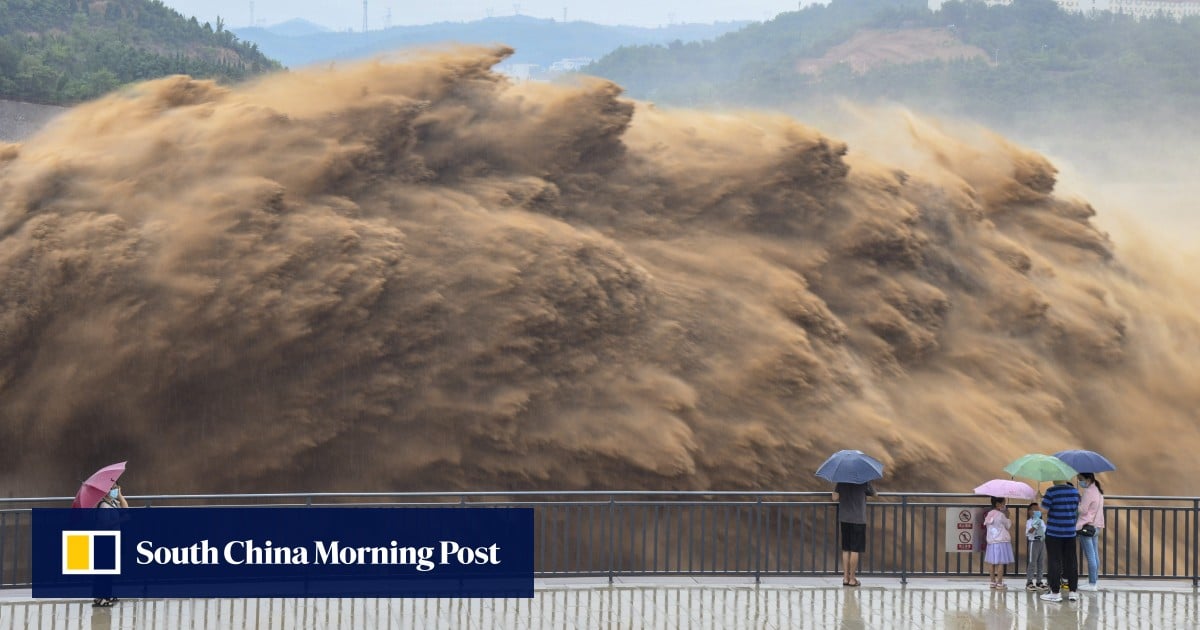
A team led by Tsinghua University says it has built a framework that could better predict and manage these powerful flows
The findings, along with a framework the researchers have built for understanding the formation of turbidity currents, could help to better predict and manage these powerful flows, protecting underwater infrastructure and managing reservoirs.
“Self-accelerating turbidity currents are powerful, erosive gravity underflows that sever intercontinental telecommunication cables and reshape subaqueous landscapes,” they wrote in a paper published on May 26, by the Proceedings of the National Academy of Sciences.
“Despite success in small-scale set-ups, field observations of accelerating turbidity currents have been rare, with only a few cases primarily in submarine settings,” according to the peer-reviewed paper.
The team included researchers from the Yellow River Institute of Hydraulic Research, the University of Wyoming, the University of Illinois, Texas Tech University, Hokkaido University and Durham University.
Source: News - South China Morning Post