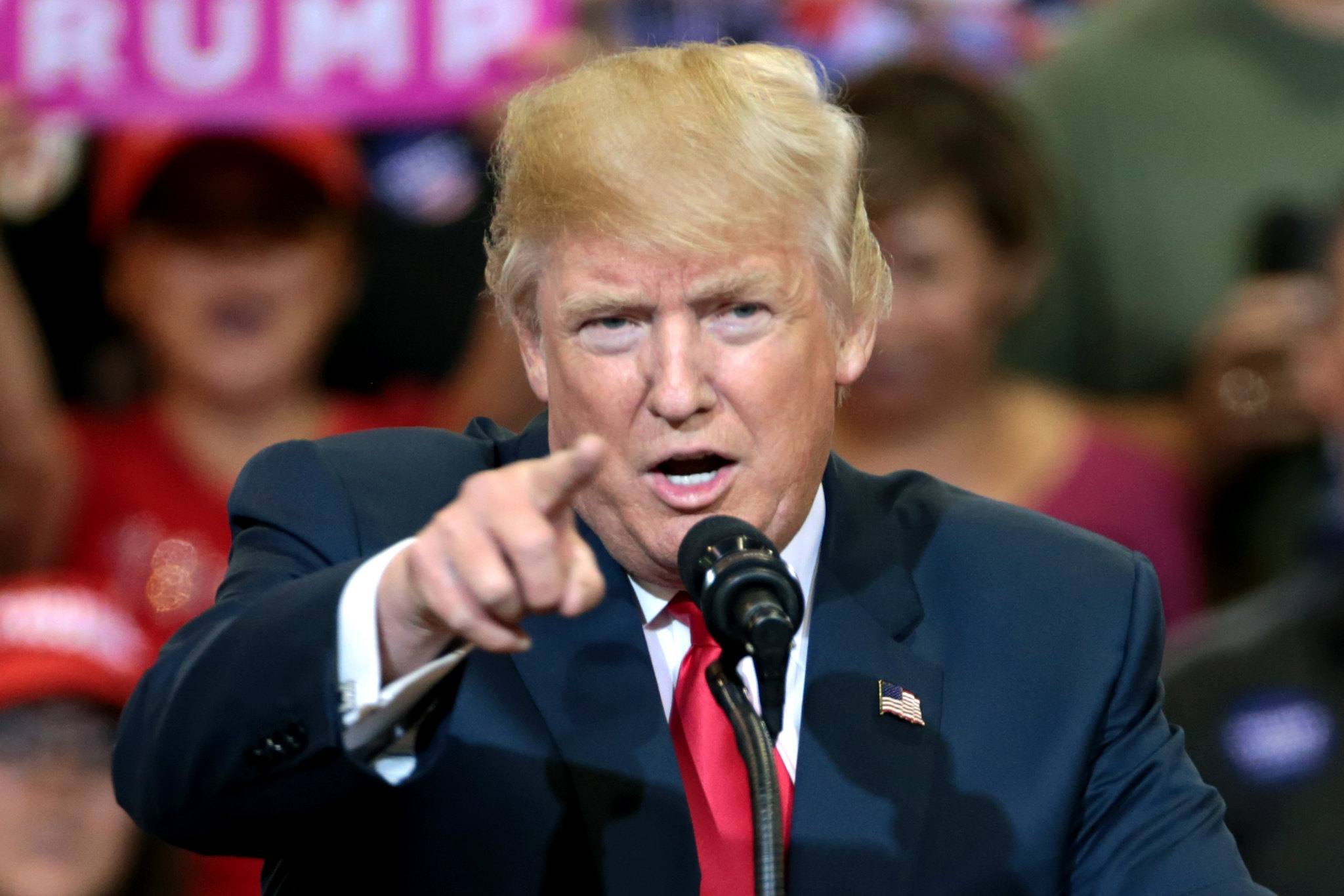
President Donald Trump's use of emergency powers to impose sweeping tariffsis back in focus as the US Supreme Court prepares to issue rulings in the coming days, with Justice Neil Gorsuch's earlier warning about a 'one-way ratchet' of authority from Congress to the White House now colliding with a rare bipartisan rebuke on Capitol Hill.
At the centre of the dispute is whether the International Emergency Economic Powers Act (IEEPA), a 1977 law designed for national emergencies, allows a president to levy broad import duties by declaring an emergency. The case has been closely watched by markets and lawmakers because it tests how easily Congress could reverse such tariffs once imposed, particularly if any rollback is met with a presidential veto.
Justice Amy Coney Barrett, another Trump appointee, voiced a similar concern in court, asking the government whether Congress would find it 'very hard' to pull the tariff power out of IEEPA if the court endorsed the administration's interpretation. In the same arguments, Solicitor General D. John Sauer argued that the statute anticipates a political check on emergency declarations, pointing to Congress ending the COVID-19 emergency as an example of political discipline.
The timing of the ruling remains uncertain.The Hillreported the Supreme Court had signalled it would release opinions on multiple days between now and next Wednesday, and that speculation has built because more than 100 days have passed since oral arguments.
While the justices deliberate, the House of Representatives has delivered an early, if largely symbolic, test of congressional appetite to curb Trump's tariff authority. On 11 February, six Republicans joined Democrats to pass a resolution, 219–211, to repeal Trump's Canada tariffs that were imposed under IEEPA by terminating the underlying emergency declaration.
The measure now heads to the Senate. However, bothThe HillandCBS Newsnoted the vote fell well short of the two-thirds majority in both chambers that would be required to override a veto should the legislation reach Trump's desk.
The House vote also followed a procedural rupture inside the Republican conference. CBS News reported that several Republicans voted with Democrats a day earlier to defeat a rule that would have blocked lawmakers from forcing votes to challenge the president's tariffs, after a time-limited restriction on such votes expired in January.
Separate reporting on the November hearing has highlighted how the court's decision could shape the practical balance of power. Politico reported that Gorsuch and Barrett suggested any effort to rein in tariff authority after a broad reading of IEEPA could require a veto-proof majority, raising constitutional questions about Congress's Article I power over duties and trade.
Justice Ketanji Brown Jackson has also addressed the pace of decision-writing in public remarks, an unusual step while cases remain pending. Speaking during a book promotion appearance on CBS, she said there are 'lots of nuanced legal issues' and that 'it takes a while to write,' adding that the court aims to be 'thorough and clear' even if the process is slow.
Source: International Business Times UK