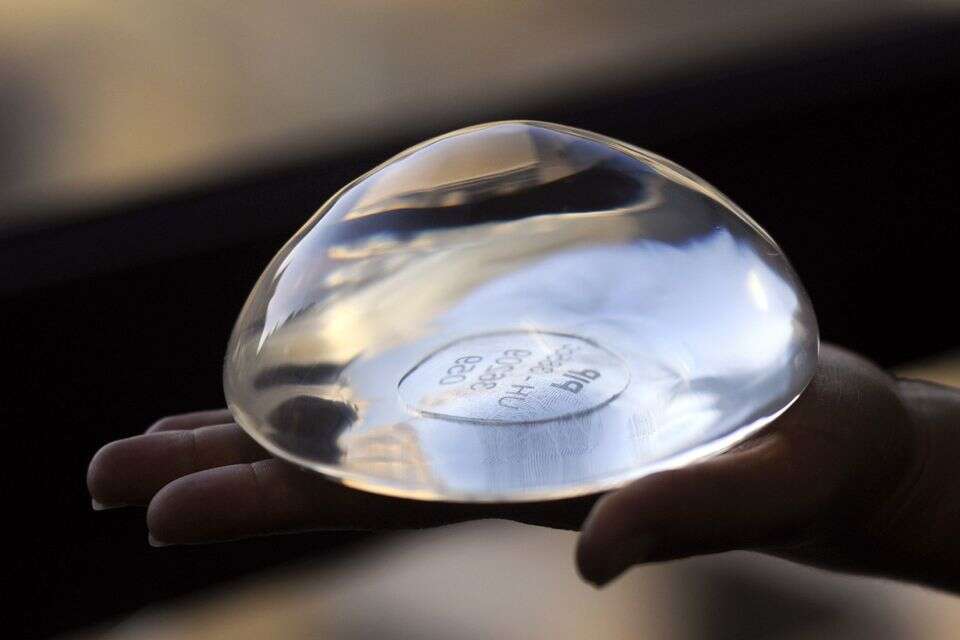
In a startling medical anomaly, a woman in Israel has become the subject of international intrigue after doctors discovered that a silicone breast implant was responsible for severe damage to her eye. The 52-year-old patient, treated at Hadassah Medical Center in Jerusalem, presented with progressive vision loss in her right eye, initially dismissed as routine age-related degeneration. Advanced imaging, however, revealed silicone microdroplets dispersed throughout the eye's vitreous humor, directly linked to a ruptured implant installed over two decades ago.
Physicians detailed the case in a recent edition of the Journal of Ophthalmology, explaining how the implant's silicone gel had silently migrated through the body's lymphatic system following a subclinical rupture. "Silicone is not inert as once believed," said Dr. Miriam Levy, the lead ophthalmologist on the case. "In rare instances, it can embolize to distant sites, including the ocular cavity, triggering inflammation and fibrosis that impairs vision." The patient underwent intricate vitrectomy surgery to extract the silicone particles, restoring partial sight but leaving permanent scarring on her retina.
This incident underscores the long-term risks associated with silicone breast implants, which have been approved for cosmetic use since the 1960s despite periodic safety controversies. In Israel, where breast augmentation remains one of the most common elective procedures—numbering over 10,000 annually—regulators have tightened post-market surveillance following global recalls, such as France's 2010 ban on certain Poly Implant Prothèse devices. Experts note that "silent ruptures," affecting up to 10% of implants after 10 years per FDA data, often go undetected without MRI screening, allowing complications to fester undetected.
Patient advocates are seizing on the case to renew calls for mandatory imaging protocols and informed consent reforms. "Women deserve transparency about these exotic failure modes," argued Tali Cohen, founder of Israel's Breast Implant Safety Network. While implant manufacturers like Allergan maintain that such migrations are "extraordinarily rare"—citing incidence rates below 0.01%—the Jerusalem case has prompted the Israeli Ministry of Health to launch an investigation into similar unreported incidents nationwide.
Broader implications ripple through the cosmetic surgery industry, valued at billions globally, as this episode highlights the unpredictable biology of foreign body implants. Ophthalmologists worldwide are now advised to consider implant history in enigmatic vision loss cases, potentially reshaping diagnostic paradigms. For the patient, now advocating anonymously, the ordeal serves as a cautionary tale: a routine enhancement turned vision-threatening sabotage, two decades in the making.