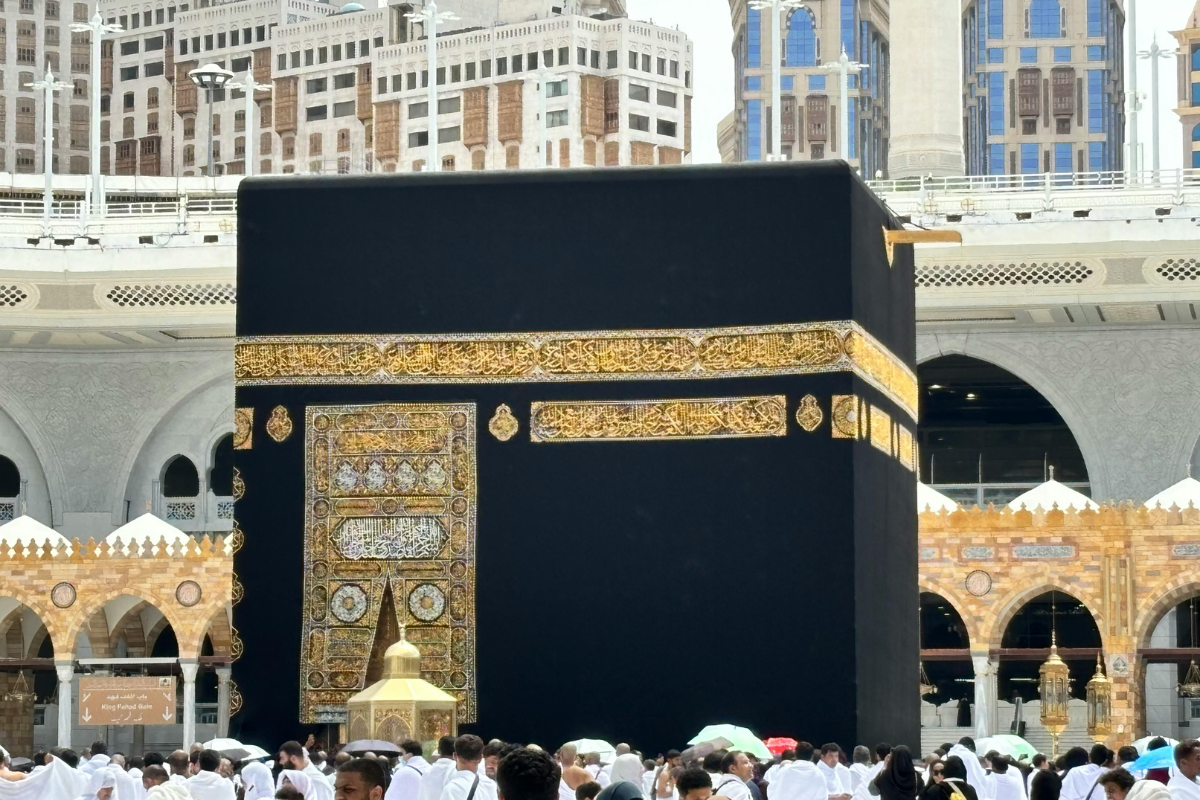
Explosive emails from 2017 have surfaced, alleging that a fragment of the sacred Kiswah—the black cloth enveloping Islam's holiest site, the Kaaba in Mecca—was shipped to Jeffrey Epstein's orbit amid shadowy dealings with UAE-linked figures. The correspondence, obtained through a Freedom of Information Act request and first reported by the International Business Times UK, paints a picture of high-stakes intrigue blending religious reverence with the late financier's notorious web of influence.
The emails, exchanged between Epstein associate Ghislaine Maxwell and a Dubai-based businessman with ties to the UAE royal family, reference the discreet transport of "a piece of the holy covering" from Saudi Arabia. Dated July 2017, just months after Epstein's release from his earlier legal troubles, the messages detail logistics for the item's delivery to Epstein's New York mansion. "The Sheikh insists it arrives intact for JE's collection," one email reads, using initials for the disgraced financier. The Kiswah, embroidered with Quranic verses and weighing over a ton in its full form, is replaced annually in a ceremonial rite, with fragments occasionally gifted to dignitaries—but rarely, if ever, to outsiders like Epstein.
UAE connections run deep in this saga. The businessman in question, identified as a liaison for Abu Dhabi interests, had previously facilitated Epstein's meetings with Gulf elites during trips to the region in the mid-2010s. Epstein's flight logs, unsealed in prior court cases, show multiple flights to Dubai and Abu Dhabi, where he pitched investment schemes to sovereign wealth funds. Insiders speculate the Kiswah fragment was a token of alliance, perhaps linked to Epstein's rumored role as a backchannel for intelligence or financial favors between Western billionaires and Middle Eastern powers.
Islamic scholars expressed outrage upon learning of the claims. "The Kiswah is not a trinket for collectors; it's a symbol of divine unity," said Dr. Aisha Rahman, a Mecca-based historian. Questions swirl about how such a relic left Saudi custody, given strict protocols overseen by the Saudi Ministry of Islamic Affairs. No official confirmation has come from Riyadh or Abu Dhabi, but the revelation adds fuel to ongoing scrutiny of Epstein's global network, which spanned from Palm Beach to Paris and beyond.
Legal experts analyzing the emails suggest they could reopen probes into Epstein's estate, now valued at over $600 million and tied up in victim compensation funds. With the UAE's growing role in Western tech and finance—exemplified by recent AI investments—these disclosures highlight uncomfortable intersections of faith, power, and predation. As more documents trickle out from federal archives, the full extent of Epstein's exotic acquisitions may yet unravel further threads in this tapestry of scandal.
