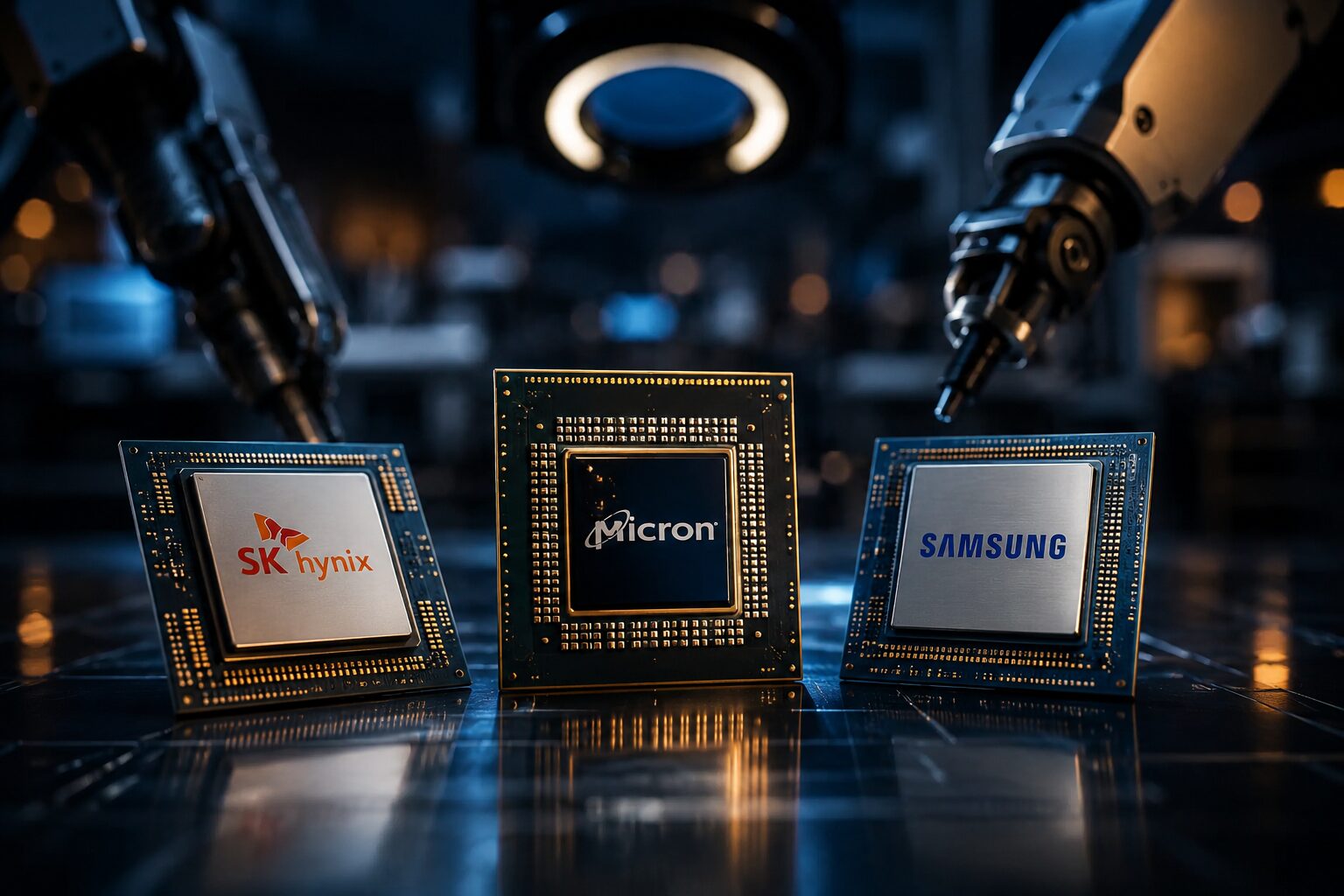
Will Micron stock drop as Korean rivals continue to lock up a larger share of the AI memory market? That is what a lot of investors are asking right now, and the concern is not without merit. At the time of writing, MU sits at $981.61, down around 1.43% on the day, after briefly touching $1,012 earlier in the session. SK Hynix holds an estimated 60 to 70% of HBM4 volume for Nvidia’s Vera Rubin platform, with Samsung expected to take roughly 25 to 30%, and Micron left supplying the remainder. For a stock trading at a P/E of 46, Micron stock competitors are putting pressure on MU that investors cannot really ignore.
Also Read:Micron Stock Bull vs Bear: Sell Signal or Long-Term Buy
Will Micron stock drop? This question keeps coming back to two core concerns: valuation and market share. SK Hynix HBM leadership has been assessed by some of the biggest names on Wall Street, and the verdict is not entirely comforting for MU bulls.
“SK Hynix will maintain its dominant position in HBM3 and HBM3E until at least 2026, sustaining a total HBM market share of over 50%.”
That is a lot of runway for the Korean leader. On the bear side for Micron, analysts at Trefis flagged that Samsung, SK Hynix, and Micron itself are in a massive capital expenditure race, with Micron alone spending over $25 billion in FY26. Synchronized capacity expansion like that could lead to an oversupply situation when new fabs come online in 2027 and 2028, causing a sharp drop in average selling prices and margins from current peaks. That is the scenario where micron stock drop risks become very real, very fast.
BNP Paribas equity derivatives strategist Greg Boutle also flagged that a sharp selloff in Micron shares could be an early warning sign of market impact from the upcoming SpaceX IPO, which is another pressure point not many are talking about right now.
Fairly solid numbers also back the bull case for Micron. William Blair analystSebastien Naji, who initiated coverage with an Outperform rating, noted a key fact about Micron’s current position:
“Micron has already sold its entire 2026 production capacity.”
Naji also projects Micron will hold market share in the low-20% range through 2027, and could capture approximately $20 billion in HBM revenue by then, driven by the higher profit margins HBM chips generate compared to standard memory products. Morgan Stanley, meanwhile, raised its price target from $520 all the way to $1,050, citing persistent DRAM supply constraints expected to last two to three years. Bernstein also just initiated coverage with a Buy rating.
Samsung HBM chips and SK Hynix HBM leadership are not going away, but analysts forecast the HBM shortage to persist through 2028. In April 2026, Goldman Sachs raised its 2026 DRAM supply-demand gap forecast from 3.3% to 4.9%, describing it as the most severe shortage in 15 years. That rising tide is, for now, also lifting Micron’s numbers along with those of its Korean rivals.
Source: Watcher Guru
